



Shaping Ethical Global Leaders through Flexible Programs and Industry Connections
Pacific Lutheran University (PLU) is a private liberal arts university with a strong sense of community and purpose. The university’s mission goes beyond academics, focusing on service, experiential learning, and justice. Located on the traditional lands of the Nisqually, Puyallup, Squaxin Island, and Steilacoom peoples of Washington state, PLU acknowledges and respects the original caretakers of the land it calls home.
Within PLU, the School of Business stands out as a place where faculty and staff are deeply invested in student success. The school emphasizes a student-centered approach that blends business education with the values of the liberal arts. Its mission is clear: to inspire students to learn for life, live with purpose, lead responsibly, and care for others.
“We are invested in their educational, professional and emotional growth with hopes that they become ethical and responsible global leaders. Our small class sizes allow students to develop lasting and meaningful connections with their faculty as well as industry guests that visit throughout the semester,” says Cameron Bennett, Interim Dean of the School of Business and Dean of the College of Professional Studies. The faculty in the School of Business are known for going above and beyond for all students and are deeply committed to each student’s success.
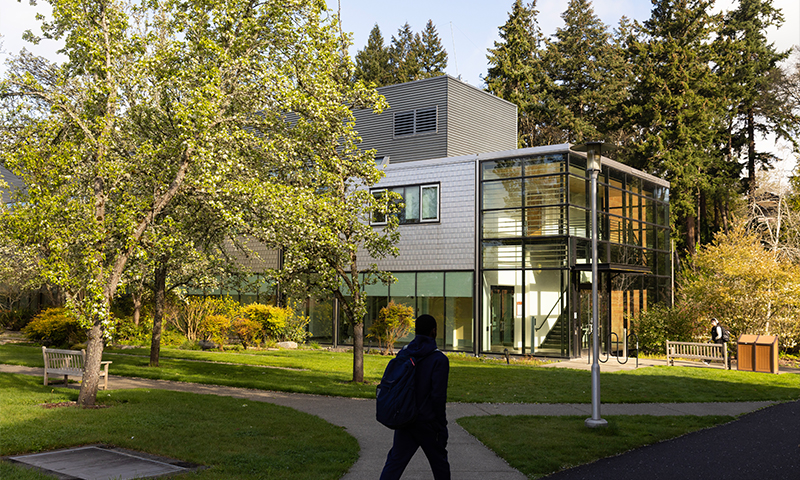
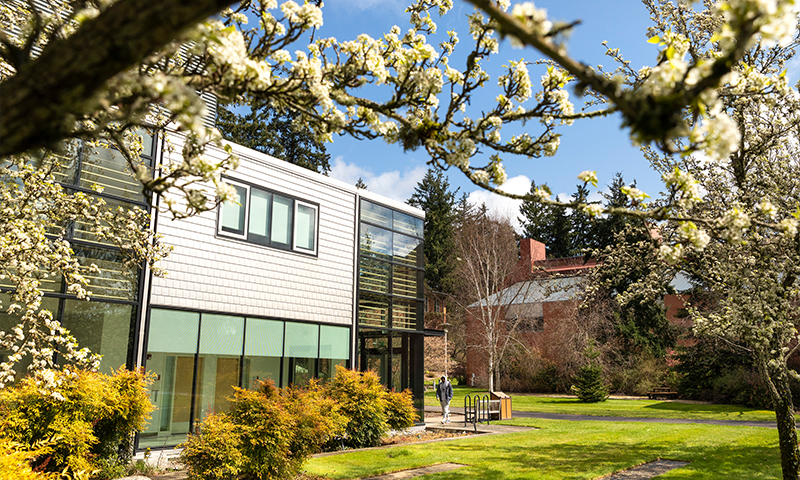
The School of Business is located in the Morken Center for Learning and Technology, one of PLU’s most advanced academic facilities. The classrooms are equipped with modern, industry-standard technology that supports hands-on learning. The center is also designed to help students build essential skills for business leadership, including negotiation, teamwork, and group and individual presentations. Associate Dean Juanita Reed explains, “Mastering these skills takes practice, and access to the right environment makes that possible.”
Pathways for Learners at All Levels and Stages of Life
The School of Business offers both a Bachelor of Business Administration (BBA) and a Master of Business Administration (MBA). The BBA is a traditional business degree that allows students to choose concentrations in accounting, finance, management, or marketing. For those with interests beyond these areas, students can work one-on-one with a faculty adviser to design an individualized concentration that aligns with their personal and professional goals. This flexibility ensures that students can shape a degree that reflects their aspirations.
The MBA program is structured with the same spirit of flexibility. Classes are held in the late afternoon and evening, making it possible for working professionals to balance studies with careers and family responsibilities. The program can be completed in as little as nine months or extended up to twenty-one months, depending on each student’s needs. “We work with each student individually to create a plan that will help them achieve their degree goals while still fully engaging in both professional and familial responsibilities,” says Reed. Students can also add concentrations in Entrepreneurship and Closely-Held Firms, Healthcare Management, Supply Chain Management, or Technology and Innovation Management to tailor their MBA experience to their career goals.

Academic Programs with Purpose
Preparing students for leadership is a core commitment of the School of Business. Leadership, however, goes beyond technical knowledge. Bennett shares, “Being a leader is not only about knowing the ‘three C’s of brand development’ or how to determine the valuation of an organization. Studies show that students are entering the workforce lacking skills in project management and communication. We have developed programs that allow students to fully engage in these experiences.” To address these needs, the school integrates service-learning opportunities into its curriculum. Students work directly with local industry partners to recommend solutions and develop new systems.
Practical experiences extend into specialized programs as well. Juniors and seniors can participate in consulting certificate programs where they provide services to small start-ups in the community. Accounting students gain real-world experience by offering free tax services to local residents during tax season. These opportunities reinforce classroom learning while strengthening ties between students and the local business community.
The School of Business also enriches its programs with frequent guest speakers, alumni visits, and guidance from its Executive Advisory Board. Many classes include service-learning projects with local organizations, which often lead to internships or even job offers. Faculty are encouraged to involve students in their research, ranging from short-term assignments to long-term projects. Students are equally encouraged to propose new ideas and initiatives to school leadership.
At its core, the School of Business is a supportive, innovative, and inclusive community. Faculty, staff, and administrators work closely with students, creating an environment where academic growth and personal development go hand in hand.
Commitment to Excellence
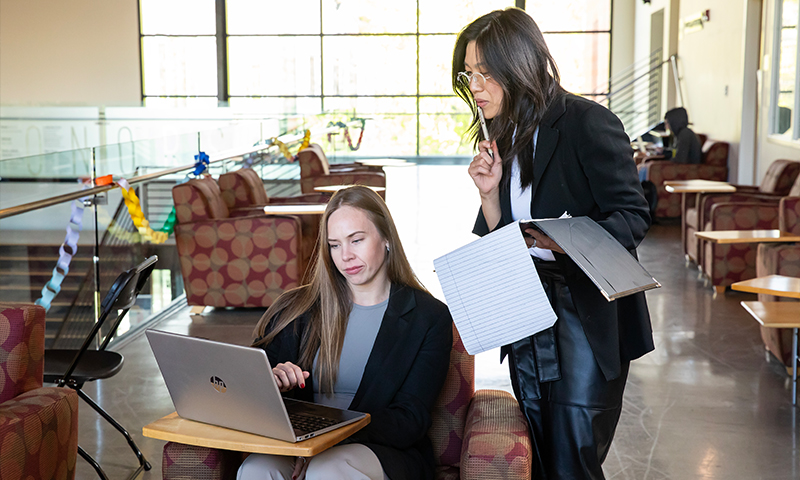
Accreditation is a cornerstone of the School of Business. The school was the first of its size to earn accreditation from AACSB International, a distinction it has proudly maintained since 1971. This recognition is more than a credential – it drives the school to evolve with industry changes, adopt innovative practices, and continually strengthen the connection between education and the business world. “Our accreditation requires us to assess whether we’re meeting our learning goals and to make adjustments that lead to real improvement. The process reflects our commitment to growth and accountability,” adds Bennett.
Only six percent of business schools worldwide hold AACSB accreditation, which places PLU in an elite community of institutions dedicated to high standards. For students, this means confidence in the quality of their education. AACSB evaluates areas such as curriculum design, faculty research, student outcomes, and alumni engagement. “Accreditation ensures that you have a global community of business educators watching out for your best interests,” adds Reed.

The school also benefits from the guidance of its Executive Advisory Board (EAB), a volunteer group comprising alumni and business leaders from the Puget Sound. The board meets with faculty and administrators throughout the year to share insights on industry trends and workforce needs. Their input often shapes curriculum updates and creates opportunities for students. When the EAB highlighted a shortage of project management skills among job applicants, the school responded by creating a dedicated project management course for both undergraduate and graduate students.
Partnerships further strengthen the school’s reach and relevance. A recent collaboration with MultiCare, a leading regional healthcare provider, has led to the launch of a Leadership Development Program for MultiCare managers. The school has also introduced a new direct admission process for its undergraduate business degree, making it easier for students to begin their journey in business education.
Preparing Leaders for Life
The undergraduate and MBA programs at the School of Business are designed with a global outlook. The mission is simple: graduates should learn for life, live purposefully, lead responsibly, and care for others. Students are encouraged to be curious, ask questions, think critically, and take risks with new ideas. By practicing these skills in a supportive environment, they gain the confidence to apply them in professional settings after graduation.
“When we connect with our alumni two to four years after graduation, we see them doing meaningful work and making a difference in their organizations. The real testament to our success comes when employers across the Pacific Northwest tell us how much they value PLU graduates for their work ethic, leadership skills, and care for colleagues,” shares Reed.
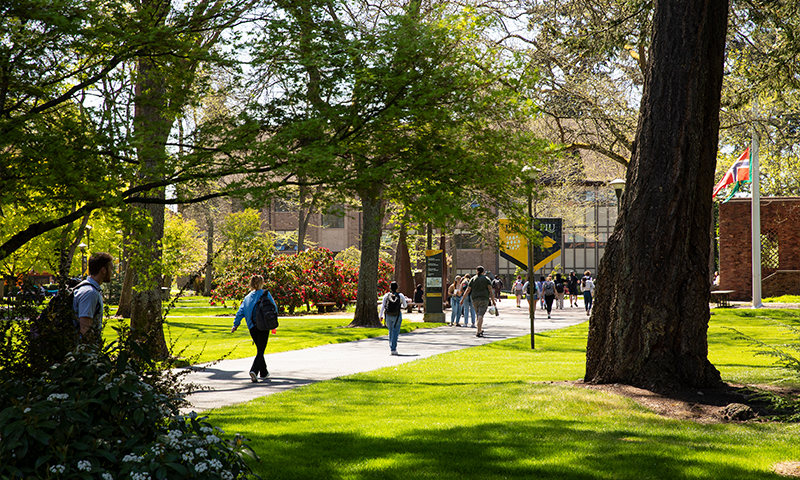
Relationships play an important role in this process. From their very first semester, students in the School of Business have opportunities to meet and learn from business leaders. These connections continue throughout their studies, often leading to mentorship and career opportunities. The school’s alumni community also plays a strong role in supporting new graduates. “The PLU community opens doors for each other, both while they are here and after they graduate,” says Bennett.
The School of Business takes pride in its close-knit community. Faculty and staff know students by name and care about their individual success. No student is ever treated as one of many. The goal is clear: to prepare graduates who are ready to begin a career in any field they choose, with the skills and confidence to lead and the values to make a difference.
For More Info: https://www.plu.edu/