

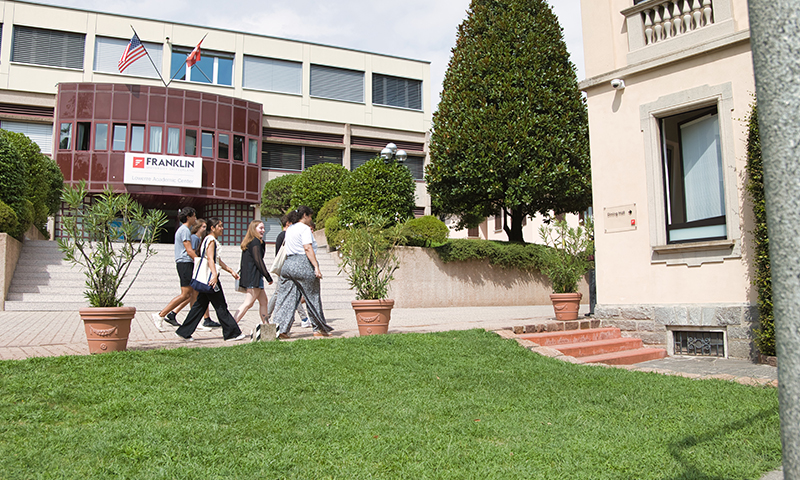
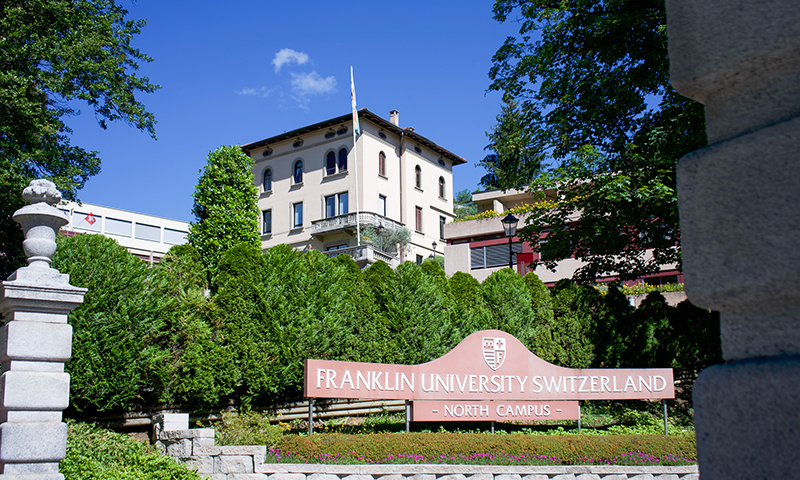
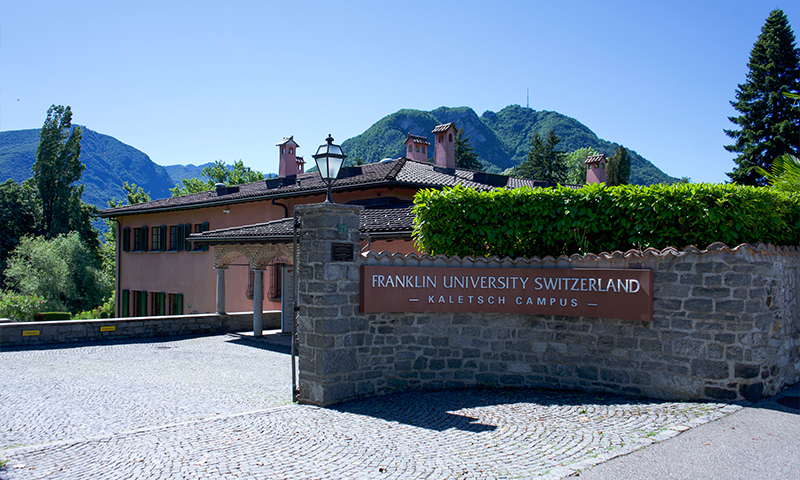
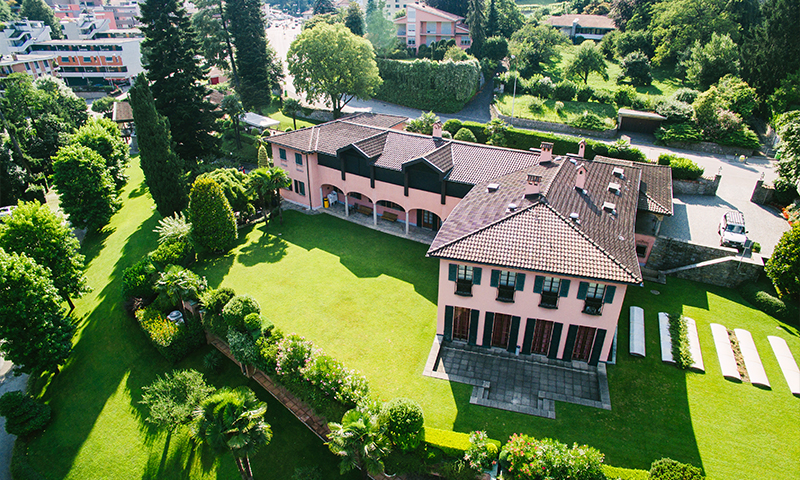
Perched in the quiet elegance of Lugano, where Swiss precision meets Mediterranean warmth, Franklin University Switzerland has long stood as a bridge between worlds. Founded over half a century ago by a group of visionaries who believed education could transcend borders, Franklin has evolved from a small college in a hillside villa to a globally recognized liberal arts university, uniquely accredited in both the United States and Switzerland. Its essence, however, has never changed: learning through connection, curiosity, and cultural understanding.
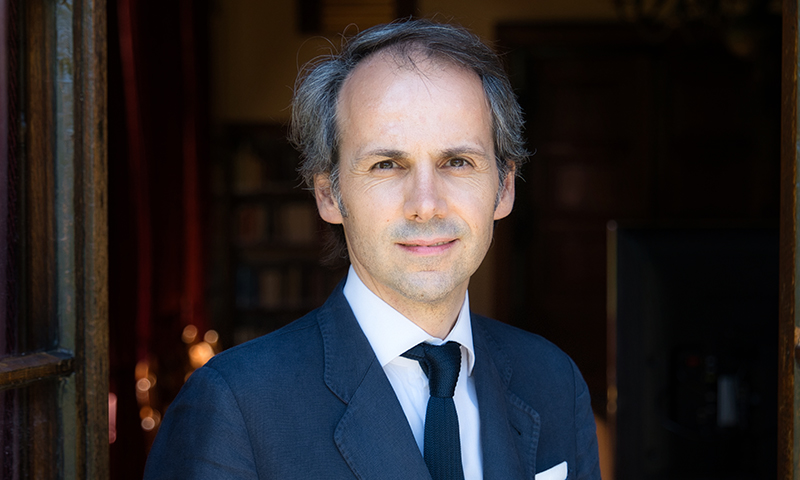
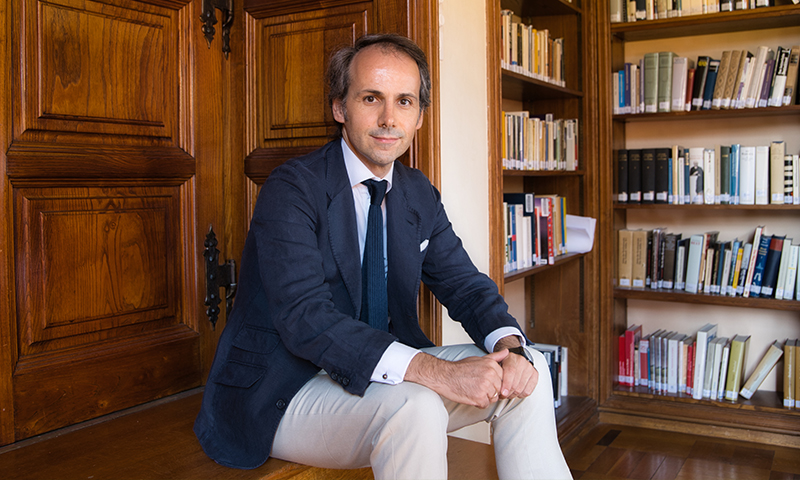
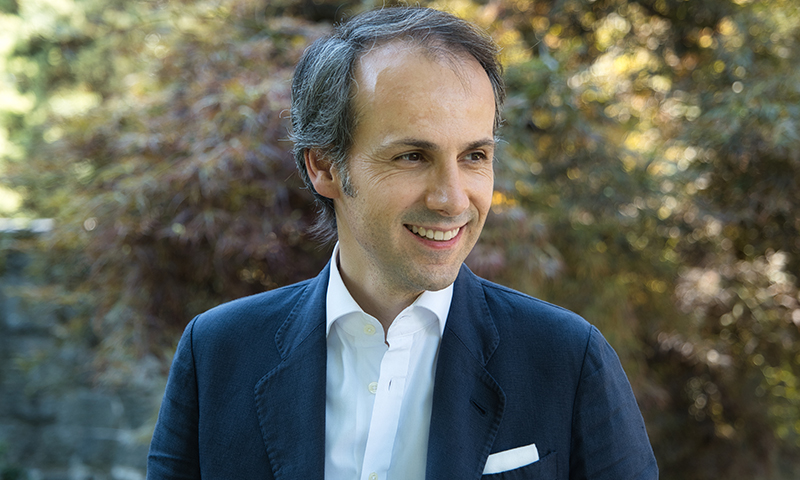
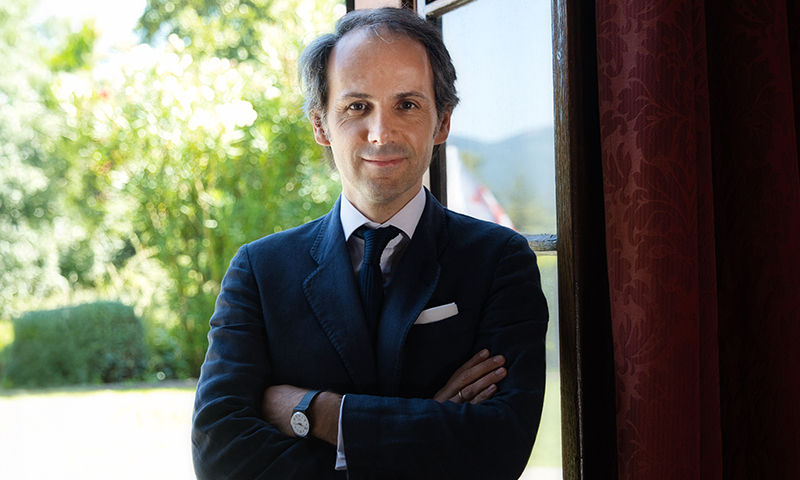
Guiding this enduring mission today is Dr. Samuel Martín-Barbero, a leader whose career embodies the universal spirit that defines Franklin. With leadership roles at the University of Miami, IE University, IE Business School, and UCJC, Dr. Martín-Barbero has built a reputation for leading transformation with empathy and foresight. His philosophy is unmistakably human and international: universities must evolve with compassion, agility, and a clear sense of purpose.
Since taking on the presidency of Franklin University Switzerland in 2022, Dr. Martín-Barbero has infused the institution with fresh energy and strategic clarity. Under his guidance, Franklin has launched Strategic Vision 2030, a forward-looking plan that strengthens Swiss and US accreditation, builds new global alliances, and expands undergraduate and graduate academic offerings in areas such as sustainability and health sciences. His approach combines academic excellence with real-world application, preparing Franklin students to think critically, act responsibly, and engage meaningfully with the world around them.
Dr. Martín-Barbero says, “What drew me to Franklin was its singular identity: an American-style liberal arts institution in the heart of Europe, grounded in the Swiss tradition of intercultural dialogue.” For him, this balance between intellectual rigor and cultural immersion is what makes Franklin truly distinctive. “Few universities in the world so naturally embody both intellectual breadth and geographic centrality,” he explains. “The idea of leading a community where East meets West, where North meets South, where the humanities converse with the life sciences, and where curiosity transcends national boundaries, was profoundly compelling.”
In Dr. Martín-Barbero’s view, Franklin’s educational model, which is intentionally small, inter-connected, and experiential by design, captures the essence of what higher education should aspire to in the 21st century. As Franklin University Switzerland moves confidently into its next era, his leadership stands as both a continuation of its founders’ dream and a reimagining for a new age, where learning reaches beyond classrooms, where education inspires action, and where knowledge continues to unite the world.
A Community that Thinks, Feels, and Grows Together
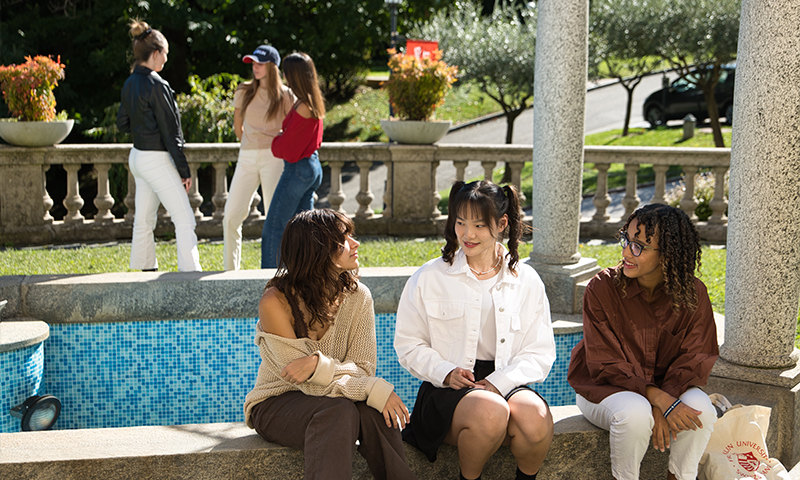
At Franklin University Switzerland, cultures, languages, and ideas come together naturally. Students from around the world share classrooms, meals, and experiences. Diversity here is not a rule but a way of life. “Franklin’s personality is truly cosmopolitan, plural, and deeply empathetic. We bring together students from nearly sixty countries who think differently, express themselves differently, worship differently, and dream differently, yet coexist with natural inclusivity and belonging,” says Dr. Martín-Barbero.
The university’s character has been shaped over 55 years by people who believed in dialogue over division, curiosity over judgment, and freedom balanced by responsibility. That blend of intellectual freedom and emotional intelligence is what Dr. Martín-Barbero noticed most in his first year as president. “From my first days on campus, I was struck by the genuine care people extend to one another; students to faculty, faculty to staff, and staff to students. There is a true passion and loyalty all constituencies demonstrate for Franklin,” he recalls.
That sense of belonging is not a coincidence. It’s the invisible thread running through the institution that links academic quality to the joy of learning. Every student, staff, and faculty member feels part of something larger than themselves. “Everyone feels part of something meaningful. That sense of shared purpose and respect for others has been, to me, the defining characteristic of Franklin, and has inspired me in my leadership role at the University,” says Dr. Martín-Barbero.
When he took on the role of President, Dr. Martín-Barbero knew his first stages at Franklin needed to begin with listening. Instead of arriving with a pre-conceived vision, he spent his first month’s meeting with the people who make Franklin what it is. “Before offering any analysis or vision, I wanted to hear every voice: trustees, faculty, staff, students, alumni, and partners,” he explains. Over the course of that period, he conducted more than a hundred one-to-one conversations, immersing himself in the daily pulse of campus life.
What emerged from that exercise was Strategic Vision 2030, a blueprint shaped not from the top down but from within the community itself. The plan defines seven institutional pillars: from Academic Excellence and Experiential Learning to Sustainability, a growing Global Footprint, and what he calls the Franklin Voice. “The process was inclusive by design, ensuring that the vision reflected not only the President’s agenda but the collective ambition of the Franklin community,” states Dr. Martín-Barbero.
Learning That Lives Beyond the Classroom: the Academic Travel
At Franklin University Switzerland, education feels deeply personal. The university’s small scale is it’s defining experiential learning strength. With an exceptional faculty-to-student ratio of 1:10, Franklin turns closeness into opportunity. Professors understand their students’ ambitions, challenges, and growth, and that connection extends far beyond the classroom. Dr. Martín-Barbero says, “Students are not anonymous participants; they are co-authors of their education.”
Dr. Martín-Barbero often emphasizes Franklin’s educational value by what also happens outside of class, where learning occurs in hallways or over coffee, and when research is applied during field experiences, as significant as the ones conducted during academic travels. The result is a learning environment where confidence grow side by side, and where students accomplish one of the most important lessons in life: that their voice matters.
Nowhere is Franklin’s identity more palpable than in its deep commitment to environmental and social responsibility, which shapes both academic and community life. The student-founded Green Office, a collaborative initiative between students and staff, has become a vibrant example of this ethos in action. It integrates sustainability and civic engagement into daily routines, whether through eco-conscious campus projects, awareness campaigns, or local partnerships.
“Our devotion to sustainability and transformation runs through everything we do. It’s in our institutional mission adaptation to the current competitive landscape, our business and managerial decisions, and our student-led initiatives like the Green Office,” explains Dr. Martín-Barbero. The message is clear: at Franklin, leadership is learned by doing, and values are practiced, not preached.
Another defining experience is Franklin’s Academic Travel program, a cornerstone of its liberal arts identity. Each semester, students study a subject on location, such as art in Florence, politics in Brussels, economy in Frankfurt, diversity in Paris, solidarity in Madagascar, design in Singapore or sustainability in Iceland. “The program embodies the integration of learning and living. It’s where theory becomes practice, and where students begin to see the world not as distant geography, but as their classroom,” says Dr. Martín-Barbero.
This seamless connection between knowledge and experience is what keeps Franklin relevant in a fast-changing world. As universities across the globe race to expand or specialize, Franklin continues to focus on its core purpose: educating students broadly, critically, and ethically. Dr. Martín-Barbero says, “We are laying a foundation for students to be empowered to adapt and lead globally. They will go on to thrive in diverse economies and societies that are constantly evolving.”
Recent academic developments at Franklin reflect this balance between tradition and innovation. Interdisciplinary programs such as the Master of Arts in Sustainability and Transformation and the Bachelor of Science in Health Sciences address emerging global needs. Each initiative reinforces Franklin’s ability to look forward without losing its liberal arts compass.
Yet perhaps the most important change since Dr. Martín-Barbero’s arrival is not found in programs or policies, but in mindset. “The most meaningful transformation has been our collective awakening to context. We now recognize that Franklin operates within a highly volatile and rapidly changing higher education ecosystem,” he highlights.
That awareness has sparked a wave of collaboration across departments. The Academic Faculty unity and administrative teams now work together more closely than ever, supported by a data-informed approach to decision-making and a new Growth & Engagement Division that acts as an enabler and detector of opportunities. What has emerged is a shared sense of ownership over Franklin’s direction, an understanding that every member of the community contributes to its evolution.
In many ways, this transformation captures the essence of organizational change: agility, lean, cooperative, and gradually innovative. It is a place where education evolves through connection, and where every idea, conversation, and journey adds to a larger mission; the making of thoughtful, confident, and responsible global citizens.
Building Bridges to a Global Understanding
Franklin University Switzerland has always stood at the crossroads of continents and ideas. Under Dr. Martín-Barbero’s leadership, that crossroads is widening into a network of purposeful partnerships designed to shape the future of global education. Collaboration, he believes, is no longer optional; it is the foundation of progress.
“Franklin’s future will be defined by global partnership, by strategic and tactical collaboration across borders and sectors,” says Dr. Martín-Barbero. His vision is both ambitious and precise. The university is expanding its global network of academic partners across Europe, North America, the Middle East, and Asia to create new mobility pathways and joint programs that connect academic rigor with real-world relevance. Agreements with the University of Miami, Wheaton College, Texas Christian University and the American University in Cairo, among preexisting ones are already opening new doors for students and faculty, and more are on the horizon.
These collaborations extend beyond universities. Franklin is deepening its relationships with international schools, foundations, and NGOs that share its belief in education as a force for transformation. Such partnerships are creating new avenues for internships, research, and applied learning, giving students the chance to engage directly with issues that shape the modern world.
Dr. Martín-Barbero envisions Franklin becoming a hub for cross-cultural citizenship education, a place where academia, diplomacy, and industry meet to address shared challenges. “From sustainability and digital transformation to leadership and ethics, we are building bridges that prepare our students not just to participate in the future, but to shape it,” he explains. This holistic approach begins even before university life. Franklin works with high school students to ensure a smooth transition into higher education, focusing on well-being, belonging, and readiness for global citizenship.
Over the next five years, Franklin’s Strategic Vision 2030 will serve as the roadmap for growth. The goal is to bring each of its seven institutional pillars to full expression (Global Footprint, Franklin Voice, Wellbeing, Community Engagement, Academic Identity, Living and Learning Spaces, and Career Readiness). Academically, that means expanding interdisciplinary programs and embedding experiential learning into every degree. Globally, it involves strengthening partnerships across continents: from North America and the Middle East to Asia and Latin America, creating new opportunities for mobility, research, and collaboration.
Yet, for Dr. Martín-Barbero, growth at Franklin is not measured in size but in depth. “Spiritually, if I may use that word, our goal is to preserve our soul as we grow. Franklin’s full potential lies not in becoming larger, but in becoming deeper in purpose and impact,” he says. It is a sentiment that resonates throughout the campus, where innovation is always guided by the values that have anchored Franklin since its founding.
Several initiatives now in motion capture that evolution. The university is advancing new curricula and co-curricular programs with international partners, alongside an enriched experiential education model that continues to thrive through Academic Travel and Living Labs. These programs embody Franklin’s distinctive approach to education: rigorous, relevant, and rooted in lived experience.
Equally transformative has been the reimagining of Franklin’s brand identity. Now known globally as Franklin Switzerland, the name reflects both its American liberal arts heritage and its European sophistication. “This renewed identity positions us more clearly as the only liberal arts university in Switzerland accredited in both the U.S. and Swiss systems. It’s an extraordinary distinction that few universities in the world can claim,” Dr. Martín-Barbero.
Leading with Purpose and Intentionality
For Dr. Martín-Barbero, leadership in higher education is not defined by authority but by influence, empathy, and the quiet power of example. “The values that guide me in my approach to leadership are inspiration, collegiality, delegation, and respect. Inspiration, because leadership must elevate rather than instruct. Collegiality, because academia flourishes through dialogue, not decree. Delegation, because empowerment is the surest path to excellence. And respect, always respect, because institutions are built on trust,” he explains.
These principles are not abstract ideals at Franklin University Switzerland; they are visible in daily life. The collaborative atmosphere that connects students and faculty mirrors the same ethos that guides its president. In faculty meetings, in administrative discussions, and in student forums, the spirit of dialogue is tangible. “Leadership, to me, is less about authority than about stewardship. It is about leaving the institution stronger, more cohesive, and more forward-looking than when I found it,” he says.
Dr. Martín-Barbero’s leadership also thrives on balance; the ability to honour the past while moving boldly toward the future. He describes this as “the ambidextrous principle,” a way of thinking that values both refinement and reinvention, exploitation and exploration. “Balancing tradition and innovation is an act of intellectual agility. At Franklin, this means refining our academic heritage while embracing new modalities of teaching, research, and engagement,” he adds.
The university’s liberal arts foundation, with its focus on discussion, inquiry, and critical thinking, remains central to its identity. At the same time, Franklin integrates modern tools such as digital learning platforms, data analytics, and immersive experiential modules.
At Franklin, that idea takes tangible form in the way students experience the world. They study sustainability in Bhutan, political science in Brussels, or art history in Florence; learning that knowledge gains meaning only when placed in context. “The future of education belongs to those who can bridge cultures, disciplines, and technologies. At Franklin, our students practice this daily. They learn that understanding the world requires inhabiting it,” Dr. Martín-Barbero.
To him, the purpose of education extends far beyond career preparation. It is a human endeavour that nurtures empathy, discipline, and adaptability. He says, “My advice is simple. Stay curious, stay humble, and never stop learning. Education, at its best, is not a profession but a vocation of service to humanity.”
Small Scale with Big Soul
For Dr. Martín-Barbero, the joy of leading Franklin University Switzerland comes not from grand gestures or distant milestones, but from the everyday moments that reflect the university’s living spirit. “The most fulfilling aspect of leading a university like Franklin is witnessing the immediate, human impact of our work. In a community of our scale, leadership is tangible. You see the effect of your decisions in the enthusiasm of a student presentation, the dedication of a staff member, or the success of a new partnership,” he says.
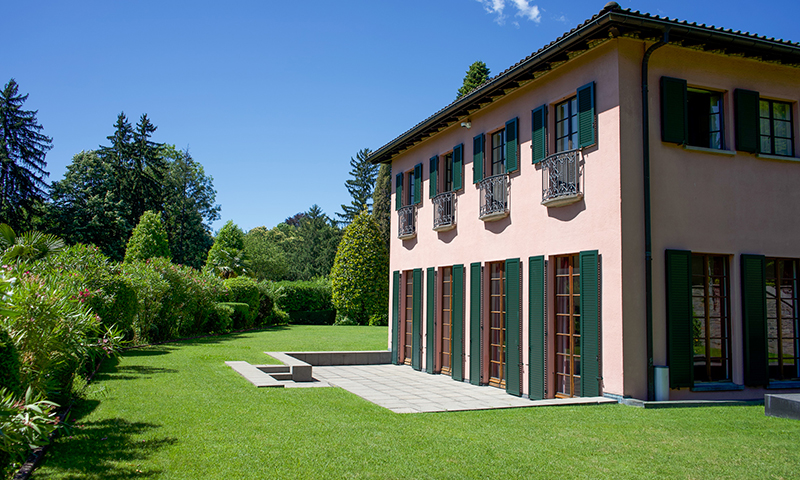
Franklin’s story has always been one of scale with soul. It is small enough to stay personal, yet global enough to make a difference. Every classroom conversation, every research project, every student journey contributes to something larger: a living model of what higher education can be when it keeps humanity at its centre.
“In a time when higher education risks becoming transactional, Franklin offers something rare. An experience that transforms both intellect and character, a safe harbour for liberal arts education,” says Dr. Martín-Barbero. This human-cantered approach has become Franklin’s signature model where learning is relational, inclusive, and globally attuned.
The university’s mission today remains true to the vision that inspired its founding more than 50 years ago: to cultivate the next generation of global citizens. Named after Benjamin Franklin, a figure synonymous with curiosity, innovation, and public service, the institution was created to prepare students for a world defined by change. That mission feels more urgent than ever.
“The world needs graduates who think critically, act ethically, and engage empathetically across differences,” says Dr. Martín-Barbero. Franklin Switzerland continues to embody that purpose as an institution where education is both an intellectual pursuit and a moral one, where the classroom serves as preparation for a life of global contribution. At its heart, Franklin remains what it has always been: a place where education transforms not just minds, but lives.
For More Info: https://www.fus.edu/