

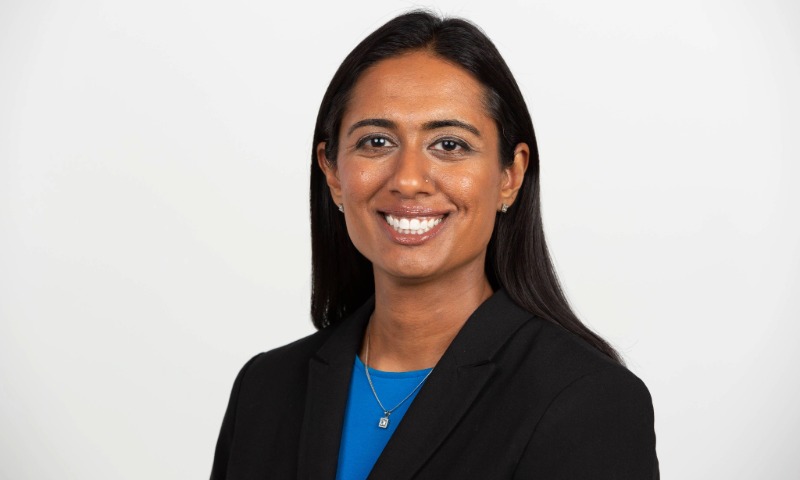
Dr. Aarti Dhupelia is the Chief Executive Officer of One Million Degrees (OMD), a nonprofit that empowers community college students to succeed in school, work, and life. Before joining OMD, Aarti served as Executive Vice Chancellor and Chief Student Experience Officer at City Colleges of Chicago (CCC), where she oversaw student services and success partnerships across all seven colleges and worked to strengthen enrollment and outcomes. She previously served as Vice President for Undergraduate Education and Founding Dean of the Undergraduate College at National Louis University (NLU), where she led the rapid scaling of innovative efforts to drive equity in bachelor’s degree attainment and employment.
Recently, in an exclusive interview with Higher Education Digest, Aarti shared insights into her career in education, One Million Degrees’ mission, and the challenges facing education leaders today. She also shared her role models, favorite quote, future plans, pearls of wisdom, and much more.
Hi Aarti. What motivated you to pursue a career in education, and how have your passions evolved over time?
My motivation to pursue a career in education is deeply personal and professional.
Personally, I’m the daughter of South Asian Indian immigrants who came to the U.S. from Uganda over 50 years ago, and they have the classic immigrant story of arriving with one suitcase and $50 in their pockets – AND their education – which set them up for successful careers and economic prosperity. So they always told me that people can take anything from me – houses, cars, money, even people – but that once I was educated, education is the one thing no one can take away from me. So that initially lit the fire of the importance of education in me.
I got excited about education as a career during college while tutoring and teaching students from under-resourced communities, and seeing how different their public education was from mine and I built a passion for wanting to bridge that opportunity gap.
As for my passion for community colleges specifically, personally I always remember my mom enrolling at our local community college to help her re-enter the workforce back in the 1980s, and it made a huge difference for our family at that time. Professionally, as I have spent more time working in higher education over the past decade and have observed the lack of affordability, accessibility, and professional focus of so many four-year institutions, I have concluded that community colleges are too often overlooked and underestimated as viable paths to economic mobility. In a moment where people are demanding ROI from college more than ever, I genuinely believe we can transform millions more students’ lives through stronger outcomes in community colleges nationwide.
What sets One Million Degrees from other organizations working in the college success space?
I chose to join OMD because the mission aligns perfectly with what I care most about as an education leader.
First, I’m a huge believer in the power of community colleges as the largest-scale opportunity in higher education to drive equity in education and workforce outcomes, and OMD stands apart from most other organizations in this space through its focus on partnering with community college systems.
Second, OMD is unique in that its approach to student support is holistic: it delivers a comprehensive, research-backed model that integrates personal coaching, financial support, and career readiness into one comprehensive approach.
Third, OMD works in trusted partnerships to get the work done, knowing that one organization can’t do it all alone – partnering with higher education institutions and employers to meet student and employer needs – and I believe this collective effort creates more opportunities for students and more talent pipelines for employers than any one organization would achieve on its own.
And most importantly, what truly makes it powerful is that it works; randomized control trials have shown measurable gains in graduation outcomes. I’ve been fortunate enough to see this impact at scale in my previous role at City Colleges of Chicago, and prior to that when I was at National Louis University, I vividly recall meeting a soon-to-be graduate who told me OMD was the reason he had made it through college. And now, I’m focused on continuing that success.
What do you believe are the most pressing challenges facing education leaders today, and how can we address them?
Our work at One Million Degrees offers a unique window into the student journey—from enrollment through completion and into transfer or employment outcomes.
Student well-being is at an inflection point. Across the country, colleges are contending with growing mental health challenges and basic needs insecurity that pose real barriers to persistence and completion for students. Forward-thinking higher education institutions, like City Colleges of Chicago and the University of Illinois System, are leading the way—expanding campus mental health infrastructure and forging innovative partnerships with food banks and local organizations to combat student hunger and ensure stability. These efforts underscore a simple truth: academic success cannot exist without basic needs security.
At the same time, questions of affordability and return on investment are intensifying. College costs continue to rise, even as public confidence in higher education declines. Students and families are asking a fair question: “Will this pay off?” Community colleges are at the heart of the answer—offering high-value, career-connected pathways that serve as engines of economic mobility. Supporting students today requires more than ensuring they earn a credential; it means providing a launchpad to lifelong opportunity. The OMD model bridges education, employers, and community partners to equip learners with the skills, confidence, and networks they need to thrive in the modern workforce.
Finally, we cannot ignore the lingering academic and enrollment gaps left in the wake of the COVID pandemic. K–12 systems are working hard to help students recover lost learning, but higher education must act with equal urgency to meet those same students as they enter or return to college. The learning disruptions of the pandemic didn’t end at high school graduation and continue to shape students’ confidence, preparedness, and persistence in college.
What role do you see technology playing in advancing equity in education, and how have you leveraged it in your work?
Technology, used thoughtfully, can be a remarkable equalizer. It helps us to see students more clearly — to anticipate more quickly when they need help, to connect them with resources faster, and to expand access to the kinds of career tools that open doors to opportunity. But technology isn’t a substitute for human connection. Instead, we need to think about it as a tool to help make that connection more impactful. When used with intention, it helps us build systems that are not only more efficient, but more humane — ones that recognize the complexity of students’ lives and help us to better meet them where they are.
How do you stay current with emerging trends and innovations in education?
I stay current by reading every day, and by engaging with and listening to students (in fact, I’m starting my next year of coaching OMD students later this month), and by listening to students, staff, employers, supporters, and peers across sectors. I try to stay active in local and national professional networks I’ve been a part of. Trends matter, yes, but real innovation happens when you combine research with the lived experience of the people you serve.
What do you believe are the key characteristics of a successful education leader?
I think there are a number of key characteristics that successful leaders in education have:
- Has a clear Why and Vision – does the work with authentic commitment to positively impacting students and communities, and has a clear vision of a day when all students have equitable access to opportunities and are empowered to achieve their personal and professional goals.
- Leads with heart (care), head (think), and hand (do) – centers people and their humanity and dignity, and pays attention to thoughtful strategy and disciplined execution alongside ensuring accountability for results.
- Believes in the power of collaboration – this work is complex and we must come together and partner within and across organizations to make meaningful progress.
- Operates with transparency – recognizes that not everyone will agree with them but takes the time to listen to input, to explain the Why of major decisions, and to move forward thoughtfully and openly with a willingness to adjust along the way as needed. This builds trust across the team and with external stakeholders.
Have you had any mentors or role models who have influenced your career path?
Yes, absolutely! I’m obsessed with the topic of leadership and believe it’s something all of us can always get better at. I am constantly observing and learning from other leaders to see what aspects of how they lead are tools I want to try to add to my leadership toolbox. And I’ve been extremely fortunate over the years to have many role models be supportive bosses and mentors along my path.
For example, Greg Darnieder, former leader at the US Department of Education and Chicago Public Schools, is someone I’d consider one of the founders of the postsecondary access and success movement in K-12 education, and when I worked for him he instilled in me the importance of data-informed practice as a foundation of driving transformational and sustainable improvements in student outcomes – and it shows when you look at gains in Chicago and nationwide on measures like FAFSA completion and college enrollment.
Former Secretary of Education and former CEO of CPS Arne Duncan taught me something during my first week at CPS which I still remember, which is that while there are often contextual guardrails we must respect and operate within, we should also be courageous and open-minded to think about, if we were designing a solution from scratch with a blank sheet of paper and without guardrails, what would we do? This might lead us to think more outside the box and not be too bound by the current state. Then we can consider those ideas alongside the current state context to build robust solutions for the students we serve.
President Nivine Megahed at National Louis University is one of the most innovative leaders I have ever met. She taught me to be more comfortable sitting in the messy, to recognize that success is built on a mountain of failures, and to not wait for things to be perfect before trying because we can also learn and adjust to better achieve our mission.
Chancellor Juan Salgado at City Colleges of Chicago authentically centers caring for humans and communities as the core of what our work is all about. He models treating everyone the way he and every one of us would want to be treated – with care, respect, and empowerment.
What is your favorite quote?
Tim Quinn was an educator in K-12 and higher education, and he spent many years training rising school system superintendents and other senior education leaders. I heard him speak just as I was entering my education leadership career in 2007, and I wrote down something he said then, which remains my favorite quote today: “Your calling is when great passion and your great gifts intersect with your perception of the greatest needs in the world.” It’s a remarkable statement to help people reflect on their Why, and are they spending their time doing the things they feel in their heart they should be doing. And it has helped me stay consistently motivated to persist through challenges because I believe that the work I do is needed in the world and that I bring strengths to advance the mission.
What are your long-term career aspirations, and how do you see yourself evolving as a leader over the next five years?
My aspirations are less about me and more about community impact. I’d like to see One Million Degrees become the best community college student success partner nationwide, accelerating thousands of students on pathways to economic mobility. As a result of our collaborations with community colleges, I envision a future where we dramatically drive up community college student completion, transfer, and employment outcomes across the nation. This will come from scaling our program model with more college partners, continuing to innovate and strengthen our program in areas such as career-connected learning, transfer advising, and data-informed and technology-enabled practice, and solidifying ourselves as an employer partner of choice in Chicago and beyond. I want to help scale models that work and influence how our country supports community college learners to realize their personal and professional purpose and achieve economic mobility.
What advice would you give to aspiring education leaders looking to drive transformational changes?
My advice for aspiring education leaders is mult-faceted:
- Start with clarity on your “why.” If you know why this work is important to you and what impact you’re trying to achieve, it will help you focus your solutions on the ultimate objective, and it will help you get through the inevitable challenging moments you’ll face.
- Ask students what they think as you design solutions. They are the people we are working for, in service of, so their perspective should be at the center. As leaders, we sometimes over-think and over-complicate solutions, when a simple “What do you think?” conversation with a student or group of students can guide us.
- Lead with data. You move what you measure, so be careful to measure the few things that really matter, then build the systems to measure them regularly, then build the structures to support teams to take action on what the data is telling them and to learn and share with each other what’s working. You’re setting a common bar for success then empowering educators to personalize their solutions based on the needs of their local students/communities. And once you leave, these systems and structures of measurement will exist even as local strategies to achieve desired outcomes may evolve – it is a sustainable model.
- If you want to go fast, go alone, but if you want to go far, go together. Recognize that education work is complex, and no single person or organization has all the solutions – if anyone did, we wouldn’t see the low attainment levels and large equity gaps we see nationwide. Prioritize building a great team, and lean into interdependence with partners who share your vision and values and who bring complementary strengths – together you can accelerate your impact.
- Don’t wait for perfect conditions to act. Transformation takes courage, consistency, commitment to continuous learning, and the belief that change is possible when people come together around a shared mission.