



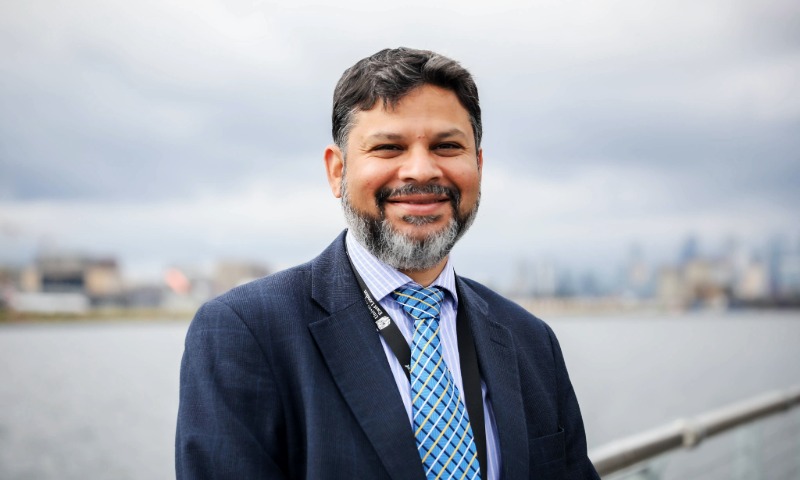
Professor Mohammad Ali serves as Vice Chair, Board Member, Pro Vice-Chancellor, and Dean at Anglia Ruskin University, bringing over 25 years of experience across higher education, automotive, business, law, and governance sectors. A seasoned leader, he is recognised for his strategic oversight, governance expertise, and consistent success in driving institutional growth and transformation. In his executive and board roles, Professor Ali has been instrumental in shaping policies, strengthening governance frameworks, and fostering collaborations between academia, industry, and government. His work reflects a deep understanding of corporate governance, strategic planning, risk management, and stakeholder engagement. He holds a PhD in Business Forecasting, a Master’s in Business Performance Management, a Bachelor’s in Mechanical Engineering, and an Executive Certificate in Management and Leadership.
In this insightful conversation with Higher Education Digest, Professor Ali talks about his transformative journey from the automotive industry to academia, and the lessons learned along the way. He discusses the evolving identity of universities, the growing integration of AI and digital learning, and the importance of designing education that bridges theory with practice. Professor Ali also shares his leadership philosophy rooted in coaching, collaboration, and continuous learning. Below are the excerpts of the interview.
You’ve bridged industry and academia, and risen to senior leadership roles. Could you reflect on three pivotal moments or decisions that shaped your career path?
Reflecting on my path, it feels less like a straight line and more like a series of connected leaps of faith. If I had to trace the route, three moments stand out as true turning points.
The first was the decision to trade my hard hat for a student backpack. I was a Supply Chain Manager in the automotive sector, comfortable in the hum of the factory floor. When the chance for a full-time Masters came up, it felt like a moment of rebellion against the routine. But stepping back into the classroom with real-world experience in my pocket was transformative. I fell in love with that environment so deeply that when a bursary for a PhD in Business Forecasting was offered, I embraced it. That decision—to leave a stable career for doctoral research—fundamentally rewired my identity. It also planted the seed that I didn’t want that relationship with universities to end when my PhD did.
The second pivotal moment came not long after I stepped into my first major leadership role as the Head of the Department. I remember sitting in my new office, surrounded by strategic plans and budget reports, and having a sudden, clear realisation: my impact was no longer just about my own research or teaching. I was no longer just an academic in an ivory tower; I felt like an architect of experience for thousands of students – suddenly my work had a clearer heartbeat. That shift in perspective became my compass. It ignited a passion to move beyond theory and build tangible, lasting value – to create learning experiences that were not just educational, but truly transformative for every student who walked through our doors.
The third defining leap was a more personal transformation towards a coaching-oriented leadership philosophy. After completing my executive coaching certification, I initially saw it as just another tool for the toolkit. But the real transformation began when I started practicing “coaching with a small ‘c'”—not as a formal process, but as my daily ethos. I made a deliberate choice to lead by asking questions, and this is where I learnt the value of unlocking potential and capability. It changed my entire understanding of impact. My role as a leader was to create the space and conditions for others to grow, innovate, excel, and to make a difference one conversation at a time. It was perhaps the most humbling and rewarding pivot of all.
Looking back, the common thread isn’t a specific skill or title. It was the willingness to repeatedly step away from comfort and trusting that the stretch would be worth it – and each time it was. If there’s a through-line to my story, it’s this: stay curious, be willing to be uncomfortable, and use whatever platform you have to build practical, lasting value for students and society. Together, they’ve charted the course of this wonderfully unexpected journey.
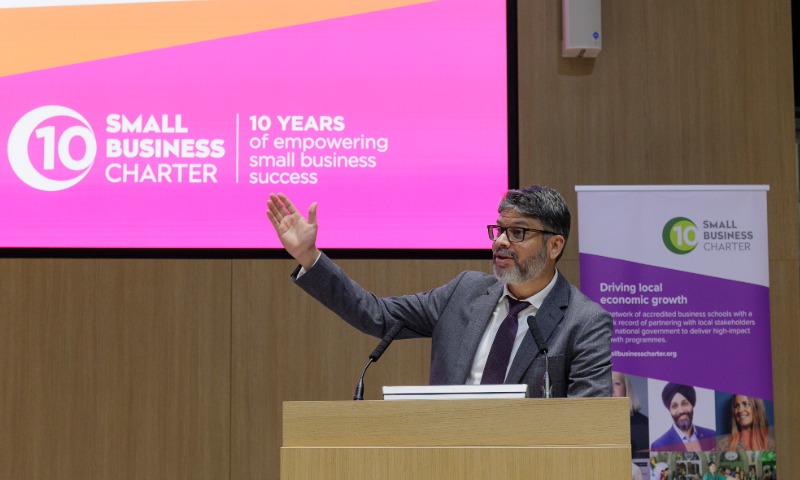
From your vantage point in UK and global business schools, what are the most urgent challenges universities face today, especially in bridging academic relevance and industry demand?
The most urgent challenge for universities is a fundamental identity crisis. We’re operating in a world that’s changing at lightning speed, while our structures often move at the pace of a glacier. Bridging academic relevance and industry demand isn’t just a nice-to-have anymore; it’s a question of survival and purpose.
I see this play out in a few critical areas:
First, we’re grappling with the very nature of knowledge itself. I was once speaking with a brilliant lecturer, and I asked how they were embedding AI into their course. Their answer was both funny and profound: “I’m asking AI to teach me how to teach AI to my students.” That moment perfectly captures the shift. Knowledge is no longer a scarce resource we guard in libraries; it’s a ubiquitous current flowing all around us. Our role is transforming from being the “sage on the stage” to understanding that the value-add is facilitation: guiding critical thinking, ethical judgement, and applied problem solving. We must now teach students how to navigate, critique, and apply this flood of information—to turn data into wisdom and tools into capability.
This leads directly to the second challenge: the agility of our curriculum. Too many programs are like detailed maps for landscapes that have already eroded. We’re often sending graduates into the world with a “skills gap” because the traditional, multi-year curriculum cycle can’t keep up with the real-time evolution of business and technology. The solution isn’t just to “update courses”; it’s to co-create them. This means building a permanent seat at the table for industry partners—not just on advisory boards that meet twice a year, but in the ongoing design of projects, micro-credentials, and learning modules that reflect what’s happening on the ground right now.
Finally, to make this co-creation work, we must tackle the incentive structures that hold us back. There’s a recurring friction. For companies, the question is always, “What’s the ROI on my time collaborating with a university?” For our faculty, the question is too often, “Will this industry engagement count toward my research output?” We’ve built a system where true partnership can feel like an extra burden for both sides. We need to become more nimble and redefine what “impact” means. It’s not just a publication in a prestigious journal; it’s a research insight that becomes a new policy, a product, or a teaching case that shapes the next generation of leaders. We must champion and reward this translation of knowledge.
In short, the universities that will thrive are those that become more porous and collaborative. They’ll see their campuses not as ivory towers, but as dynamic hubs where students, researchers, and industry practitioners converge to co-create value. My experience has shown me that this isn’t a simple fix, but a necessary cultural shift—one that requires us to be constant learners, just like the students we serve.
How are AI, data analytics, and digital learning technologies influencing how you design programmes, assessments, and teaching in your faculty? What’s changed and what’s still aspirational?
You know, it’s fascinating. AI and data analytics have moved from being shiny new toys in the corner to being part of the very plumbing of business schools. They’re not just subjects we teach; they’re becoming the environment in which we teach. This has led to some profound shifts in how we think about our programs.
What’s changed is our design philosophy. We used to ask, “Should we add an AI module?” Now, the question has flipped. In our recent portfolio transformation at Anglia Ruskin University, we’re asking, “How is AI woven into the fabric of this module?” It’s less about a special topic and more about a fundamental tool, like a calculator or a library. We’re designing with AI in mind from the very first sketch.
This shows up in two ways. First, in how we teach. Lecturers might use an AI to role-play a difficult stakeholder in a negotiation class, creating a dynamic scenario that changes based on the student’s inputs. Or they might use a live analytics dashboard to show a marketing cohort how their simulated campaign is performing in real-time. It’s using AI to teach.
Second, and more importantly, it’s in how students learn. We’re now asking them to use generative AI to draft a business plan, then tear that draft apart to find its flaws and biases. This is using AI to learn how to use AI—critically and ethically. The biggest operational challenge, without a doubt, has been getting our faculty comfortable and skilled in this new world. It’s a massive, but essential, training undertaking.
Now, for what still feels aspirational—though I believe it’s just over the horizon. I have a vivid picture of what’s next.
I can see AI agents acting as personal tutors—a digital mentor that knows a student struggled with the concept of ‘break-even analysis’ in week three and can gently reintroduce it in a new context in week eight. This isn’t about replacing us; it’s about giving every student a 24/7 learning partner that scales a lecturer’s attention.
I imagine using Augmented Reality to bring a case study to life. Instead of just reading about an ethical dilemma in a pharmaceutical company, a student could put on AR glasses and literally walk through a virtual factory, spotting safety issues and having to make real-time decisions. It’s about creating visceral, emotional learning that a textbook can never provide.
And through it all, that core value remains non-negotiable: human skills will continue to matter. Our goal is that “bilingual fluency”—ensuring our graduates are just as eloquent in the language of data as they are in the language of people and purpose.
I think often of a project where students used predictive analytics to optimise a hospital’s patient flow. The model was brilliantly efficient. But then we asked the hard questions: How do you explain this algorithm to a frightened family? How do you override its recommendation in a true emergency? The model provided the optimal path, but it was the human in the loop who had to navigate the ethics, the empathy, and the communication. That’s the space we’re preparing them for. The tech handles the computation; our job is to develop their judgment.
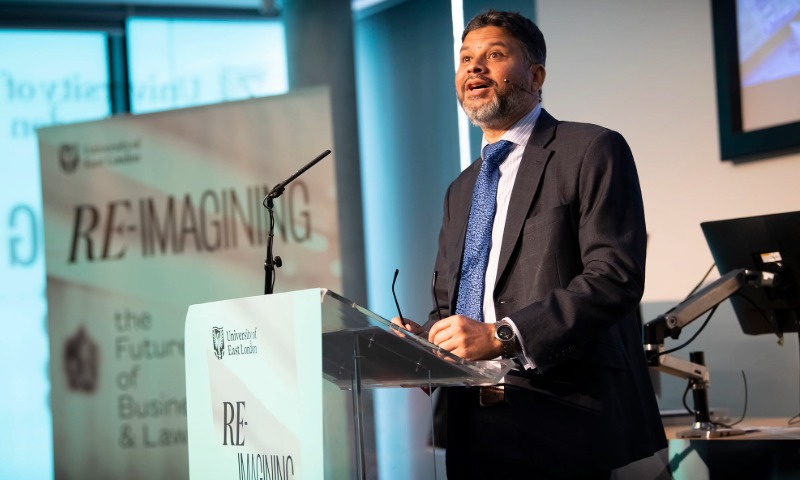
You have led major strategic initiatives. Which initiative are you most proud of, and what leadership lessons did you learn from driving it?
You know, when I look back at the various initiatives, the one that truly stands out isn’t a single project, but a central theme that has defined my approach: the move from designing courses to architecting experiences. I have led on various comprehensive portfolio transformations at various institutions where it is not just a curriculum refresh; but the aim always is to inspire a cultural shift to embed technology, personalisation and a practice-based ethos into our very core. For example, the practice-based centres like the Marketing & Strategy Lab we built with Amazon Web Services at UEL. That lab became the physical heart of our philosophy. I remember the early days—it wasn’t just about securing the funding or the hardware. The real magic happened in those messy, cross-disciplinary meetings with faculty, IT wizards, and industry mentors, all arguing over the best way to build a space where theory met practice.
This same principle of building bridges was critical when I led the industry engagement strategy at Anglia Ruskin. I learned that strategic leadership is less about broadcasting a vision and more about curating a chorus of voices. We actively brought external leaders into our decision-making rooms, not as guests, but as partners. There were moments of friction, of course, where academic tradition met business pragmatism. But by truly listening and adapting, we didn’t just create more relevant programmes; we sparked a genuine culture of innovation. It taught me that influence is often more powerful than authority.
And while these tangible initiatives are what you see on the brochure, the legacy I’m perhaps most proud of is the one you can’t hold: cultivating the leadership teams behind them. In every institution, I’ve focused on assembling and mentoring groups of colleagues who’ve grown to become the organisation’s true competitive advantage. Seeing them flourish and drive change long after I’ve moved on is the ultimate reward.
So, if I were to distill the leadership lessons from this journey, it would be this: shared purpose and adaptability are your compass and your map. Whether you’re building a multi-million-pound lab or redesigning a degree, success hinges on empowering your colleagues, staying flexible in your execution, and never losing sight of the “why”—which is always, ultimately, about creating lasting value for our students and their future.
Outside of your academic and strategic work, what personal values or interests motivate you? How do you balance professional demands with personal renewal or reflection?
That’s a great question, because it gets to the heart of what fuels the work in the first place. To make sure I can lead effectively and be present for those who depend on me, I’ve come to embrace the airplane oxygen mask analogy: you have to secure your own before you can help others. For me, that “oxygen” is faith. It is the foundational layer from which everything else—my values, my resilience, my purpose—draws its breath.
My truest compass comes from moments of quiet prayer and religious reflection. It’s in that solitude, in conversation with the Almighty, that I find the clarity to ask the most important questions: Am I living my principles? Am I the person I am called to be, especially when under pressure? This daily practice of alignment is what centres me. It’s not just about finding answers, but about grounding my ambition in service and humility, reminding me that my work is part of a larger purpose.
This spiritual foundation is what allows me to fully show up for my most important earthly anchor: my family. I have a lovely, incredibly supportive wife, and our partnership is a blessing I cherish. She’s the person who tells me both what I need to hear and what I want to hear. And with my two children, my main hobby is essentially whatever their “flavour of the week” is! Whether it’s a new video game, a sport, or a bizarre craft project, diving into their world is the ultimate reality check and a guaranteed source of joy. It forcibly pulls me out of the strategic clouds and grounds me in what’s real and immediate.
When I do get a sliver of “me-time,” you’ll likely find me on a good run through the park. There’s something about the rhythm of running that creates the headspace I need to process everything. And yes, I’ll confess the academic in me never truly clocks out—I’m always either buying / downloading a book or in the middle of a book, which feels less like work and more like a conversation with another mind.
This sense of connection, rooted in my faith, naturally extends beyond my front door. My involvement in the charity sector—from food banks to refugee settlement—isn’t an add-on; it’s an act of faith in action. It’s a practical expression of my beliefs and a powerful reminder of our responsibility to the wider community, which constantly keeps my own professional challenges in a healthy perspective.
Sustainable leadership, I believe, starts with a sustainable leader whose strength is drawn from a deep, personal well. By protecting that time for spiritual and personal connection, I can return to my professional life not just refuelled, but realigned and recentred.
For students or early-career professionals eyeing careers at the intersection of business, technology, and academia, what three pieces of advice would you offer them today?
That’s a great question, and it takes me right back to my own crossroads. For anyone starting out at this exciting intersection, the path isn’t a straight ladder—it’s more like building a portfolio of experiences. If I had to distil it down, my advice would centre on three things: mindset, method, and meaning.
First, trade in the idea of a ‘job for life’ for the mindset of a ‘portfolio careerist.’ The roles you’ll have in five years probably don’t even exist today. So, become a relentless, curious learner. This isn’t just about formal qualifications; it’s about constant, intentional upskilling. Follow your curiosity down rabbit holes, whether that’s a online course on a new coding language, a podcast on behavioural economics, or a book on AI ethics. Your career security won’t come from a title, but from your ever-evolving and unique combination of skills.
Second, get your hands dirty. Theory without practice is just a rumour. Don’t just learn about supply chain analytics—find an internship where you can help a local business optimise its inventory. Don’t just study marketing funnels; use low-code tools to build one for a real product. I’ll never forget a student who used a class project on predictive modelling to help a local charity forecast donation patterns. That hands-on experience didn’t just look good on a resume; it taught her how to translate complex data into a human story, which is where the real magic happens. Seek out problems, not just positions.
Finally, and this is the one that truly separates great careers from good ones: never underestimate the power of human connection. In a world obsessed with AI and algorithms, your most durable skill will be your ability to communicate, collaborate, and lead. I’ve seen brilliant technologists struggle because they couldn’t explain their idea to a non-technical CEO, and I’ve seen empathetic leaders accelerate projects because they knew how to build trust. Work on your storytelling. Practice giving and receiving feedback gracefully. Becoming ‘bilingual’—fluent in both the language of technology and the language of people—is your ultimate career multiplier.
Your journey will be defined less by a single grand plan and more by how you respond to key moments—a failed project, a new industry shift, a chance conversation. Stay curious, be proactive in seeking challenges, and always remember that your technical expertise opens the door, but your human skills decide how far you go.
Looking ahead 10 years: how do you envision the role of business schools evolving? What will define success for institutions, faculty, and graduates in that future?
Looking ahead a decade, I see a business school that has successfully shed its skin as an ivory tower to become something far more vital: a dynamic nerve centre for the economy and society. I’m fundamentally optimistic because our core mission—to develop talent and create knowledge that solves problems—is more critical than ever. But the institutions that thrive will be those that undergo a profound identity shift, from being standalone educators to being the central node in a vibrant, integrated ecosystem.
Imagine a campus where the boundary between the lecture hall and the boardroom is virtually erased. Academic rigour remains our bedrock, but it now wears a practical hat. Here, a professor’s research on sustainable supply chains isn’t just published in a journal; it’s simultaneously tested and refined with a consortium of corporate partners, and those live findings directly shape a student’s project the very next week. This isn’t just “industry engagement”; it’s a continuous loop of co-creation where businesses and scholars learn with each other, not just from each other.
To reach this future, however, we must first be honest about the two formidable challenges holding us back. First, the UK’s financial model for higher education is structurally broken. The fee cap amidst soaring inflation has created a survival mindset, forcing institutions to focus on efficiency savings when we should be making bold investments for the future. Second, we have a critical perception problem. We’ve become a political pawn and have been too passive in telling our own story. We can no longer assume society understands our value; we must proactively and powerfully demonstrate it.
To navigate this, we must adopt a long-term, expansionary mindset. This means being brutally honest about our challenges—asking if our cost base is growing faster than our revenue streams—while also boldly investing in our people and our future. We can learn from global counterparts: from the philanthropic fundraising models in the USA to the deep industry integration and investment model in Australia, to long term planning in Singapore where they plan with a 70-year horizon, not just a political cycle.
So, what will define success in 2035?
For Institutions: Success will be impact and agility. It will be measured by how our research solves real-world problems, how quickly we can update programs for the AI-driven economy, and how we contribute to societal goals. It means having the courage to lead on issues like academic freedom and EDI, and creating a culture of psychological safety where our greatest asset—our people—can thrive, innovate, and even fail forward.
For Faculty: The role will evolve from a pure lecturer to a facilitator and ecosystem-builder. Success will be their ability to blend rigorous scholarship with practical impact, to teach students not just what to think, but how to learn, adapt, and lead with ethics in a world of constant change.
For Graduates: They will be successful if they possess the earlier-mentioned “bilingual fluency”—the ability to speak the language of data and technology as eloquently as the language of people, purpose, and ethical leadership.
Ultimately, the future is not something that happens to us. It’s something we build. It requires moving from endless conversations to a disciplined cycle of Dialogue, Decision, and Delivery. If we can do that—if we can rebuild our financial models, reclaim our narrative with pride, and focus on our core purpose of educating for a better world—then business schools won’t just survive; we will become the true vanguards of progress we are meant to be.