



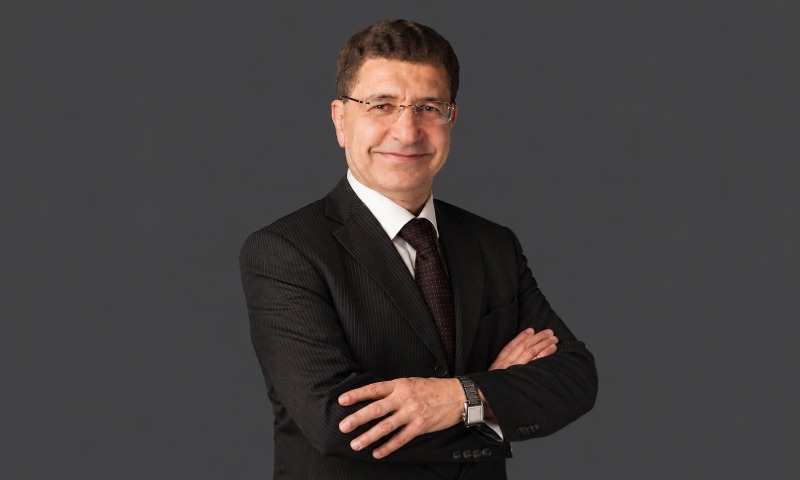
Professor Hassan Abdalla is the Provost and Vice-President at the University of East London and a globally recognized higher education leader with expertise spanning academia, research, industry partnerships, and innovation-led transformation. His work focuses on smart and sustainable cities, immersive learning environments, green technologies, AI-enabled education, and research innovation. He has led major European projects worth several million euros, published over 200 internationally refereed publications, and serves on several international advisory boards, government, Journals, winners of several international awards. He worked with the executive team and university community to achieve national recognition for teaching quality, student success, social impact, and global partnerships driving economic growth and sustainable development.
Recently, in an exclusive interview with Higher Education Digest, Prof Abdalla shared insights into how his career began with a frustration that brilliant research stayed trapped in journals while industry and communities faced real problems. That disconnect drove him to bridge academia, industry, and government, turning universities into engines of economic growth and social mobility. As Provost & Vice-President at University of East London, he now leads major projects in smart cities, green tech, and AI-enabled immersive learning. On AI, he believes by 2030 data-heavy tasks like literature reviews and simulations will be AI-assisted, but curiosity, ethics, and judgment must stay human. His advice to leaders: build curricula that teach graduates to work with AI using critical thinking and empathy, and design technology that enhances humanity rather than diminishes it. The following excerpts are taken from the interview.
Hi Dr. Abdalla. Your career spans research, academia, industry, and policy. Looking back to your earliest research project, what problem made you realize academia could directly shape industry and society, and what did you do next?
One of the earliest moments that shaped my belief in the power of academia to transform industry and society came during my early research work in engineering and technology-driven innovation. I became increasingly aware that many brilliant research outcomes remained confined to laboratories and academic journals, while industries and communities continued to struggle with very real challenges that those discoveries could help solve.
What struck me most was the disconnect between knowledge creation and practical implementation. I realised that universities should not exist as isolated intellectual spaces; they must become engines of economic growth, social mobility, innovation, and public impact. That understanding fundamentally changed the direction of my career.
From that point onward, I became deeply committed to building bridges between academia, industry, government, and society. I focused not only on research excellence, but also on creating ecosystems where research could translate into tangible outcomes – whether through skills development, innovation partnerships, entrepreneurship, policy influence, or applied technologies that improve lives and address the grand challenges humanity are facing!
This philosophy has shaped every leadership role I have undertaken since. I have worked to expand university-industry collaborations, develop employability-focused education models, immersive learning environment that stimulates creative and critical thinking, support start-ups and social enterprises, and establish international partnerships that widen access to opportunity and innovation. I strongly believe that universities have a responsibility to prepare graduates not just for today’s jobs, but for solving tomorrow’s global challenges.
What inspires me most is seeing how higher education can transform entire communities. When universities align their applied research, professional education, and innovation with societal needs, they become powerful catalysts for national development, economic resilience, and social progress. That is the vision that continues to drive me today.
What do you love the most about your current role?
What I value most about my current role is the opportunity to create meaningful impact at scale – transforming lives through education while helping reimagining the future direction of higher education itself.
As a university leader, I have the privilege of working with talented students, academics, professional staff, industry leaders, politicians, and international partners who are all united by a shared purpose: to make education a force for opportunity, innovation, public values, and social progress. Seeing students from diverse (over 160 nationalities at our university) and often underrepresented backgrounds (over 50% are first generation in their families to go to Higher Education) succeed, gain confidence, and go on to become leaders in their professions is incredibly rewarding.
I also enjoy the strategic dimension of the role – building sustainable growth, driving innovation, developing global partnerships, and creating educational models that respond to the rapidly changing needs of society and the economy. Higher education is undergoing significant transformation, particularly with advances in disruptive technologies, artificial intelligence, and evolving workforce demands. I find it exciting to help position universities not only to adapt to these changes, but to lead them as the powerhouse of innovation.
What motivates me every day is the belief that universities have the power to change individual lives, strengthen communities, and contribute directly to national and global development. Being able to combine academic excellence with real-world impact is what I love most about my role.

AI is reshaping how research is done, from literature review to lab work. What part of the scientific method will be fully AI-assisted by 2030, and what must remain human?
By 2030, I believe many aspects of the scientific process will become significantly AI-assisted, particularly those involving data-intensive and repetitive tasks. AI will transform literature reviews, automate large-scale data analysis, accelerate simulations, optimise experimental design, identify hidden patterns in complex datasets, and even help generate new research hypotheses. In fields such as healthcare, engineering, climate science, and materials research, AI will dramatically reduce the time between discovery and application.
We are already witnessing the early stages of this transformation. In healthcare, for example, AI systems are helping researchers analyse thousands of medical images and patient records to detect diseases such as cancer earlier and more accurately than ever before. During the COVID-19 pandemic, AI-supported research accelerated vaccine development by rapidly modelling virus behaviour and analysing global datasets. In climate science, AI is being used to predict extreme weather events, optimise renewable energy systems, and support sustainable urban planning. In engineering and manufacturing, AI-driven simulations are enabling researchers to test new materials digitally before creating physical prototypes, saving both time and resources.
In my own leadership journey, I have seen firsthand how emerging technologies can bridge the gap between research, education, and real-world societal impact. One example was the development of an advanced simulated healthcare training hub powered by AI, augmented reality (AR), and virtual reality (VR). The vision was to create an immersive learning environment where healthcare professionals and students could practise the latest clinical techniques, emergency responses, and non-invasive treatment procedures in highly realistic scenarios without risk to patients. This approach not only enhanced the quality of training, but also accelerated workforce readiness, supported continuous professional development, and improved patient safety outcomes.
Another example has been developing strategic partnerships with global industry leaders such as the blue-chip company Siemens to accelerate innovation in decarbonisation and green energy solutions. Through these collaborations, universities can combine academic research with industrial expertise to develop practical solutions in renewable energy, smart infrastructure, sustainable engineering, and low-carbon technologies. This demonstrates how AI, advanced analytics, and interdisciplinary research can directly contribute to addressing one of the world’s most urgent challenges: achieving a sustainable and resilient future.
By the end of this decade, AI-assisted research environments and autonomous laboratories may become standard in many disciplines. Imagine a laboratory where robotic systems conduct experiments 24 hours a day, AI analyses the results in real time, and researchers focus their energy on interpretation, innovation, and strategic decision-making. This has the potential to transform not only the speed of research, but also its accessibility and global collaboration.
However, the most important elements of the scientific method must remain deeply human. Curiosity, ethical judgment, creativity, critical thinking, empathy, and the ability to ask meaningful questions cannot be delegated entirely to machines. AI can analyse patterns, but it does not possess human values, social responsibility, or contextual understanding of the broader implications of research.
For example, AI may help identify a highly effective genetic treatment, but humans must decide how that technology is used ethically, who has access to it, and how society protects privacy and fairness. Similarly, AI can generate policy scenarios for climate change, but leaders and researchers must make difficult decisions that balance economics, sustainability, and human wellbeing.
Science is ultimately about improving the human condition. Decisions around research priorities, ethical boundaries, societal impact, sustainability, and public trust require human wisdom and accountability. The role of researchers will therefore evolve – from being primarily processors of information to becoming strategic thinkers, ethical leaders, and interdisciplinary innovators who leverage and work alongside AI rather than compete with it.
The future of research will not be about humans versus AI; it will be about how human intelligence, and artificial intelligence together can solve challenges that neither could address alone. The universities and research institutions that succeed in this new era will be those that combine technological capability with human-centered leadership, creativity, and purpose.
Graduate skills for economic growth is a focus in Westminster debates. What skill will employers demand most from graduates in 2030 that most curricula still ignore today?
One of the most critical capabilities employers will seek in graduates by 2030 is the ability to work confidently and intelligently alongside artificial intelligence and other disruptive technologies, while bringing uniquely human strengths to the table – including critical thinking, creativity, ethical judgment, emotional intelligence, cognitive agility, and sound decision-making.
As automation increasingly takes over routine and predictable tasks, the real value of future graduates will lie not in competing with technology, but in complementing it. The workforce of the next decade will require individuals who can interpret complexity, challenge assumptions, lead with empathy, innovate responsibly, and make decisions that balance technological advancement with human and societal needs. In many ways, the ability to combine technological fluency with deeply human capabilities will become the defining workforce skill of the 2030 economy.
Most curricula today still focus heavily on knowledge acquisition and traditional disciplinary content, but the future economy will increasingly reward graduates who can solve complex real-world problems, adapt quickly to change, interpret data intelligently, collaborate across disciplines, and innovate in uncertain environments. Technical knowledge alone will no longer be enough because AI will automate many routine analytical and administrative tasks.
The graduates who thrive in 2030 will be those who combine digital fluency with distinctly human capabilities – critical thinking, emotional intelligence, communication, leadership, entrepreneurship, ethical reasoning, and cultural adaptability. Employers will look for individuals who can ask the right questions, not simply provide the right answers.
For example, in healthcare, future professionals will work with AI-assisted diagnostics and robotic systems, but patients will still value empathy, trust, communication, and ethical care from human practitioners. In engineering and green energy industries, graduates will need to integrate sustainability, innovation, and systems thinking to solve increasingly complex environmental challenges. In business and public policy, leaders will need the ability to make strategic decisions in rapidly changing technological and geopolitical environments.
This is why universities must rethink the purpose of higher education. We should not only educate students for specific jobs; we must prepare them for lifelong adaptability and continuous reinvention. Curricula must become more interdisciplinary, industry-connected, and focused on experiential learning. Students should graduate having worked on live industry projects, entrepreneurial challenges, digital simulations, and collaborative problem-solving activities that mirror the complexity of the real world.
In my own experience, partnerships between universities and industry have shown how transformative this approach can be. Through collaborations with organisations such as Siemens, we have explored how students can engage directly with decarbonisation, smart technologies, and sustainable innovation challenges. Similarly, AI and simulation-powered healthcare training environments are helping students develop not only technical competence, but also decision-making, resilience, teamwork, and professional confidence in high-pressure scenarios.
I believe the universities that succeed in the coming decade will be those that move beyond traditional teaching models and become engines of innovation, employability, entrepreneurship, and societal transformation. The ultimate goal is not simply producing graduates who can find jobs, but developing graduates who can create solutions, lead change, global citizens, and contribute meaningfully to economic growth and social progress.
Leaders need perspective beyond data. What piece of art, music, or architecture inspires you, and what does it remind you about the human side of technology and progress?
One piece of architecture that deeply inspires me is the great Islamic architectural heritage represented in landmarks such as the Holy Mosque in Mecca, the Alhambra in Spain, and the Sheikh Zayed Grand Mosque in Abu Dhabi. What fascinates me is how these extraordinary spaces combine advanced engineering, mathematical precision, artistic creativity, spirituality, and human-centered design into timeless expressions of civilisation.
The Holy Mosque in Mecca, in particular, represents something profoundly powerful to me. Every year, millions of people from different cultures, languages, and backgrounds gather in one place in a remarkable demonstration of unity, humility, purpose, and human connection. The scale, organisation, and continuous evolution of the site reflect not only architectural and engineering excellence, but also the importance of designing systems and spaces that serve humanity with compassion, inclusivity, and resilience.
When you stand within these spaces, you realise that true progress is not only about technical achievement; it is about creating environments that elevate the human experience. The intricate geometric patterns, the mastery of light and space, and the harmony between art, science, and culture demonstrate that innovation has always been at its best when it serves humanity rather than overshadows it.
This is particularly relevant today as we navigate the age of artificial intelligence and rapid technological disruption. Technology can process information at extraordinary speed, but it cannot replace human meaning, empathy, imagination, ethics, or cultural identity. The lesson these architectural achievements remind us of is that the most enduring advancements are those that combine scientific excellence with human values and purpose.
I often reflect on the fact that many of the world’s greatest periods of innovation – whether during the Islamic Golden Age or the Renaissance – emerged when societies successfully integrated knowledge, creativity, philosophy, and human development. That balance is something we must preserve in the modern era.
As leaders, especially in higher education and innovation, we have a responsibility to ensure that technology enhances humanity rather than diminishes it. AI, data, and digital transformation should ultimately help us build healthier societies, more sustainable economies, greater inclusion, and better opportunities for future generations. Progress without humanity is incomplete.
For me, architecture like this serves as a powerful reminder that the future should not only be smarter – it should also be wiser, more inclusive, and more deeply connected to the human spirit.
If you could host a dinner with three thinkers from any era to discuss knowledge, ethics, and technology, who would you invite, what would you ask them, and what assumption would you want challenged?
If I could host a dinner with three great thinkers from across history to discuss knowledge, ethics, and technology, I would invite Ibn Sina (Avicenna), Leonardo da Vinci, and Alan Turing. Each of them represents a defining moment in humanity’s relationship with knowledge, innovation, and the future.
Ibn Sina would bring the perspective of a philosopher-scientist who believed deeply in the integration of knowledge, ethics, medicine, and human wellbeing. His work reminds us that scientific advancement must always remain connected to moral responsibility and the improvement of society. I would ask him: How do we ensure that rapid technological progress strengthens human dignity rather than weakens it?
Leonardo da Vinci fascinates me because he embodied limitless curiosity and interdisciplinary thinking long before the modern world began speaking about innovation ecosystems. He moved effortlessly between art, engineering, anatomy, architecture, and science, demonstrating that creativity often emerges at the intersection of disciplines. I would ask him: Have modern education systems become too specialised, and are we losing the power of imagination by separating science from creativity and humanity?
Alan Turing would be essential to the conversation because his ideas laid the foundations for artificial intelligence and modern computing. Yet his life also reminds us of the ethical and societal challenges that often accompany transformative innovation. I would ask him: As AI becomes more powerful, how do we ensure that humanity remains in control of the values and decisions that shape civilisation?
The assumption I would most want challenged during that dinner is the modern belief that technological progress alone automatically equals human progress. History shows us that societies advance not simply because they become more technologically sophisticated, but because they apply knowledge wisely, ethically, and inclusively.
I believe the future will belong not to those who develop the most powerful technologies alone, but to those who can combine innovation with wisdom, ethics, empathy, and a deep understanding of humanity. That is the conversation I would hope to have around the table – not only about what we can create, but about what kind of world we want those creations to serve.
What is your biggest goal? Where do you see yourself in 5 years from now?
My biggest goal is to help shape a higher education ecosystem that is globally connected, socially impactful, technologically advanced, and deeply focused on transforming lives through opportunity, innovation, and knowledge. I believe universities have a critical responsibility not only to educate students, but also to drive economic growth, social mobility, sustainability, and solutions to some of the world’s most pressing challenges.
Over the next five years, I see myself continuing to lead transformational change at institutional and international levels – building stronger bridges between academia, industry, government, and society. I am particularly passionate about advancing innovation-driven education, AI-enabled learning, high-impact research ecosystems, global partnerships, and skills development models that prepare graduates for the rapidly evolving future economy.
I also hope to contribute more significantly to international policy discussions around the future of higher education, research, digital transformation, and workforce development. As technologies such as artificial intelligence reshape every sector, universities must evolve from traditional teaching institutions into agile engines of innovation, entrepreneurship, and lifelong learning. I want to play a meaningful role in helping shape that transformation globally.
At a personal level, success for me is not defined only by institutional growth or rankings, but by lasting impact – seeing students from disadvantaged backgrounds succeed, supporting communities through education and innovation, creating opportunities for future generations, and helping build more sustainable and inclusive societies.
Five years from now, I hope to look back knowing that I helped create educational systems and partnerships that did not simply respond to change but actively shaped a better future.
Aspiring researchers often chase “hot topics.” What is your advice for a young academic who wants to build a 25-year career with lasting impact, not just citations?
My advice to young academics is simple: do not build your career around trends alone – build it around purpose, curiosity, and meaningful impact.
“Hot topics” will always change. Research areas that dominate headlines today may become less relevant in five years. However, the researchers who leave a lasting legacy are those who focus on solving important problems that genuinely matter to society. A successful 30-year academic career is not measured only by the number of citations or publications, but by the lives improved, industries transformed, policies influenced, students inspired, and knowledge advanced for future generations.
I would encourage young researchers to ask themselves three questions early in their careers:
What problem am I passionate about solving?
Why does it matter to society?
How can my work create real-world value beyond academia?
The most impactful academics are often those who combine deep expertise with interdisciplinary thinking, resilience, and long-term vision. Some of the greatest breakthroughs happen at the intersection of disciplines – where engineering meets healthcare, AI meets sustainability, or social sciences meet technology and policy.
I also believe young academics should actively engage beyond the university environment. Work with industry, collaborate internationally, contribute to policy discussions, support communities, and understand the practical challenges facing society. Research becomes far more powerful when it is connected to real human needs.
In my own experience, some of the most meaningful initiatives were not necessarily the ones that produced immediate academic recognition, but those that created tangible societal impact – such as developing AI- and simulation-powered healthcare training environments to improve professional practice and patient safety or building partnerships with organisations such as Siemens to accelerate innovation in sustainability, green energy, and decarbonisation. These projects demonstrated how universities can become catalysts for innovation, economic growth, and social transformation.
Another important lesson is to remain adaptable. The future academic leader will need to continuously evolve, learn new technologies, and work across global and cultural boundaries. Artificial intelligence, digital transformation, and emerging technologies will reshape every discipline, but human qualities such as integrity, creativity, empathy, leadership, and ethical judgment will become even more valuable.
Most importantly, never lose sight of why knowledge matters. Research should not only advance careers; it should advance humanity. If you stay focused on creating value for society, maintain intellectual curiosity, and continue learning throughout your journey, the citations and recognition will follow naturally – but the real legacy will be the positive difference you leave behind.