


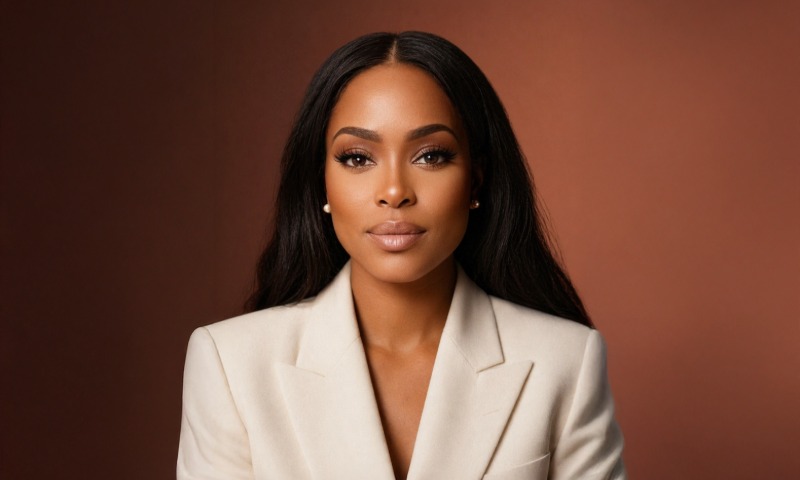
Dr. Yetunde A. Odugbesan-Omede has built her career at the intersection of higher education, global affairs, civic engagement, and policy, not just studying institutions but building them. A pracademic in every sense of the word, she teaches courses in political science and global affairs while consistently bridging the gap between theory and practice. As Director of Community and Civic Engagement at Farmingdale State College (SUNY), she leads institution-wide initiatives that develop the next generation of civic leaders. A four-time author, Guardian Newspaper contributor, and international speaker on governance, leadership, and women’s empowerment, she was named to the Most Influential People of African Descent Top 100 Under 40 in Politics and Governance and is an inductee of the Rutgers University African-American Alumni Hall of Fame. Visit www.dryetunde.com.
Recently, in an exclusive interview with Higher Education Digest, Dr. Omede shared insights into her journey as a pracademic who builds institutions rather than just studying them, tracing a leadership path that began as a high school class president and expanded to influencing bilateral agreements at the United Nations and transforming academic departments in higher education. She expressed concern over the reduction of higher education to workforce metrics, arguing that its true mandate is to develop civically minded, globally conscious citizens, and she praised SUNY’s system-wide civic discourse requirement, Empire Service Corps, and Civic Fellows program as proof that civic impact is central to education. She also shared her favorite books, future plans, words of wisdom, and much more. The following excerpts are taken from the interview.
Every leader’s path begins with a moment of awakening. Can you take us back to the first experience that made you realize institutions could be built, not just studied, and how did that shape your career?
There was never one singular moment. It was a compounding. As far back as high school, where I served as class president, I was already making decisions that affected people and understanding the weight of that responsibility. From there, my path took me into spaces where the stakes grew exponentially. At the United Nations, I had the privilege of influencing global politics and contributing to bilateral agreements that extended well beyond any one country or conversation. In higher education, I have had the incredible opportunity to transform academic departments and make decisions that shape entire institutions and the people they serve. Over the years, the opportunities to lead and wield influence have been many. I have served as president for numerous associations and organizations, held seats at tables where consequential decisions were made, and built initiatives that outlasted the moments that inspired them. But if I am honest, it was never really about the title. It was about the ability to look at a problem, cut through the noise, and offer clarity, passion, and direction. That is what people saw. That is what they gravitated toward. And that is the thread that connects every chapter of this journey.
What do you love the most about your current role?
What I love most is watching an idea take root and grow into something that genuinely moves an institution forward. My journey at Farmingdale State College began in the faculty, and over time I was able to build out a full institutional mandate for community and civic engagement. That process required bringing the right people into the room, working across academic departments, units, and divisions, and convincing people at every level that civic engagement was not a peripheral program but an institutional priority worth investing in. What emerged from that work was a real strategy built on sustainable initiatives, and I am proud that SUNY Farmingdale is now recognized on a national stage for its approach to community and civic engagement, often referenced as a best practice model. There is still much work to be done, and that in itself is something I love. But what drives me every single day is seeing how an academic institution, when it is truly intentional, can impact not only the students it graduates but the entire community it serves.
The social contract between universities and communities is being renegotiated. From your seat at SUNY, what trend is most reshaping how higher ed connects to civic impact, and how should institutions respond?
The trend that concerns me most, and that I believe institutions must urgently reckon with, is the narrowing of what we believe higher education is for. There has been a creeping reductionism in how we talk about the value of a college degree, one that measures return on investment almost exclusively in starting salaries and workforce placement. And while economic mobility absolutely matters, we have allowed that framing to crowd out something far more consequential. Higher education’s mandate has always been to develop citizens, people who are not only professionally competent but civically minded, globally conscious, and genuinely equipped to engage with a world that is growing more complex by the day. What gives me tremendous hope is that systems like SUNY are leading the way in reclaiming that mandate. SUNY’s new system-wide General Education requirement in civic discourse, alongside bold priorities like the Empire Service Corps and Civic Fellows program, sends an unambiguous message. Civic impact is not an extracurricular. It is central to what education at all 64 SUNY campuses is meant to accomplish, and by extension, what it means for the countless communities surrounding those campuses. The problems our students will inherit do not respect disciplinary boundaries or job descriptions. They require people who can think critically, collaborate across difference, and lead with both knowledge and conscience. When we produce graduates like that, the return on investment is not just a good job and a respectable salary. It is a better functioning democracy. It is communities that are more just, more informed, and more resilient. You cannot put a price on that. And institutions that forget this dimension of their purpose are not just doing their students a disservice. They are failing society itself.
Gen Z and Gen Alpha bring new expectations. How are students today different in how they approach civic leadership and global issues, and what must educators unlearn to meet them?
These students arrived already awake, and I say that as a millennial who has watched this generation come of age with a front row seat. They are digital natives who understand the power of social media and technology in ways that are genuinely reshaping what civic leadership looks like. They are not waiting for an institution, an organization, or an educator to create an opportunity for them. They build it themselves. They see a problem and they believe, with full conviction, that they can change it. And honestly, their patience for bureaucracy and slow-moving systems is thin, rightfully so. What they are looking for from us is competence, authenticity, and access. They want educators who treat them as collaborators, not recipients. They want civic education that is honest about history, including the complicated parts. What educators must unlearn is the assumption that we are the final authorities on what civic life should look like. Our role now is to create the conditions for students to develop their own frameworks and then trust them to run with it. When I launched the Global Civic Initiative and took a group of students for a private briefing at the United Nations, I knew exactly what I was doing. I know the power of what exposure, access, information, and representation can do all at once. Applied learning, high impact practices, engaged scholarship, and civil discourse are not buzzwords. They are the tools that meet this generation where they are and give them something real to work with.
Women’s empowerment is central to your work. What emerging trends give you the most hope for gender equity in governance, and what barriers are proving most stubborn?
What gives me the most hope is the growing refusal among young women to accept limitations that were never theirs to begin with. They are not shrinking themselves to fit old molds or overcompensating to be taken seriously. They are arriving whole, confident, and clear about what they bring to the table. More young women are taking up space in every sense of the word, pursuing fulfilling, well-rounded careers and refusing to be boxed into a single dimension of who they are. The data reflects that momentum. Women now hold 27.4 percent of parliamentary seats globally, up from 11 percent in 1995 when the Beijing Declaration set the global benchmark for women’s political participation (IPU and UN Women, Women in Politics: 2026). In the United States, women have grown to nearly 30 percent of the STEM workforce (U.S. Census Bureau), slightly above the global average of 28 percent (Society of Women Engineers Global Research, 2024), yet they still represent only about 15 percent of engineers (Society of Women Engineers) and less than a quarter of computer professionals (U.S. Bureau of Labor Statistics). The stubborn truth is that women lead in only 28 countries worldwide, 101 nations have never had a woman head of state, and at the current pace, gender parity at the highest levels of power will not be reached for another 130 years (UN Women, 2026). The institutions and governments that close this gap fastest will have a measurable competitive advantage. That is not idealism. That is evidence based strategy and it should be driving policy decisions at every level. The most persistent barrier is the quiet architecture of institutional life that still rewards a particular kind of leadership, one that tends to look and sound like the people who built those institutions. The resources and institutional will to change these numbers exist. What must match that is the commitment to actually use them. And I will say this because it matters: the goal is not simply to have more women in these spaces. It is to have women of integrity in these spaces, women who lead with honesty, accountability, and genuine commitment to the people they serve. Representation without character is not progress. It is just a different face on the same problem.
Mentors come in many forms. Beyond formal titles, who is someone, living or historical, you consider a personal role model for governance and empowerment, and what trait of theirs do you emulate?
My influences span governance, global affairs, literature, and faith, which I think reflects the kind of leader I am. I do not draw from one well. I have been blessed to have great mentors over the years from all walks of life, people who have poured into me personally in ways I will always treasure. But this question could fill an entire book, and honestly it might one day. What I will speak to here are five voices whose stories have shaped how I move through the world. These are not all mentors in the traditional sense, but their lives and legacies have guided me just as profoundly, and they deserve to be named.
Shirley Chisholm. She understood something I have carried my entire career: that you do not wait for permission to lead. You show up prepared, purposeful, and unapologetic about the value you bring. What I emulate most is her ability to hold both conviction and grace simultaneously. She led with clarity and courage but never lost her humanity or her compassion for the people she served. She never allowed the weight of opposition to diminish her vision or her voice. I think about her often when navigating complex institutional and political dynamics. You can hold your ground without losing your heart.
Mary McLeod Bethune. She built an institution from the ground up with little more than vision, determination, and an unshakeable belief that education was liberation. She advised four sitting presidents while never losing her connection to the communities she served. That balance of institutional influence and grassroots accountability is something I aspire to every single day.
Nelson Mandela. My connection to South Africa is personal. I have walked the grounds where his story unfolded, stood on the long road to freedom, and had the profound honor of meeting Winnie Mandela. Through my work with the Teboho Trust and my multiple visits to South Africa, his legacy is not abstract to me. What I emulate is his use of reconciliation as a governance strategy. He taught the world that you can dismantle systems of oppression without becoming what opposed you. That takes a quality of character very few leaders ever reach.
Ngozi Okonjo-Iweala. As a first generation Nigerian-American, watching her ascend to become Director-General of the World Trade Organization was deeply personal and deeply inspiring. She sits at the intersection of global governance, economic policy, and African leadership at the absolute highest level. She did not arrive in those spaces seeking validation. She arrived on merit, on excellence, and on a body of work that was undeniable. That is the standard she sets and the one I hold myself to.
Paulo Coelho. As an author myself, his philosophy has always resonated with me at a foundational level. He writes that every person has a Personal Legend, a calling they are destined to pursue, and that the greatest failure in life is to never pursue it. That belief is woven into everything I do, from the programs I build to the books I write to the stages I stand on. What I emulate from him is the courage to lead in your own voice across every border, cultural, professional, and personal, and to never stop pursuing the work you were called to do.
Leaders are shaped by what refuels them. When you step away from policy briefs and global summits, what is your favorite way to recharge, and why does it restore your clarity?
My family restores me. There is something about being in the presence of people who need you to be fully present, not impressive, not strategic, just present, that strips away everything that is not essential. I am a wife and mother of three, and each of them teaches me something different about what truly matters. Beyond family, I am a woman of deep faith, and prayer and stillness are not optional for me. They are structural. When I get quiet enough, the clarity I need almost always surfaces. I also love writing, listening to good music, watching a great series when life allows, and treating myself to a good spa day. These are not indulgences. They are intentional acts of restoration. And travel is non-negotiable for me. Experiencing different cultures, sitting in spaces far from my own context, and being a genuine student of the world is not separate from my leadership. It is part of it. I believe you cannot truly lead on global issues without having lived curiously, and I carry that spirit into every aspect of my life. It is no coincidence that my latest book is titled Balance: Balancing Life, Love, Family, Career and the Pursuit of Your Dreams. These are not just things I talk about. They are things I practice. You cannot pour from an empty vessel, and I take that seriously.
Books can be lifelong mentors. Which book, academic or otherwise, sits on your desk year after year, and what idea from it shows up in your leadership today?
My desk and my shelves tell the story of who I am and how I think. If you walked into my space you would find Paulo Coelho’s The Alchemist, a book I return to whenever I need to be reminded that the pursuit of your Personal Legend is not optional, it is the whole point. You would find William P. Young’s The Shack, which speaks to faith, healing, and the kind of inner clarity that no leadership manual can give you. On the leadership side you will find the classics, Robert Greenleaf’s Servant Leadership, Jim Collins, Brene Brown, books that have shaped how I think about building teams, leading with purpose, and showing up with courage. But then you will also find Dead Aid by Dambisa Moyo sitting right alongside Chinua Achebe and Chimamanda Ngozi Adichie, because I believe you cannot lead globally without understanding the African narrative on its own terms, not through someone else’s lens. How Democracies Die by Steven Levitsky and Daniel Ziblatt is one I keep close as well. In the current global climate it is not just an academic text, it is a warning and a roadmap, and anyone serious about civic leadership and governance needs to have read it. Christian D. Larson’s work is always nearby as well, his philosophy on belief, potential, and the power of the mind is something I come back to consistently. And there is always something on global politics within reach because the world does not stop moving and neither can your thinking. I am also a published author myself. My first book Young Woman’s Guide and my most recent Balance: Balancing Life, Love, Family, Career and the Pursuit of Your Dreams, you will also find those on my shelves as well.
What is your biggest goal? Where do you see yourself in 5 years from now?
I used to answer questions like this with a very precise five year plan, titles, institutions, timelines. And while ambition and intentionality still matter deeply to me, I have arrived at a place where I can answer this with something more grounded than a career roadmap. In the next five years I will have continued to move in the direction I have always been moving, upward, forward, and with purpose. I will be in a leadership position that reflects the full breadth and scale of what I am capable of. I will have written more books, because I have more to say and more people I want to reach. And I will still be doing work that is good, that is important, and that makes a genuine difference in the lives of people and communities.
If you could hand one mindset to every reader, what’s the single belief you wish every aspiring civic leader would adopt before their next project, speech, or policy memo?
If I could hand every aspiring civic leader one mindset it would be emotional intelligence. Not as a soft skill but as a strategic discipline. You can have the best policy, the most compelling vision, and the deepest commitment to your community and still fall short if you cannot discern what people need beyond what they say, regulate yourself under pressure, lead across difference, and make those around you feel genuinely seen and heard. Civic leadership is fundamentally relational. It is built on trust, on human connection, and on the ability to meet people where they are not just where you want them to be. The leaders who understand that and do the inner work to show up with both clarity and empathy are the ones who do not just hold positions but actually move people and change things. That has always been my approach and it has never led me wrong.