



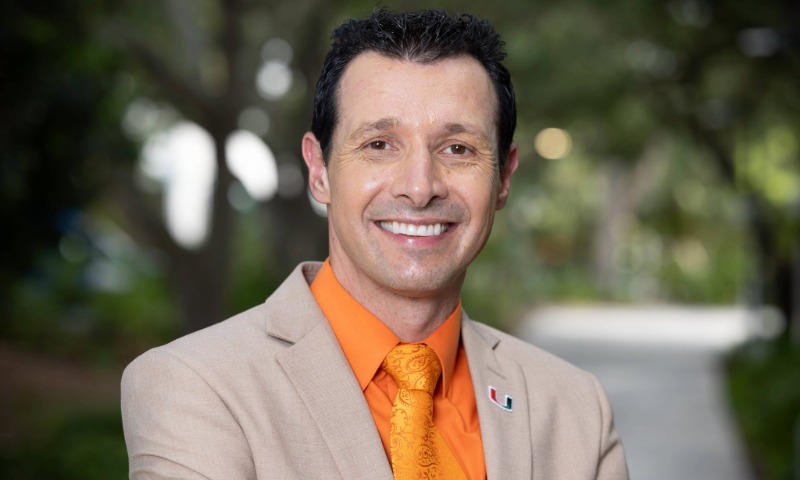
Dr. Paul A. Pavlou serves as Dean of the University of Miami Patti and Allan Herbert Business School and university-wide Lead for Executive Education at the University of Miami. A transformative servant leader, he drives AI-enabled innovation, advances research, fosters student success, strengthens community belonging, and amplifies societal impact. A globally recognized AI thought leader and proven crisis leader, Paul has guided top AAU/R1 institutions through challenges with shared governance, fiscal stability, and transformative results.
At the University of Miami, he has reimagined higher education through a bold strategy that positions Miami Herbert Business School for Top 20 national recognition, achieving historic firsts: #1 MBA graduate career placement, #2 global faculty research productivity, and #3 in executive education (Financial Times, 2025). As continuing education lead, he established Miami Herbert as a national model of AI-driven innovation and cross-campus collaboration through interdisciplinary programs, industry partnerships, and global alliances.
Previously, as Dean and Cullen Distinguished Professor at the University of Houston’s Bauer College of Business, Dr. Paul led record enrollment growth (+40%), 90%+ graduation and 99% job placement rates, and over $150 million in philanthropy. He elevated the MBA program to the Top 25 and the undergraduate program to the Top 15 among public universities, while leading the Entrepreneurship program to five consecutive #1 global rankings (Princeton Review).
In this conversation with Higher Education Digest, Dr. Paul shares how he is transforming business education beyond algorithms by blending innovation with human insight. As AI reshapes the future of learning, he believes business schools must go beyond technology to cultivate creativity, ethical judgment, and purposeful leadership. His vision reimagines business education as a space where intelligence meets integrity, preparing future leaders to shape a rapidly changing world. Below are the excerpts of the interview.
What inspired your journey into academic leadership, and what continues to drive your vision for business education today?
As a first-generation college student from a small Mediterranean island, I experienced firsthand how education can transform lives and create opportunities for everybody, irrespective of background. Therefore, I was inspired by the transformative power of higher education and its potential to transform lives. That belief has guided my journey through every leadership role I have had the privilege to hold.
What continues to drive me is a conviction that higher education must evolve to meet a rapidly changing world, particularly in today’s AI era, where many entry-level cognitive jobs are disappearing. My goal has always been to reimagine higher education as a dynamic, personalized, and globally immersive experience that empowers students to reach their full potential, prepares them to shape the future, and helps them make a societal impact.
The education landscape is changing rapidly. What are the biggest opportunities and challenges facing business schools?
The biggest opportunity, and simultaneously the greatest challenge, is organizational and societal transformation because of AI. Emerging technologies and artificial intelligence are redefining how we live, work, and learn. Students no longer accept one-size-fits-all education; they expect learning to adapt to them, not the other way around. Business schools and universities have a unique opportunity to lead this transformation. The challenge is to use technology and AI to make education more personalized and interactive. We must teach our students to pair data-driven decision-making with empathy, critical thinking, ethical judgment, and adaptability, human intelligence skills that no machine can replace (at least in the foreseeable future!).
How do you see artificial intelligence transforming the way business schools teach, learn, and lead?
AI will transform higher education just as electricity transformed the world; it will quietly power and transform everything around us. In higher education, AI will change how we recruit students, how we teach in the classroom, how we guide careers, and how we connect with alumni throughout their lives.
But AI alone is not the solution and the endgame. The real transformation would come when AI will be intelligently used to focus more deeply on the human side of education, such as personalized mentoring, encouraging creativity, developing ethical reasoning, and building leadership skills. The future belongs to institutions that can combine AI (artificial intelligence) with human emotional and moral intelligence, something that I term “augmented intelligence”. The more we can instill augmented intelligence in our students, the more they will be prepared to succeed and thrive!
How do you approach leading a business school that honors its legacy while embracing technological and pedagogical change?
Leadership in higher education means harmonizing tradition with transformation. I see the legacy of 100 years at the University of Miami as our foundation, not a limitation. We honor our history of academic excellence, but we should also have the courage to challenge convention when it no longer serves our students or society.
At the University of Miami, our approach is to preserve the intellectual rigor that defines great business schools while integrating cutting-edge innovation with AI, data analytics, and interdisciplinary collaboration into everything we do. We must protect what makes us great while continuously reinventing what makes us relevant, especially in this era of AI that many of the conventions of higher education are being challenged in front of our very eyes.
How would you describe your leadership philosophy, and how has it evolved through your experiences across different institutions?
My leadership philosophy is grounded in servant leadership, guided by purpose and ethics, and inspired by the desire to transform the institution. I believe great leaders listen first, act boldly, and measure success by the success of others and the institution that they serve.
Over the years, my approach has evolved from merely empowering and inspiring people to amplifying possibility for the institution by aligning people with purpose, leveraging the power of technology into processes, and crafting a bold vision that draws upon the shared mission. I strongly believe that leadership today is not about control. It is about creating the conditions for everybody in the institution to thrive, innovate, and make an impact. This is the essence of servant-transformative leadership that I actively promote in all my roles.
Outside of your academic responsibilities, what activities or interests help you stay grounded and inspired?
Balance is essential for success. I find inspiration through time with family, travel, sports, and the arts. As a former professional basketball player, I value teamwork, discipline, and determination; the same principles that guide my leadership style. The arts remind me why education matters because they help expand imagination, empathy, and judgment. Whether at a concert or an opera, I am reminded that creativity is the fuel of innovation and the heart of leadership, and we need to embrace the liberal arts along with technology and business.
What advice would you offer to students and young professionals who aspire to lead in an era defined by AI, data, and digital transformation?
First, while you should be fluent with technology and AI, and leverage them extensively, ultimately lead with your humanity and judgment. AI can process data, but it (still) cannot feel compassion or show integrity. Those are your true differentiators as a leader.
Second, stay endlessly curious. The future belongs to lifelong learners who embrace change as an opportunity, not a threat. Do not see AI as a threat, but as an opportunity to amplify your (augmented) intelligence.
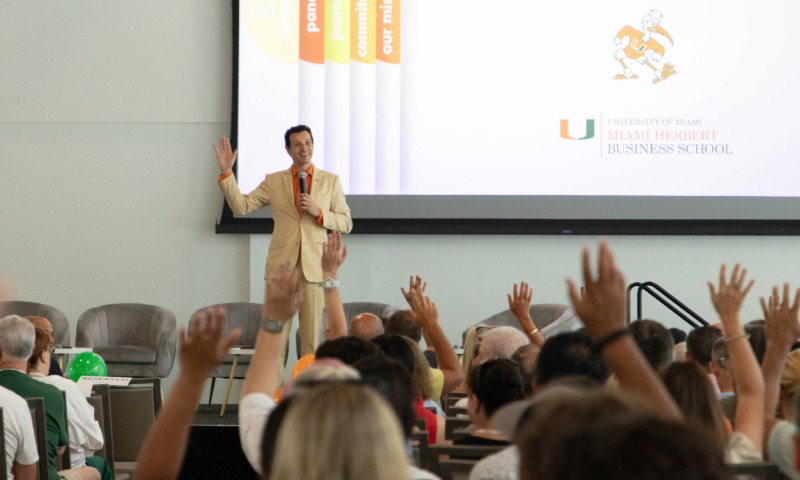
Third, be a great public speaker. While generative AI can help with your writing, solve problems, and retrieve all the knowledge in the university, you should be the carrier of the output to others through public speaking. People want to interact and hear from other people, and public speaking will be one of the last human skills to be replaced by AI.
Fourth, be accountable for everything you produce. While you may ethically use technology and AI to support your work, you are ultimately responsible for everything you put out there.
Fifth, be brave. Disruption rewards those who think differently, take calculated risks, and act with intent. Use AI to enhance your impact, not replace you. In a world shaped by AI, your character and personality will always be your greatest competitive advantage, so make sure you work on your human intelligence skills!