


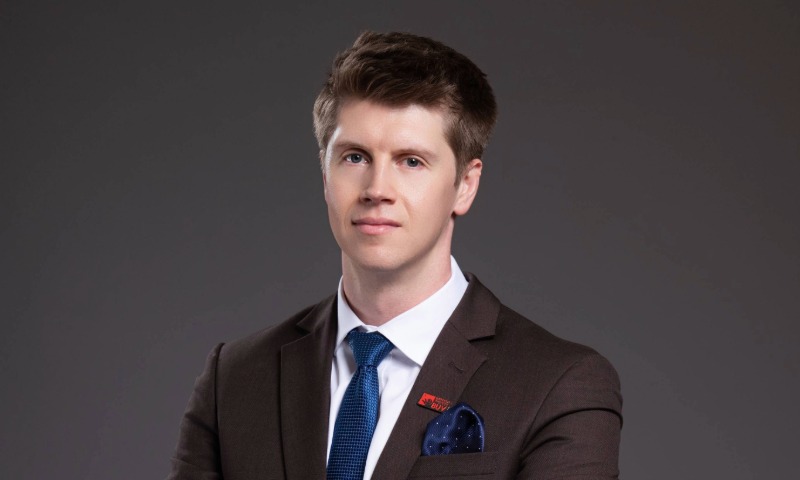
Associate Professor Dr. Mike Perkins heads the Centre for Research & Innovation at British University Vietnam, where he leads the GenAI Academic Research Cluster and trains Vietnamese educators and policymakers on this topic. Mike is one of the authors of the AI Assessment Scale, which has been adopted globally across schools and universities. His research focuses on GenAI’s impact on education and has explored various areas within this field. This has included AI text detectors, attitudes to AI technologies, and the ethical integration of AI in assessments through the AI Assessment Scale. His work bridges technology, education, and academic integrity.
Recently, in an exclusive interview with Higher Education Digest, Mike shared insights into his journey in management and higher education, sparked by a performance improvement project in policing. In the next 5 years, Mike sees Generative AI transforming higher education, particularly in distance and blended education, and emphasized the need for educators to develop adaptability, critical AI literacy, and assessment design skills. He also shared his personal hobbies and interests, future plans, words of wisdom, and much more. The following excerpts are taken from the interview.
Hi Mike. What sparked your interest in management and higher education, leading you to pursue a PhD from the University of York?
My interest in management started during my undergraduate degree, and it became much more real when I worked on a performance improvement project in policing. That experience stuck with me because it showed how complicated improvement is in public services, and how much outcomes depend on systems, incentives, and decision-making rather than just individual effort. My PhD at the University of York grew out of that. I wanted my research to properly study how improvement happens in complex systems, and to develop new knowledge that could help public services get better.
What do you love the most about your current role?
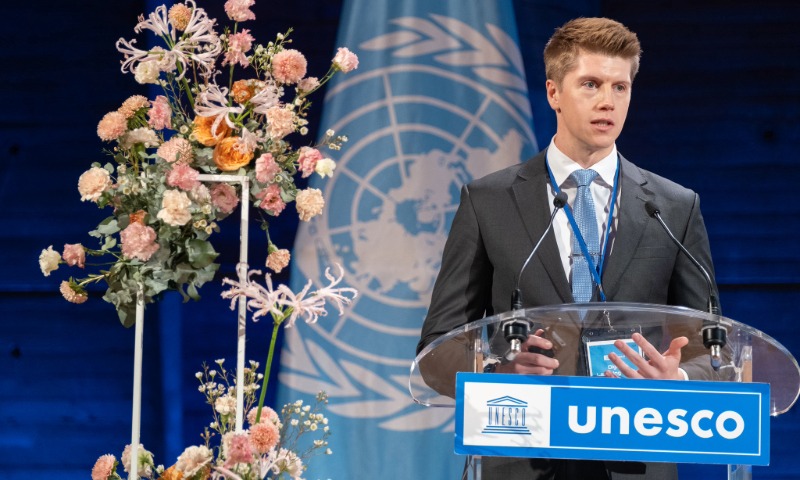
As Head of the Centre for Research & Innovation at BUV, I get to build a research culture inside an institution, and I have been able to do that from the ground up. That’s genuinely satisfying work. The best part is supporting new researchers and seeing the moment it clicks, when they realise they can contribute to the field. Watching someone get their first publication out, and seeing research actually shape practice, is a great feeling.
How do you see Generative AI transforming higher education in the next 5 years?
I think distance and blended education will feel the impact most sharply, because assuring learning becomes more challenging as tools get more powerful and more accessible. As a sector, we will need to rethink what institutions are for, not just delivering content, but supporting students through change and helping them build judgement and confidence. Assessment is where the pressure will be highest. We will need major redesigns so assessment still validly measures learning in a world where AI can generate plausible output very quickly.
What are the key skills educators need to develop to effectively integrate AI in their teaching?
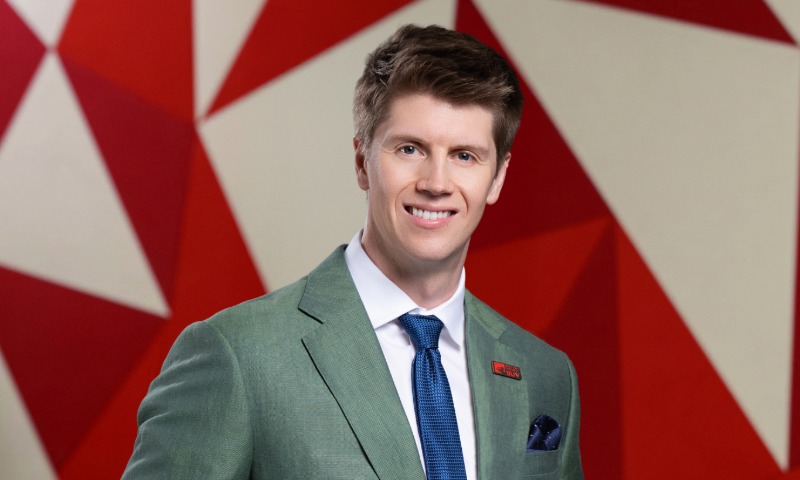
The big three are adaptability, critical AI literacy, and assessment design. Adaptability matters because the tools and norms will keep changing. Critical AI literacy is not just knowing how to use tools, it’s understanding their limits, where they fail, and how to check outputs quickly, and then being able to pass that judgement on to students. Assessment design is the glue that brings it together. It’s often treated as an afterthought, but it’s the difference between acknowledging AI exists and being able to still assess student learning fairly and validly. That alignment between what AI can do, what it should not be used for, and how we test learning is the real skill set.
Many congratulations on being recognized as one of the Top 50 Voices in Higher Education 2026. Our readers would love to know the secret mantra behind your success.
No secret mantra, honestly. If there’s one thing I’d encourage, it’s putting your work out there rather than waiting for the perfect moment. In a fast-moving space like AI and education, it’s important to share early and iterate, so educators can benefit sooner. A lot of the attention my work has received has come through preprints and open discussion, and that cycle of sharing, learning, and improving. In areas like the effectiveness of AI detectors, I hope that work helped more educators and institutions realise that detection is not a reliable solution to the assessment challenges we are facing, and that the durable answers are better assessment design and clearer expectations.
Are there any particular books, articles, or resources that have significantly influenced your thinking or approach?
Sarah Elaine Eaton’s work on postplagiarism has been a huge influence for me, because it captures a key shift: if you cannot stop academic integrity breaches through technology alone, then the response has to be better education, clearer ethics, and smarter design. Phillip Dawson’s work on assessment validity and security has also shaped my thinking, especially around questions like, what are we actually measuring when we set a task, and is it testing what we mean to test. That line of thinking has been central to how I approach the AI Assessment Scale and the broader assessment reset we are all working through.
What is your favorite quote?
My favourite quote is, “What gets measured gets managed.” I like it because it’s both helpful and a warning. In performance improvement work, metrics can focus attention and drive real progress, but they can also distort behaviour if you choose the wrong measures. That’s very relevant to my current work too, because building a healthy research culture means being thoughtful about research metrics, what they incentivise, and how to measure what matters without pushing people toward quantity over quality.
What are some of your passions outside of work? What do you like to do in your time off?
I’m a big fan of anything active. Running and cycling are my go-tos, and I also love squash and weightlifting. Skiing is the one I miss most, as after 12.5 years in Vietnam I haven’t had as many chances to get to the mountains as I’d like.
What is your biggest goal? Where do you see yourself in 5 years from now?
My biggest goal is to help higher education’s key stakeholders, students, educators, and institutions, fundamentally improve through periods of change. In five years, I’d like to be in a role where I can directly influence that kind of improvement at scale, whatever the big challenge is at the time, whether that’s technology, assessment, or something else entirely.
What advice would you give to early-career academics looking to make an impact in higher education and technology?
Try to work on the challenges that are coming next, not only the ones already dominating the conversation. That’s what keeps your work ahead of the field. For me, starting to explore academic integrity concerns around generative tools before ChatGPT meant I was ready when interest surged. Also, don’t wait for perfect. Share drafts, share preprints, and let others pressure-test your thinking. Most importantly, stay loyal to the evidence. If the evidence takes you somewhere new and it means your view changes from one paper to the next, that’s not a problem, it’s a sign you’re learning and adapting.