


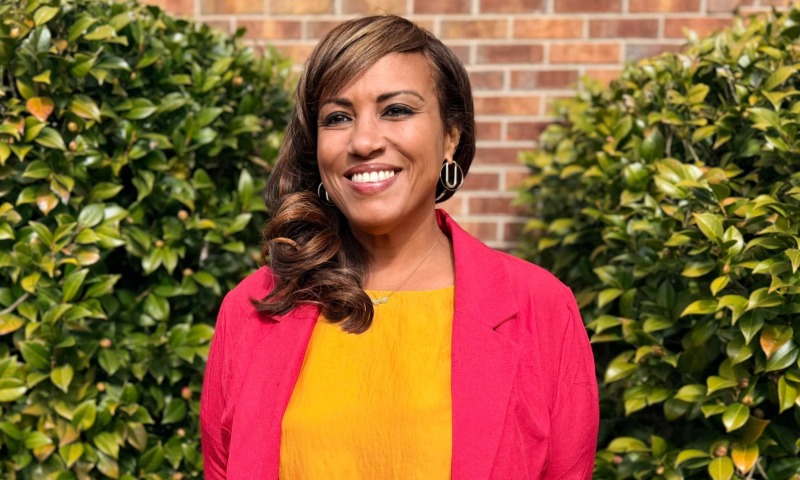
Darleny Cepin, Ed.D., is the Senior Associate Dean of Campus Life and Chief Student Affairs Officer at Oxford College of Emory University. She leads strategic initiatives that cultivate student belonging, well-being, and engagement through a holistic campus experience. With over 20 years in higher education, she previously served in leadership roles at Princeton University and Columbia University, where she advanced innovative residential and student development programs. Darleny holds degrees from Teachers College, Columbia University, and is a certified meditation teacher and professional coach. She integrates mindfulness, emotional intelligence, and strategic leadership to foster transformative, student-centered institutional growth.
Recently, in an exclusive interview with Higher Education Digest, Darleny shared insights into her journey, passions, and leadership philosophy. As a first-generation immigrant, Darleny’s experiences shaped her commitment to student well-being and success. She also shared her personal hobbies and interests, future plans, words of wisdom, and much more. The following excerpts are taken from the interview.
What’s the story behind your journey to becoming a leader in student affairs, and how did you develop your passion for student well-being and success?
I am a first-generation immigrant from the Dominican Republic. I was raised in a collectivist culture where community was everything. We did not succeed alone. That foundation shaped how I see the world and how I lead.
Education became my superpower. It changed the trajectory of my life. Not just because of the degrees, but because of the people. The mentors I encountered were living textbooks. They did more than teach content to span my sense of self and imagination. And it was not only my mentors, but my classmates were also part of that transformation. Many of them were navigating their own firsts, their own sacrifices, their own quiet battles. We sharpened one another, challenged each other’s thinking, held space for each other’s doubt, mistakes, and ambition.
I come alive in this work because it sits at the intersection of my gifts and my purpose. I deeply believe in meeting students where they are. Not where we assume they should be. Not where policy places them. Where they truly are in their developmental journey. Every student carries a story shaped by family, culture, expectation, fear, and hope. When we take the time to see them fully, we unlock possibilities.
Community is the throughline of my journey. I experienced what it feels like to be held by people who believe in you before you believe in yourself. That experience changed me. It became a quiet standard for how I show up in the world. I try to offer that same belief and steady presence to every person who comes my way, hoping that our interaction leaves them feeling more capable, more seen, and more grounded in their own strength than before.
At Oxford College, we value a small and personalized environment where every student is known. That belief resonates deeply with me. I know what happens when a student feels unseen. I also know what happens when they feel known. The difference can shape whether they stay, whether they flourish, and whether they step into leadership with confidence.
My passion for student well-being and success is personal. I understand the pressure of being the first. I understand navigating institutions that were not built with you in mind. I understand what it means for education to feel both liberating and weighty at the same time.
My leadership is grounded in three commitments.
- To build community that cultivates real belonging and connection where everyone flourishes.
- To ensure that education remains transformational for every student we serve.
- To design systems that remove barriers and open doors.
Student affairs allows me to focus on the whole student — their intellectual growth, emotional development, social connection, and sense of purpose. I care deeply about creating spaces where students can grow in all of these dimensions. I want them to leave not only as strong scholars, but as thoughtful leaders and active contributors to their communities. That’s the part of the work that keeps me here.
I am here because someone once saw me. Now I dedicate my work to making sure our students are seen, supported, and challenged to rise to their fullest potential. And that work continues to shape me as much as I hope it shapes them.
What do you love the most about your current role?
I love everything about it. I honestly believe I was born for this work.
There is something sacred about college years. It is a serendipitous window in a person’s life. Students arrive at this incredible experimental bubble where they are allowed to question, to expand, to fail safely, to rebuild, and to imagine new versions of themselves. Few spaces in the world offer that kind of protected transformation.
What I love most about my role is that I get to stand at the center of that magic.
College students are the key to our collective future. The decisions they make, the confidence they build, the wounds they heal, the purpose they discover during these years ripple far beyond campus. When a student finds their voice, chooses courage over fear, or realizes they belong in rooms they once doubted, the world changes in small but powerful ways.
Higher education is one of the last places where humans are invited to experiment with identity. To try leadership. To wrestle with ideas. To stretch intellectually and emotionally. To make mistakes and recover. To ask, “Who am I becoming?” and have time to sit with the answer. I love the conversations in hallways. The breakthrough moments in crisis. The quiet victories no one else sees. The late-night doubts that turn into clarity. The student who walks unsure and walks out steady. I value that my role allows me to help design the conditions for that becoming.
This work is alive. It is human. It is complex. It demands heart and strategy at the same time. And every single day, I get to contribute to shaping an environment where transformation is not accidental, but intentional.
That is what I love most.
As student affairs evolve, how do you see the field shifting towards more holistic and equity-centered approaches?
I am deeply concerned about higher education right now. This moment is calling us to evolve.
We are living in a time marked by evolving public trust, increased scrutiny of higher education’s value, and renewed focus on expanding access and opportunity for students. Education is often reduced to workforce preparation alone, as though its highest purpose is economic productivity. That narrowing of vision worries me.
The field has always carried a wide portfolio – programming, support services, case management, operations, crisis response, and policy implementation. Those functions are vital. Now we have an opportunity to be even more explicit about the throughline: student development. We must lead as educators and architects of environments that advance well-being, belonging, and learning.
That evolution also requires deep integration with academic affairs. At Oxford College, we speak of an inspired academic experience where intellectual rigor and developmental support are not parallel tracks but mutually reinforcing. Student affairs cannot sit adjacent to the classroom; we must continue to be in active partnership with faculty, shaping conditions where academic challenge is sustained by belonging, purpose, and holistic support. When the curricular and co-curricular are aligned, students do not experience their education in fragments. They experience it as coherent, demanding, and transformative.
That is the shift I see happening.
Holistic practice means we stop fragmenting students into academic performance, mental health, conduct, or engagement silos. Students are whole human beings. Their intellectual growth is connected to their emotional safety. Their sense of belonging affects their persistence. Their identity development shapes their leadership capacity. Our field has long articulated learning and development outcomes that affirm this integrated approach. Now we must operationalize it with courage and clarity.
An equity-centered lens requires us to examine systems, not just support students within flawed systems. It asks harder questions. Who is thriving here and why? Who feels invisible? Who leaves early? What hidden curriculum advantages some and disadvantages others? In a climate where equity language is increasingly scrutinized or politicized, we have to be even more disciplined, more strategic, and more rooted in evidence about why this work matters.
I also believe student affairs must help rebuild trust. Roosevelt, in Rescuing Socrates, reflects on education as a space where individuals learn to think deeply, wrestle with complexity, and strengthen democratic values. That work feels urgent right now. If higher education retreats from cultivating critical thinkers who can engage difference with courage, we weaken the very fabric of our civic life.
So, I see the field shifting in three critical ways.
First, from programming to developmental design. Every experience should intentionally move students toward greater self-authorship, resilience, and civic responsibility.
Second, from access alone to true belonging. Representation is not enough. Students must feel psychologically safe and meaningfully connected.
Third, from reactive support to proactive transformation. We cannot wait for crisis to intervene. We must build environments that cultivate capacity before crisis arrives.
I worry about higher education. But I also believe this is a defining moment. If we lean into adaptive leadership, developmental theory, and a liberatory vision of education, student affairs can become even more central to shaping ethical, thoughtful, courageous leaders. And right now, the world desperately needs them.
What are the key skills student affairs professionals need to develop to lead in a rapidly changing landscape?
My dissertation explored how student affairs professionals learn to meet student needs while navigating institutional expectations. What I found is that the landscape is not just changing. It is constantly shifting. And professionals must learn in ways that are informal, relational, and adaptive.
Several key skills emerged from that work.
First, the ability to recognize and interpret the impact of the external environment.
Higher education does not operate in isolation. Economic pressures, political shifts, demographic changes, and accountability demands all shape institutional priorities. Professionals who were most effective understood how these external forces influenced their daily practice. They could see beyond their office walls and understand the broader ecosystem affecting their students and their institution.
Second, the capacity to distinguish adaptive challenges from technical problems.
Some issues can be solved with policy adjustments or procedural changes. Others require shifts in mindset, identity, and culture. The professionals I identified as “drivers” were able to recognize when change required deeper learning and recalibration. That skill is critical today. Without it, leaders risk applying surface solutions to systemic challenges.
Third, self-directed learning.
One of the most powerful findings of my research was that student affairs professionals learn informally. They learn through dialogue with colleagues. Through collaboration. Through feedback and reflection. Through trial and error. Through reading, research, professional associations like NASPA and ACPA, and advanced study. The most effective leaders did not wait for formal training. They actively sought knowledge and refined their practice continuously.
Fourth, the ability to engage in various levels of learning.
My analysis identified three levels: instrumental, communicative, and transformational learning. Instrumental learning helps professionals acquire skills and procedures. Communicative learning deepens understanding through dialogue and shared meaning-making. Transformational learning shifts how professionals see themselves and their role within the institution. Leading in today’s environment requires all three, but especially the willingness to undergo transformational growth.
Fifth, adaptability paired with resilience.
Adaptability was a defining characteristic across participants, but it showed up differently. Drivers leaned into change. Reactors adjusted when necessary. The disengaged resisted or withdrew. In a rapidly evolving profession, adaptability is not optional. Burnout emerged as a real impediment to effectiveness. Sustainable leadership requires emotional regulation, boundaries, and reflective practice.
Sixth, the ability to build and sustain mentoring relationships.
Mentorship and supervisory support were critical factors in effective practice. Professionals who felt supported were more willing to experiment, reflect, and grow. Leadership in this field is relational. No one learns this work alone.
Ultimately, my dissertation revealed that leading in student affairs requires comfort with tension. Professionals must hold student needs and institutional expectations simultaneously. They must advocate, translate, and sometimes negotiate between both worlds without losing sight of purpose.
The rapidly changing landscape of higher education demands professionals who are reflective learners, adaptive thinkers, collaborative partners, and resilient leaders.
That learning never stops. And it rarely happens in isolation.
Are there any particular books, articles, or resources that have significantly influenced your thinking or approach?
Ronald Heifetz has shaped how I think about navigating institutions. His work helped me understand that leadership is often about regulating distress and helping people stay in the work when it feels uncomfortable. That lens has been invaluable in complex campus environments.
Robert Kegan influenced how I think about adult growth, especially for professionals. His ideas helped me see that leaders are also evolving, not just the students we serve. That awareness has changed how I approach supervision and team development.
Paulo Freire pushed me to think more critically about power, voice, and whose knowledge gets centered. His work reminds me to question assumptions and to stay attentive to whose experiences are being overlooked.
Within student affairs, the scholarship emerging from NASPA and ACPA around professional competencies and assessment has influenced my commitment to grounding our work in evidence and accountability. And beyond books, I pay attention to practitioners who are building new models in real time. I learn a great deal from conversations with colleagues who are experimenting, assessing, and adjusting as the landscape shifts.
I am influenced by thinkers who challenge comfort and push toward depth. That is the kind of growth I try to model in my own leadership.
What is your favorite quote?
One of my favorite quotes is from Anaïs Nin:
“We do not see the world as it is. We see it as we are.”
That quote humbles me. Every colleague, every conflict, every moment, is filtered through perspective. It pushes me to pause and ask, What am I bringing into this moment? And what am I not seeing?
It keeps me grounded in curiosity instead of judgment.
How do you prioritize work-life balance amidst a demanding career in student affairs?
I don’t actually believe in work life balance.
Balance suggests that work and life are competing forces that need to be weighed evenly. That has never felt true to me. I believe in integration and prioritization.
When my work is aligned with my purpose and my why, it does not feel separate from my life. It feels like an expression of it. The key for me is alignment. If I am clear about why I am doing something, I can give it my full presence without resentment.
That said, integration requires intentional prioritization. There are seasons where work demands more. There are moments where family, faith, or health must come first. I am disciplined about protecting what grounds me. My meditation practice. My time in nature. My family. Those are not luxuries. They are anchors.
I also pay attention to energy. If something pulls me away from my purpose or depletes me without meaning, I reassess. Alignment is the filter.
For me, it is less about dividing hours evenly and more about ensuring that how I spend my time reflects what I value most. When my purpose, my work, my spiritual life, and my relationships are in deep alignment, that is when I feel most whole.
What are some of your passions outside of work? What do you like to do in your time off?
Outside of work, my spiritual life anchors me. I have a daily meditation practice, and I am also a meditation teacher. That practice is not separate from who I am. It shapes how I listen, how I lead, and how I move through the world. My relationship with God is central. It keeps me grounded in gratitude and perspective.
Nature is my refuge. It disarms me into the present moment. When I am outside, walking, sitting quietly, feeling the sun or the wind, everything unnecessary falls away. It brings me back to myself.
My family grounds me in the most beautiful way. They remind me what truly matters.
I also love community. I love bringing people together. Cooking for friends, hosting dinner parties, music playing in the background, deep conversation mixed with laughter. Dancing. Connection. I am passionate about people. I am energized by being the one who gathers everyone around the table.
Joy is important to me. Celebration is important to me. Stillness and movement both have a place in my life.
All of those passions: spirituality, nature, family, community — keep me whole.
What is your biggest goal? Where do you see yourself in 5 years from now?
This is a difficult question for me because I am working intentionally to stay grounded in the present. I care deeply about what is in front of me right now, and I want to give it my full attention.
That said, I do see myself continuing to evolve. In five years, I hope to be contributing even more deeply, building communities rooted in purpose, values, and belonging. I want to continue leading in ways that feel aligned, thoughtful, and human.
A friend recently said to me, “You cannot claim your mom’s stew as the best if you have never left your village.” I want to keep learning from people, cultures, ideas, and experiences beyond my own. Success for me is beyond professional growth. It is drinking good coffee, enjoying the rain and the sunrise, building meaningful relationships, and doing work with integrity. If in five years I am living expansively, building strong communities, and doing the best I can each day — that is where I hope to be.
What advice would you give to professionals looking to make an impact in student affairs leadership?
Imagine speaking to yourself at 80 years old. What would that future version of you say truly mattered? What would they tell you was worth standing for?
So often we get caught in the urgency of the moment — the immediate challenge, the email, the conflict, the politics. But I try to ask myself: is this issue a defining moment in the long arc of my life, or is it simply a grain of sand? That perspective shifts everything.
Connect deeply to your why. Give life to your purpose beyond job titles or promotions. The most impactful leaders are not those chasing external validation; they are those guided by an internal compass. When you know what you stand for, decisions become clearer, reactions soften, and leadership becomes more grounded.
Student affairs is human work. It requires courage, empathy, and clarity of values. Stay anchored in what is worth standing for. Discard the need for applause. Lead from conviction. That is what endures.