


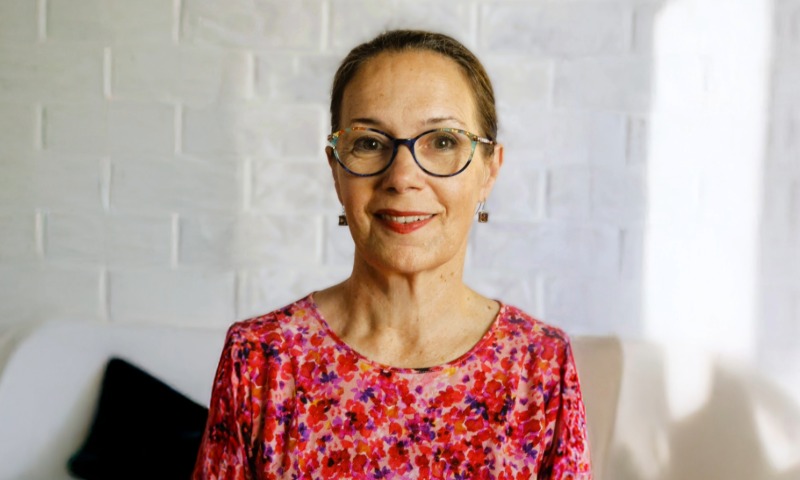
Professor Kate Ames is a senior academic leader with extensive experience in higher education, engagement, and organisational transformation. Her career spans strategic leadership, curriculum innovation, and advancing equity in education. As Pro Vice-Chancellor (Engagement & Access), she is recognised for driving innovative partnerships, widening participation, and strengthening student-focused initiatives across diverse sectors to improve learning outcomes.
Recently, in an exclusive interview with Higher Education Digest, Kate shared insights into her passion for equity and access in education, sparked by her experiences in regional Queensland and her commitment to social justice. In the next 5 years, Kate sees AI and data analytics transforming learning and teaching. She also shared her personal hobbies and interests, future plans, words of wisdom, and much more. The following excerpts are taken from the interview.
Hi Kate. What sparked your passion for equity and access in education, leading to a career as a sociologist, communicator, and leader?
Across my 30‑year career, many experiences have shaped my focus on equity in education. The turning point was living in regional Queensland in the mid‑1990s during a period of economic and perceived social decline. Seeing communities struggle with limited support made me realise how powerful education could be as an enabler, but also how hard some communities had to work to get access to learning and opportunities.
I started my career as a journalist. I transitioned to work as a media educator and researcher at a regional university that pioneered distance education—an approach grounded in equity and access. Since then, as both a student and a teacher, I’ve remained committed to asking the critical question: How will this work for the student who can’t be in the room?
My curiosity has always driven me, even though learning didn’t come easily to me (and still doesn’t) and frequent moves meant I was often the “new kid.” A strong sense of justice and lived experience also shaped my path. My brother is a quadruple amputee and disability advocate, I’m a parent of neurodivergent children, and my current research focus is on community building and access to information and education via media. These influences continually reinforce my commitment to inclusive, equitable education.
What do you love the most about your current role?
I’m the inaugural Pro Vice Chancellor, Engagement and Access at Torrens University—one of Australia’s newest private universities. I had wanted to come to Torrens for a while because of its reputation for innovation – I was surprised at just how inclusive it was. Although we’re not publicly funded in the way most other universities are, we have a strong social mission at our core. I enjoy the challenge of identifying opportunities to grow our student community and strengthening the support that underpins their success. I need to be creative and work across the University and our communities and bring together seemingly disparate areas to create new programs and approaches. It’s exciting and challenging, but we are about to launch some great new initiatives to support students new to university, so it’s an exciting time to be here.
In the next 5 years, how will trends like AI and data analytics impact learning and teaching?
I’m a strong supporter of the potential of generative AI, especially for improving equity, while still recognising the challenges around digital access and privacy. As we become more skilled in how we use AI, I believe we’ll also become more thoughtful about what it means to be human and how we interact with technology. Greater access to data doesn’t automatically give us the right answers, so we need to continually question and interrogate it—especially as some people retreat from digital visibility.
As a cultural sociologist, I feel it’s more important than ever to understand power relationships between (and within) people and systems, and the influence of socio-economic and cultural contexts. I would expect to see rising demand for both tactile learning experiences in both techno and human forms as AI becomes embedded in everyday practice. As humans, we’re better at understanding what we can see, feel and talk about safely.
As President of the Australasian Council of Open and Digital Education, I’m fortunate to see sector wide trends firsthand, and it’s encouraging to witness a growing maturity in how institutions approach education technology. There’s a clear commitment to embracing the opportunities AI brings for students and educators, alongside the significant upskilling needed across an ageing and at times fearful workforce. I challenge the premise that AI will make us ‘dumber’ and am hopeful that it will bring back some of the opportunities to play and create while we learn.
What are the key skills educators need to develop to lead in digital transformation?
For me, it’s less a skill and more a mindset: staying open and curious about how things work. Many people are hesitant to experiment with new tools or technologies, and it has become harder to simply “have a play” when tool and platform trials, data tracking, and subscription loopholes create barriers. Institutions add another layer of constraints (rightly so) through budgets and processes.
I’m often surprised by how many people still haven’t engaged with generative AI at all—even in a playful, exploratory way. Ignorance can limit us and I think we need to work hard to boundary span – look over the fence and try to identify connections. It’s entirely possible to be critical while also being open to new approaches. Resisting technology isn’t helpful to our learners, and being curious, adaptable, and willing to try is really important – but I will add that we need to include innovation and opportunities to be curious within our workload assumptions. Cognitive load is real.
Are there any particular books, articles, or resources that have significantly influenced your thinking or approach?
Journey On, a podcast by horse trainer Warwick Schiller, comes highly recommended for some alternative thinking about life and connection with others generally. Two books have influenced me deeply as an educator. A Thousand Brains by Jeff Hawkins reminded me that we ourselves are walking machine learning systems, constantly updating and adapting. What Happened to You? by Bruce Perry and Oprah Winfrey reinforced that we never truly know what learners bring with them into the classroom each day. Together, they remind me to lead with kindness, empathy, and curiosity—and to be mindful of my own experiences and biases, making an effort to name them rather than letting them shape my teaching unnoticed.
How do you mentor and support emerging leaders in education and edtech?
I mentor in a variety of ways—formally through my role with ACODE, and informally through initiatives like writing groups and collaborative supervision at Torrens. I’m always keen to bring others along on the journey, whether that’s developing researchers, supporting emerging leaders, or sharing what I’ve learned from nearly 30 years connected to the defence sector. My approach is grounded in “building as you climb,” so that when I eventually step away, I leave the people I have worked with confident in themselves to continue initiatives and find new opportunities.
What is your favorite quote?
Do one thing every day that scares you. It’s inspired by my almost 30 years of service in the Australian Army part-time. Being willing to lean into being brave, but being smart about what that looks like, is a learned skill.
What are some of your passions outside of work? What do you like to do in your time off?
I actually don’t get a lot of time off as I’m still studying and I am still active in Defence Reserves. But I do ride horses through the bush most weekends. I am very lucky to continue to live in a regional area, with access to great trails and forests. My family are cricket mad, so while they’re playing local cricket, I’m heading to the local dam with my neighbour and our horses. It’s a great way to unwind. I am in my final subject of my last ever degree (a Master of Educational Neuroscience) so once that’s finished, I’ll be working on renovating our little farm.
What is your biggest goal? Where do you see yourself in 5 years from now?
I feel very privileged to be moving toward the final decade of my career in a leadership role where I have the potential to make an impact. I hope to remain in leadership within tertiary education – I think it’s a really challenging time for us, but education is so transformative that it’s worth fighting for. My ideal “retirement job” is volunteering at a regional study hub, helping students navigate the increasingly complex systems they face when trying to enrol in university—an area we still need to improve as a sector. If I can contribute to making that journey easier, I’d consider that meaningful work.
What advice would you give to professionals looking to make an impact in education and equity?
Ensure people with lived experience are in the room—and create real platforms for diverse voices. Ask hard questions and get comfortable with discomfort; challenging privilege and dismantling hidden barriers will create tension and includes risk, and that’s part of the work.
Help others see and feel experiences from different perspectives, and use an appreciative, strengths-based approach. People from non-traditional or equity backgrounds aren’t “problems to solve”—their resilience and insights are assets that strengthen teams, decisions, and outcomes.