



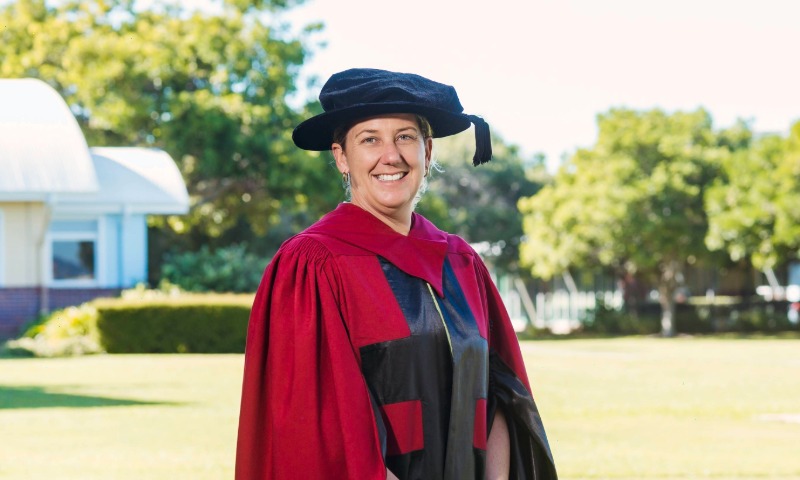
Associate Professor Linda Pfeiffer is the Deputy Dean Research for the School of Education and the Arts at CQUniversity, based at the Gladstone Marina campus. In the past 7 years Chief Investigator Linda has received almost $2m in external income. Linda won the 2016 Women in STEM Research Prize, and currently leads the Australia Pacific LNG STEM Central project, an industry-funded project which incorporates STEM experiences in a state-of-the-art facility in Gladstone, regional Queensland. This project includes the Buraligim Weiber (place of learning) program for Year 4 Indigenous students which won an Education Queensland Showcase Award in 2023.
Recently, in an exclusive interview with Higher Education Digest, Linda shared insights into her journey in STEM education, sparked by her regional upbringing and influenced by her physics teacher. Linda emphasized the importance of teacher and family support in making STEM accessible and engaging for young learners. She also shared her personal hobbies and interests, future plans, words of wisdom, and much more. The following excerpts are taken from the interview.
Hi Linda. As a passionate advocate for STEM education, you’ve made significant contributions to transforming learning experiences, what sparked your interest in STEM, and how did your journey begin?
My journey began growing up in a regional town in NSW (Dubbo). I originally wanted to be an art teacher, but when I was in year 11 art and physics were on the same “line” and I elected physics. When I completed Year 12, I was ineligible to apply to be an art teacher, so I wanted to do mathematics teaching, but I didn’t get high enough marks so I went to university studying science teaching hoping to transfer after a year. While at Uni, I absolutely loved science and the innovation and creativity involved so I continued as a Chemistry teacher. I see science everywhere and I strive to try and motivate people of all ages to see life through the lens of science, to make informed decisions and to have confidence in science. I also hope to try and change science misconceptions.
What do you love the most about your current role?
I love the flexibility and the opportunity to be able to conduct research in areas of interest to me, and that can transform lives. I love being able to help others – researchers, peers, teachers, students, youth, elderly, First Nations people, people with a disability, equity groups, industry and government.
Having developed innovative Science and STEM units for primary education courses, what’s the key to making STEM accessible and engaging for young learners?
The key is the teachers and families. If we can ensure all teachers, from early years educators, primary and secondary right through to university academics have the tools necessary to collaborate with experts in the field, community, industry and university then these partnerships can make learning contextual, innovative and engaging for all.
You’ve supervised pre-service teachers and led projects like STEM Central and Gladstone Connects. How do you empower emerging educators and leaders?
It all comes down to networks and partnerships. The old saying it takes a village is true – we need to ensure all stakeholders have a seat at the table so to speak, and that everyone can have input into the learning, including the students. You also need to do the work – show up and be reliable.
What skills will be most critical for STEM educators and professionals in the next decade?
Problem solving, communication and collaboration. Above the technical skills required, the future generations need to be able to communicate, listen and make informed decisions. Human skills (sometimes referred to as soft skills) are critical for effective teams.
Your STEM Education in the Primary School book won a prestigious award – what inspired you to share your expertise, and what’s the impact of your work?
The inspiration came from the team – Anne Forbes, Vinesh Chandra and Rachel Sheffield. We came together because we were all teaching pre-service teachers about STEM, yet there was not any resource (textbook) that provided teachers with explanations of STEM and what it can look like in the primary classroom. This book has enormous impact on the primary teaching profession as we can now see projects being implemented in classrooms across Australia that incorporate the essence of STEM education.
Are there any particular books, articles, or resources that have significantly influenced your thinking or approach?
The main influence on the direction of my work comes from community. I see and hear what goes on in the regions and that influences how I can be a part of the changes required to move forward as an innovative society. This includes being on committees but also listening to people in public and how they talk to their children.
What are some of your passions outside of work? What do you like to do in your time off?
I like to spend time outdoors on the water. I wouldn’t say I’m any good at fishing, but I love boating. There’s something calming about being on the ocean and it seems to give me the strength to face any challenges.
What is your biggest goal? Where do you see yourself in 5 years from now?
I would love to be able to make an even greater impact and change more lives. My goal is to develop a framework for Citizen Science (or community science) to ensure the community are effective participants in science. Five years from now I would like to be in a position to do that. I have aspired to be the first regionally-based Chief Scientist, but now I think any role that gives me the opportunity to have impact on as many people and influencers as I can, would be great.
What advice would you give to emerging leaders in STEM education who want to drive change?
You need a team – you cannot do it alone. You need people around the table with different skills than you so that you can have the greatest impact. You also need to get yourself out there – people cannot help you if they don’t know who you are and what you are doing. Communication and collaboration are key. Finally, if you face a barrier, find a way to go around.