



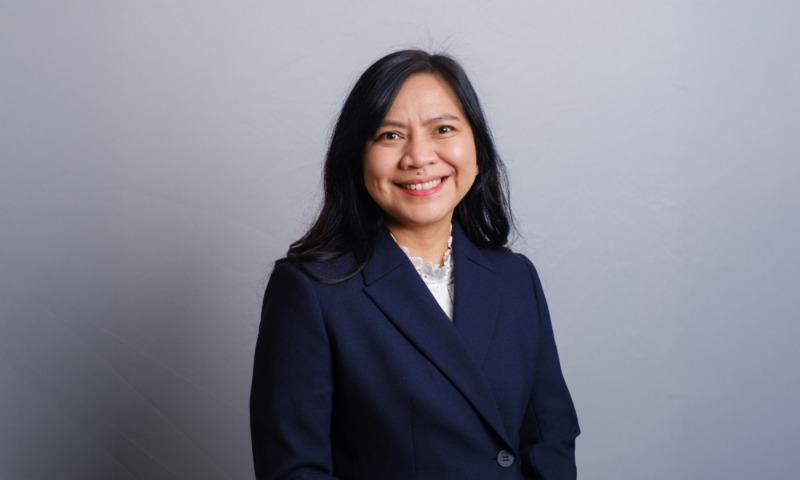
Professor Iis Tussyadiah is Dean of Surrey Business School and Fellow of the Surrey Institute for People-Centred Artificial Intelligence at the University of Surrey. An international leader in digital transformation in service, her research has influenced global and national policies on climate change mitigation, data ethics, digital employment, and tourism development. A first-generation university graduate, Iis is a strong advocate for education as a force for social mobility and innovation. Under her leadership, Surrey Business School’s Incubating Vibrant Futures strategy fosters purposeful education, impactful research, and deep collaboration with industry and society. Her vision is to harness technology and human creativity to shape responsible leadership and resilient organisations for an AI-driven, sustainable future.
In this insightful conversation with the Higher Education Digest Magazine, Professor Tussyadiah shares her journey from researcher to academic leader and her vision for shaping purposeful, tech-savvy changemakers. She reflects on how Surrey’s Incubating Vibrant Futures strategy bridges academic rigor with real-world impact through innovation, collaboration, and responsible leadership. From navigating the rise of generative AI to integrating sustainability and entrepreneurship into learning, her approach combines relevance with responsibility. Below are the excerpts of the interview.
You have had a remarkable journey from doctoral research to leading a full business school. Looking back, which turning points or roles do you consider most formative and why?
I never planned to go into management in higher education. My original ambition was to become a professor, lead my own lab, and build a strong research team. When I joined Surrey, it was to lead the newly formed Centre for Digital Transformation in the Visitor Economy, the youngest research group in the School. Together with a dedicated team of researchers and PhD students, we established it as a world-class research centre. That experience of collective growth was my first real exposure to leadership that felt enabling and empowering rather than administrative. Later, when a search for a Head of Department didn’t go as expected, I was persuaded to take on the role myself. That decision set me on a new path — first as Head of the School of Hospitality and Tourism Management, and in 2024, as Dean of Surrey Business School. Looking back, each step was driven not by a plan to climb the hierarchy, but by a sense of where I could make the biggest difference, in creating environments where people and ideas can thrive.
What do you see as the greatest challenge for business schools today, especially in balancing academic rigor with industry relevance? How do you respond to it at Surrey?
The greatest challenge for business schools today is achieving true relevance without compromising academic rigor. At Surrey, we approach this by anchoring our work in two principles: relevance and agency. For us, education is skills-based: we equip graduates not only to understand business but to act as change agents within it. Our research is solutions-focused: it advances knowledge while directly addressing the pressing challenges faced by business and society. This dual focus allows us to stay purposeful and responsible. It ensures that what we teach and research is not only intellectually robust but also meaningful in shaping a better, more sustainable future for the world we serve. We also emphasise collaboration: bringing industry partners to engage in education and research through initiatives such as executive-in-residence, founders circle, visiting industry fellows, and knowledge transfer partnership.
You work at the intersection of AI, services, and tourism. How is AI reshaping how you lead the business school, and what emerging technologies excite or worry you the most?
Generative AI is the term of the season, and its rise challenges us to rethink what the businesses of the future will look like, and what skills our students need to thrive in them. This extends into research training as well. When AI can perform literature searches and analyses in seconds, we must ask: how do we still cultivate great scholars: those who can think critically, question deeply, and create meaning from data? We also ask how AI can enhance research while keeping it rigorous, novel, and impactful. These questions have led us to develop frameworks, guidelines, and open conversations across the School to ensure we approach AI responsibly and with agency.
Personally, I’m excited about the convergence of AI and quantum technology. The implications for business and society are profound. As these technologies advance, our role is to integrate them safely and intelligently into the fabric of what we do, leading by example in how technology serves humanity, not the other way around.
Under your deanship, Surrey Business School has embraced transformation themes like Incubating Vibrant Futures. What initiatives or achievements in your tenure are you most proud of and which ones are still a work in progress?
When I stepped into the deanship, my priority was to enhance the relevance and impact of what we do, ensuring that our education and research create tangible value for business and society. I’m proud of several initiatives launched last year that are now flourishing. The B-Clinic engages students in experiential learning while helping businesses solve real problems. The Surrey Hatchery supports student entrepreneurship, turning ideas into ventures. The Data to Impact Challenge develops our students’ analytical skills and awareness of the UN SDGs through real-world data projects. We also reorganised our academic groupings to position the School for future growth and to align our disciplines with emerging opportunities. Looking ahead, we are focused on expanding our non-degree portfolio, including executive education and summer programmes, and on growing our research income and strategic partnerships. At the heart of it all is a belief that ambition must go hand in hand with facilitation; creating the conditions for our people to thrive and perform at their best.
As a first-generation university graduate, you often emphasize education’s transformative power. How does that personal history shape your values as a leader? Outside academia, what interests or practices help you recharge?
Being a first-generation university graduate has deeply shaped my belief in the transformative power of education. I know firsthand how education can open doors, change trajectories, and create opportunities that once seemed out of reach. That experience grounds my leadership values: I want to create an environment where people, regardless of their background, can realise their potential and contribute meaningfully.
I’m also a creative type by nature. I enjoy designing and producing things, whether that’s a new framework, a visual identity, or a piece of writing. Outside academia, I find balance in activities that calm my mind and feed that creative energy: gardening, painting, going to concerts or musicals, and sharing good food with friends. I also love writing and hope one day to devote time to something completely non-academic.
What one or two pieces of advice would you give to ambitious students or early-career professionals who hope to work in research, academia, or technology-driven business sectors?
My advice is to stay authentic and believe in the power of ideas, and the spirit of execution. In academia, it’s easy to feel the pressure to publish or perform and end up feeding the machine, turning your work into a production line. But genuine ideas matter. Pursuing them gives you energy, meaning, and distinction. At the same time, never underestimate execution. Ideas can be shared or even copied, but how you bring them to life (your craft, persistence, and integrity) cannot be replicated. And through it all, be kind. In research, business, and life, kindness sustains both creativity and collaboration.
Looking ahead 10 years, how do you envision the role of business education evolving and what should institutions do now to prepare?
There will always be a genuine need for the university experience, not only to prepare people for the workforce but to nurture informed, responsible members of society. What will evolve is how education and research are delivered, connected, and sustained.
As technology accelerates change, universities must serve both first-time students and lifelong learners: people upskilling, reskilling, or changing careers. This calls for flexible, modular learning pathways with multiple entry and exit points, non-degree offerings, and integrated partnerships with employers and communities. We need to create a full-circle experience, where alumni return to relearn and apply new insights, and students engage with business even before graduation.
Research, too, must evolve. The most impactful universities will be those that connect fundamental scholarship with real-world problem-solving, using AI, data, and collaboration across disciplines to generate actionable knowledge. The next decade of business education will be defined by how well we integrate research and learning into a seamless ecosystem, where discovery, application, and societal benefit continuously reinforce each other.