




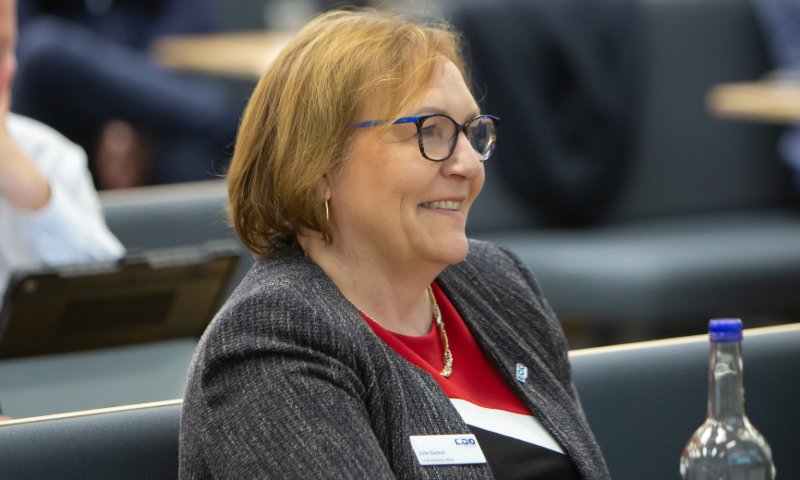
Julie Barker is a leading figure in public sector catering and higher education, renowned for her work in sustainability, student wellbeing, and professional development. She joined TUCO in 1993, helping transform its purchasing frameworks to deliver millions in savings for universities, the NHS, and local authorities. As TUCO Chair from 2011, she led a merger, rebranded the organisation with the ethos “Learn, Share, Grow”, and launched initiatives including the TUCO Training Academy, MSC accreditation for sustainable fish, and collaborative sustainability awards.
At the University of Brighton, Julie pioneered campus security partnerships with Sussex Police, created wellbeing schemes such as free fitness packages, and supported cultural integration for international students, winning an International Book Award in 2018. Since 2021, she has been Chief Operating Officer at AUCSO, strengthening governance, launching free training and benchmarking platforms, and advising government on education sector security. Her leadership has been recognised with multiple lifetime achievement awards.
In this insightful conversation with Higher Education Digest Magazine, Julie Barker shares how data-driven benchmarking, emerging technologies like AI and analytics, and policies such as Martyn’s Law are redefining the future of campus safety. She also reflects on her leadership philosophy rooted in collaboration and continuous learning, offering valuable lessons on building cohesive teams and nurturing the next generation of higher education professionals.
Your trajectory from TUCO into AUCSO is fascinating. Could you walk us through the key turning points or decisions that led you to move into campus security leadership and operations?
My journey from TUCO into AUCSO was shaped by a series of moments where I could see the bigger picture of how different functions on campus connect to create safe, supportive communities. One of the most significant turning points came during Tony Blair’s ‘Respect’ agenda, when I was representing the university in discussions with the Sussex Police District Commander about student experience. At the time, my role as Director covered a wide range of student support services, from accommodation, conference and events to food and beverage, and even some facilities management.
From those conversations emerged a unique collaboration: a shared community engagement team that was, in many ways, viewed as the ‘fourth emergency service’ across the south coast. It was then I realised how strongly elements like food, nutrition, wellbeing, training, and safety interlink, and how, collectively, they enhance the experience of our campus communities.
I’ve always been a passionate advocate for professional associations. TUCO, CUBO and now AUCSO have each demonstrated how valuable collaboration and knowledge-sharing are for our sector. I feel genuinely privileged to have been part of these organisations, all of which share a common mission – to support our profession, strengthen our communities, and create environments where students and staff can thrive.
AUCSO’s Benchmarking Report 2025 is the first of its kind in the sector. What insights from the report stood out most to you, and how do you see them shaping the future of security in higher and further education?
The 2025 Benchmarking Report is a landmark for our sector; it’s the first time we’ve had such comprehensive data drawn together specifically for higher and further education security. What stood out most to me is the sheer breadth of responsibilities that campus security teams now shoulder. It goes far beyond the traditional view of ‘guards on gates’, today’s teams are deeply involved in safeguarding, wellbeing, crisis response, technology adoption, and community engagement.
The report also highlights the scale of investment institutions are making in training and professional development, which underlines how seriously security is now recognised as part of the student and staff experience. For me, the real value lies in how this data can drive consistency, set benchmarks, and inform strategic planning, giving leaders the evidence they need to make the case for resources and innovation.
Ultimately, this report gives us a baseline to measure progress, share best practice, and elevate security as a professional discipline. I believe it will be instrumental in shaping the future of safer, more supportive campus environments right across the sector.
The higher education environment is evolving fast. Which emerging trends or risks (e.g. student mental health, campus safety, hybrid learning) do you see having the greatest impact over the next 5–10 years?
The higher education environment is evolving at pace, and I see several key trends shaping the sector over the next decade. First, the introduction of Martyn’s Law will be significant. Public place protection should be a right, and its framework will help ensure that campus safety remains paramount.
Equally important is how we engage with our communities. It’s not just about physical security; it’s about listening closely – having our ‘ears to the ground’, to understand the feelings, pressures, and needs of students and staff. That insight allows us to design the right education campaigns, mitigation strategies, and support processes so we can respond effectively to whatever challenges arise.
None of this can happen without well-trained, motivated, and engaged security teams. Their role in fostering safe, supportive environments is crucial. Finally, we cannot ignore the global geopolitical situation. Shifts in the international landscape can have direct and indirect impacts on our campus communities, and we need to be prepared for those ripple effects.
In short, the future of security in higher and further education will depend on our ability to anticipate risks, engage meaningfully with our communities, and build resilience at every level.
AI, data analytics, and emerging tech are transforming security and operations. How is AUCSO integrating or planning to integrate these technologies into campus safety, risk assessment, or response?
AI, data analytics and emerging technologies are already beginning to transform the way we think about campus security, but it’s fair to say the picture is still variable across the sector. Financial pressures inevitably shape investment decisions, and our Benchmarking Report makes clear that many institutions are weighing up how best to integrate new systems within already stretched budgets.
That said, we’re starting to see real progress in areas such as mass notification systems, which I expect to become more widely adopted. A key challenge, and opportunity, is ensuring that as legacy systems and equipment reach the end of their life, replacements are not just like-for-like, but are considered in the context of functionality, integration, IT security and whole-life cost. In this, it’s essential that security and IT departments work hand-in-hand.
The sector also needs to keep pushing itself to think about open access versus the ability to ‘lock down’ building by building, should circumstances demand it. Martyn’s Law and the forthcoming statutory guidance will be an important catalyst here, focusing attention on how we adopt the right technologies and processes to keep our communities safe.
In short, technology is moving fast, and our role is to make sure adoption is thoughtful, integrated, and fit for the evolving risks our campuses face.
Leadership in associations and voluntary sectors often demands high collaboration. How do you define your leadership style, and which achievements or initiatives are you most proud of under your stewardship?
I’d describe my leadership style first and foremost as collaborative. I’ve always believed that the best results come when we bring people together, listen, mentor, and create the space for others to thrive. I see my role as helping to unlock potential – both in individuals and in the organisations I’ve been privileged to serve.
Looking back, I’m most proud of a few things in particular. Procurement has been a real driver of change – using frameworks across the wider public sector has delivered greater value for money and raised standards far beyond higher education. Sustainability is another area close to my heart: I’m proud that we’ve been able to push the agenda so that HE food and drink is now ahead of most other sectors. The creation of the Green Gown Award for the sector and SRA accreditation were milestones in that journey.
And finally, training and development. I’m passionate about learning, and it’s been inspiring to see how far we’ve come – from the early days of bidding for funding through the Savoy Trust to developing a sector-wide training offer, and later collaborating with other public sector bodies. Today, we have a far richer landscape of L&D opportunities, and that’s something I feel proud to have helped shape.
How do your personal interests and values, beyond the professional, shape your vision for your work in higher education and security?
My passion for education and lifelong learning runs through everything I do. I’ve always believed that higher education should be a transformative experience, not only academically but personally. For me, it’s about ensuring that students feel supported, safe, and able to thrive throughout their journey.
I want every student to look back on their time at university not just for the qualification they gained, but for the positive experience they had – the friendships, the opportunities, and the sense of belonging. That’s why, in my work around security and community wellbeing, my vision is always shaped by a desire to create environments where students can flourish. It’s about safeguarding the here and now, while also investing in the future generation’s confidence and success.
Finally, what advice would you give students and young professionals who aspire to lead in higher education operations, security, or public-sector associations?
My advice to students and young professionals is simple: don’t ever see silos. Higher education is a complex ecosystem, and the real game changer is understanding how all the pieces of the puzzle fit together. The more you appreciate how your work supports, and is supported by, other services, the more effective and impactful you’ll become.
Get involved in associations early. They are fantastic development opportunities, but you only get out what you put in. Active involvement will expose you to best practice, broaden your perspective, and help you build the kind of collaborations that really make a difference.
And finally – walk the walk. No two days in HE are ever the same, and that’s part of the joy. Each year may have a rhythm, but it brings new challenges and opportunities. The greatest reward comes on graduation day, when you see students cross the stage. In that moment, you know that in some small way, you’ve helped them get there, and that’s incredibly fulfilling.