



The story of Bircham International University (BIU) began with a personal struggle and a bold idea. In the early 1990s, William Martin, now the CEO and Vice President of the university, was an aspiring filmmaker in Spain. Local opportunities were limited, and studying in the United States was far too expensive. Searching for another way, he discovered distance learning at a time when it relied on faxes, mail, and phone calls.
Through this experience, Martin noticed two pressing issues in higher education. Traditional institutions in the UK and US often overlooked the cultural needs of international students, and many programs seemed driven more by profit than by quality. He also saw how rigid and unaccommodating the system was for adult learners, who often brought valuable life experience but needed flexibility to succeed.
A turning point came when Martin received a fax from Professor Emeritus Dr. Deric Bircham, a retired academic from New Zealand who had worked in the New Zealand Public Service and at the University of Otago. Dr. Bircham had also seen how traditional universities failed to serve adult students. Martin’s proposal for a new kind of university struck a chord with him. Despite the lack of funding, Dr. Bircham believed in the vision. “He saw in me the same drive that had shaped his own destiny,” Martin recalls.
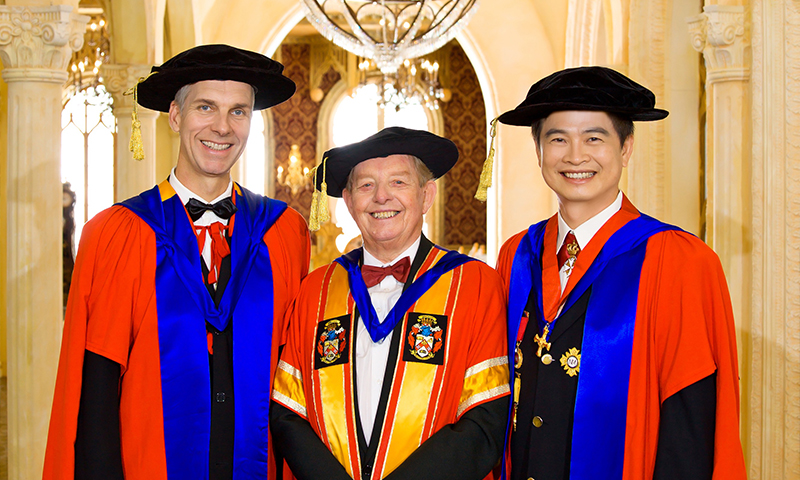
Their shared commitment to building a better model for adult distance learning led to the founding of Bircham International University. Martin named the institution in honor of Dr. Bircham, who became both his mentor and role model. They were soon joined by Laurence Cheng Wen Hung, a Chinese Medicine Doctor and entrepreneur, and together they built a university grounded in academic integrity and ethical values.
“From the beginning, our mission has been to empower adult learners around the world. We focus on teaching students how to think rather than what to think,” Martin says. The university recognizes prior learning and professional experience, helping students save time, effort, and money.
BIU operates as a non-profit institution, offering flexible, high-quality, and affordable education that fits around students’ personal and professional lives. Its success is not measured by profit but by the achievements of its graduates and the positive feedback they share after completing their studies.
A Distinct Approach to Adult Learning
BIU stands out for its focus on adult professionals. It is not structured like a conventional online school. Instead, it follows a non-formal model of education built on a distinct pedagogical approach.
The university places human values, critical thinking, and creativity at the center of its teaching. While it uses modern tools to run its operations, the institution remains firm in its belief that learning happens in the biological brain and is driven by human effort. The curriculum is designed to strengthen uniquely human skills that matter in a world shaped by technology.
Each degree program at BIU is personalized. Prior learning and professional experience are recognized as valuable achievements, and students receive credit for them. This saves students both time and money. The university operates as a decentralized educational network, offering a global curriculum in nine different languages to meet the needs of professionals around the world.
BIU is a non-profit institution guided by ethical values and academic integrity. “Our success is not measured by financial gain, but by the tangible achievements and satisfaction of our graduates who have used their BIU education to create their own destinies,” says Martin.
A key choice that defines the university’s model is its preference for correspondence-based learning over fully online platforms. This is not about resisting change. It is a deliberate decision rooted in the institution’s belief in how real learning takes place. Martin explains, “Learning occurs only as a result of the active processing by our biological brain. We harness the power of cutting-edge technology to enhance our operational efficiency, but technology is a tool to empower us, not to replace the human element of education.”
This approach places the responsibility for success firmly with the student. “It is the student who must demonstrate the determination, responsibility, and motivation to succeed,” Martin emphasizes. Students receive physical textbooks by mail and study at their own pace, fitting their education around their personal and professional lives. The focus is on delivering a high-quality, individualized education that teaches students “how to think rather than what to think.”
A Personalized Path for Every Student
A student’s journey at BIU is designed to fit seamlessly into the life of a working professional. Instead of following a single fixed model, the university builds a study plan tailored to each student’s goals, experience, and existing knowledge.
The process begins with an application where students share their educational background and professional history. The academic team reviews this information to determine how much credit can be granted for prior learning. This careful evaluation helps students save time, energy, and money. Once the assessment is complete, a customized study program is designed.
After enrollment, students receive physical textbooks by mail. This forms the core of the university’s correspondence model. The use of printed materials allows for focused, reflective study away from the distractions of a screen. Students progress at their own pace and are free to organize their learning around their work and personal life. The model encourages determination, responsibility, and motivation, qualities that are essential to succeed at BIU.
Academic progress is measured through written reports or a thesis based on the assigned textbooks, rather than traditional exams. This method encourages deeper thinking and understanding instead of memorization. Once all work is completed and approved by the academic board, students receive their diploma and academic transcript, marking a significant professional and personal milestone.
Support is an important part of the experience. The university has built a flexible support system that gives students independence while ensuring help is always available. The main point of contact is the BIU office, which handles all administrative questions, assignment support, and general guidance. The goal is to respond quickly, often within 24 hours, to keep students moving forward.
For academic guidance, the university has a global Academic Supervisor’s Network of qualified professionals and professors. If a student needs subject-specific help, the BIU office can arrange a phone or email consultation with an academic advisor. All communication is monitored to ensure that questions are answered promptly and professionally. When a student’s query points to a knowledge gap, faculty members can assign additional textbooks to strengthen their understanding.
Graduate programs end with a thesis or final project. This stage includes mentorship from the BIU Academic Board, which evaluates the student’s work. For Ph.D. students, a thesis defense is held before a committee from the academic network, often through phone or internet. This flexible process reflects the university’s commitment to supporting a global community of learners.
Building a Truly Global Learning Community
BIU has built its identity around global diversity. This is not an incidental trait but a deliberate outcome of its mission to serve adult professionals seeking flexible and accessible education regardless of their location or background. The university has been structured to cross cultural and geographical boundaries with ease.
Students at BIU come from every part of the world, forming a community that reflects a wide range of cultures and professions. The university does not operate as a local or regional institution. It has a presence across North America, Central and South America, Europe, Africa, the Middle East, and the Asia-Pacific region. To serve this diversity, BIU offers its programs in nine different languages. This multilingual approach opens its doors to students from thousands of cultural and professional settings.
The programs that attract the most interest are those that connect directly with professional practice. They are designed for adults who want to apply what they learn to their careers.
Natural Health Science is one of the most popular fields. Many students in this area come with experience in alternative health practices and are looking for a way to build on that knowledge. The university offers programs in subjects such as aromatherapy, naturopathy, and iridology. “These programs give students an academic framework to validate and deepen their expertise,” says Martin.
Business and Communication is another highly sought-after field. These programs appeal to working professionals aiming to grow in their careers. Specializations such as digital marketing and corporate social responsibility are in high demand because they match the realities of the modern business landscape. The university’s focus on critical thinking and problem-solving helps students build the leadership skills needed in their organizations.
Psychology and Humanities programs are also widely chosen. Students drawn to these fields often seek personal growth and a deeper understanding of human behavior. They value BIU’s humanistic approach, which prioritizes creativity, reflection, and ethical thinking over memorization. These programs allow them to explore broad subjects and apply their learning both personally and professionally.
The popularity of these fields comes from their relevance. They are practical, flexible, and designed to meet the needs of experienced professionals who want to keep learning and contributing.
Recognizing Experience as Education
BIU places strong importance on recognizing the learning that happens outside traditional classrooms. The evaluation of prior education and professional experience is a central part of its model. This process allows students to receive credit for the real-world knowledge they bring with them.
When a student applies, they submit details about their academic and professional background. The university’s academic team carefully reviews this information. “We are not simply looking at diplomas or job titles. We assess the actual skills and knowledge gained from those experiences,” explains Martin. For example, if a student has worked as a financial manager for ten years, the team examines the responsibilities of that role and determines how the experience aligns with the content of BIU’s business and finance programs.
The university uses a clear credit system to validate prior learning. Credits from formal education are labeled “TRANS,” and credits based on professional experience are labeled “CFLEX.” Each year of relevant experience can earn one or two credits, depending on the nature of the work. This allows students to build a personalized program and avoid repeating material they already know.
This process reflects BIU’s belief that education is about thinking, applying, and creating—not just memorizing. By validating prior learning, the university helps students move forward without unnecessary repetition. This saves time and cost while giving students a clear path to reach their academic and professional goals. “Our goal is to empower them to create their own destiny,” Martin says.
Maintaining a balance between flexibility and academic rigor is at the heart of the BIU model. Its programs are designed for motivated adult professionals who are ready to take responsibility for their own success. Academic rigor is ensured by focusing on the student’s ability to analyze and apply knowledge. Traditional exams are replaced with written reports, projects, and a final thesis. This approach demands deep understanding and the ability to synthesize information.
Flexibility at BIU does not mean a lack of structure. It means giving students the freedom to manage their studies while expecting them to be self-motivated and disciplined. The university provides resources and guidance, but the effort must come from the student. “Learning occurs only as a result of the active processing by our biological brain,” Martin emphasizes. This sense of responsibility becomes a key part of the student’s growth.
Technology plays a supportive role in this model. It improves operational efficiency and enables innovative programs, but it never replaces the human side of education. The university aims to nurture critical thinking, creativity, and a capacity for lifelong learning. These are the qualities that prepare graduates not just for a single job but for a future where adaptability and continuous learning are essential.
Building Knowledge Through Meaningful Assessments
At BIU, assessment is not a test of memory but a measure of mastery. The university’s evaluation system is designed to help students demonstrate a deep understanding of their field and the ability to apply their knowledge thoughtfully. This approach becomes even more critical at the postgraduate and doctoral levels, where students are expected to contribute to their field rather than simply learn about it. “Learning occurs only as a result of the active processing by our biological brain. That is the foundation on which our entire academic philosophy rests,” says Martin.
At the core of BIU’s evaluation process is comprehensive written work. Students earn their academic credits primarily through:
Reports: For individual courses, students produce detailed reports of 20–35 pages. These assignments test their ability to read, analyze, and synthesize information from their assigned textbooks.
Projects: Master’s students complete projects of more than 50 pages. These projects combine theoretical understanding with practical application, often including case studies that show how the knowledge can be used in real-world contexts.
Thesis: Doctoral candidates submit theses of over 70 pages. These are the culmination of their studies, reflecting their ability to conduct independent research and offer original analysis.
This model encourages students to think critically, organize information, and apply what they’ve learned to real problems. It also ensures that their academic work directly supports their career goals. BIU’s programs are designed to align with employer expectations, giving adult learners practical skills that can be immediately applied in the workplace.
The university believes the value of a degree comes not from the paper it’s printed on but from the discipline and responsibility it represents. BIU provides the framework, the guidance, and the resources. It is up to each student to turn knowledge into action. “Ultimately, the true value of a BIU education lies in the responsibility and discipline of the student. We empower our students with the skills for lifelong learning. That’s what prepares them not just for a job, but for a dynamic professional life,” says Martin.
Rethinking Accreditation and Redefining Success
The question of accreditation often comes up for prospective students, and BIU addresses it directly. The university has deliberately chosen not to pursue traditional government accreditation. According to Martin, this decision is central to preserving BIU’s flexibility and personalized approach to education. He says, “We see a fundamental difference between recognition and accreditation. A good education is about the value of the knowledge acquired, not about a stamp on paper from a bureaucracy.”
Instead, BIU positions itself as a provider of non-formal education, a growing part of the global education landscape. The university is legally registered in both the European Union and the United States, combining the EU’s focus on lifelong learning with the entrepreneurial spirit of the U.S. BIU is also recognized by various international bodies and professional associations that value its adult-centric model.
Martin encourages prospective students to look beyond traditional measures. “The true worth of our degree lies in its ability to empower a student to create their own destiny. It shows that a graduate possesses the critical thinking, creativity, and adaptability that employers value,” he says.
BIU sees its role as offering an alternative path for self-motivated adult learners who may not fit into conventional systems. Traditional universities serve students who need a structured, classroom-based environment and a universally recognized accreditation for specific career paths. BIU serves those who want something different.
BIU respects the role of formal accreditation but believes education should be flexible, continuous, and centered on the individual. The university honors prior learning and experience rather than requiring students to retake material they have already mastered. This approach saves time and allows students to focus on new learning.
The success stories coming out of BIU reflect this philosophy. Graduates have used their degrees to advance their careers, change industries, and build new ventures, often while managing demanding personal and professional lives. Their stories are about determination, responsibility, and personal growth.
“Our graduates are the living proof of our mission. Their success is not about a bureaucratic seal. It’s about their own determination, responsibility, and motivation,” says Martin. BIU calls these stories “student triumphs.” Many graduates report that the practical, critical thinking skills they gained allowed them to apply their knowledge immediately in their work. Others say they finally felt their prior experience was valued and integrated into their education.
As Martin sums it up, quoting BIU’s founder Deric Bircham: “It is not the degree that makes a man great, it is the man that makes the degree great.”
Shaping the Future of Learning
William sees the future of distance learning as a natural evolution of education. It is not meant to replace traditional universities, but to build on what they cannot always provide: flexibility, personalization, and continuity. He believes the future will belong to learners who actively engage with knowledge rather than passively receive it. “The future of education will be defined by its ability to adapt to a world where change is the only constant,” he says.
He explains that traditional education has often been rigid and slow to adapt to the needs of adult learners. The future must offer learning that is affordable, flexible, and continuous, allowing people to pursue education without disrupting their personal or professional lives.
Technology, he adds, will continue to advance, but it should serve people, not replace them. The real challenge is our ability to adapt to technology while keeping human qualities at the center of education. “A good education should teach how to think, rather than what to think,” Martin says. Skills like critical thinking, creativity, and independent problem-solving are what he believes will matter most.
The old idea that one degree completes an education no longer fits the modern world. The future demands continuous learning. A valuable education is one that inspires curiosity and builds the habit of learning throughout life.
Martin explains that BIU was created to serve this new landscape. From its beginning, the university was designed to meet the needs of adult professionals who could not be well served by traditional systems. “Learning occurs only as a result of the active processing by our biological brain, not through rote memorization,” Martin says. This principle shapes every part of BIU’s model.
BIU has developed a system that fits around a student’s life and work. It allows learners to study while continuing their careers and managing their personal responsibilities. Programs are practical and tailored to each student. Prior knowledge and experience are valued, and students focus on what they still need to learn rather than repeating what they already know.
Martin believes this is what sets BIU apart. It was never created as a response to past shortcomings, but as a forward-looking institution built for the future. The goal is not to conform to existing systems but to empower individuals to take ownership of their education and their future.
This mindset also defines BIU’s global presence. The university does not measure its growth by traditional markers like new campuses or formal partnerships. It operates as a decentralized, global network with a presence in more than 130 countries and offers programs in nine languages. Its reach expands naturally as more students and alumni apply their education in diverse professional settings around the world. “Our entire existence is a continuous, dynamic initiative. We are not a static institution that needs to announce new campaigns,” Martin says.
BIU’s focus remains firmly on each student. The university’s greatest strength, according to Martin, is its ability to create personalized study plans for adult professionals from all backgrounds. Every program is shaped to meet the student’s unique needs and aspirations. This adaptability allows BIU to serve an exceptionally diverse international student body while keeping the individual at the center of its mission.
In Martin’s view, this is BIU’s real contribution to the future of education: a model that grows globally by focusing on one student at a time, helping each of them shape their own path.
For More Info: https://www.bircham.edu/