



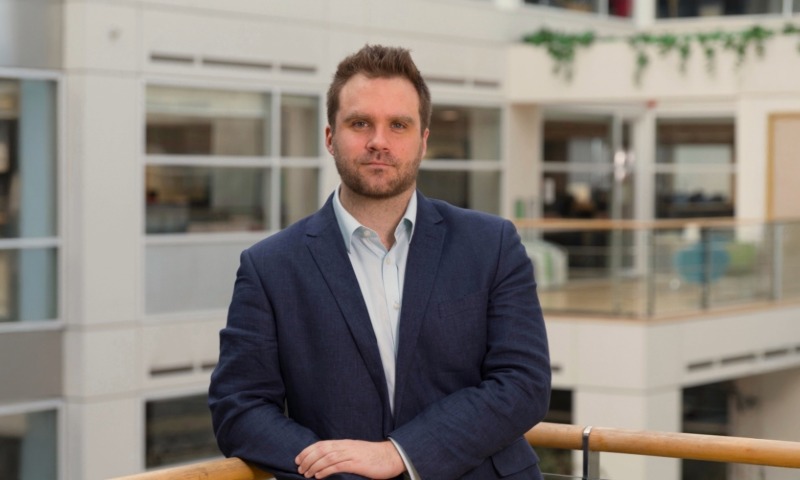
Professor Nick Watts is the Director of the Centre for Sustainable Medicine at the National University of Singapore (NUS), leading its mission to advance sustainable healthcare locally and globally. Previously, he served as Chief Sustainability Officer of the United Kingdom’s National Health Service (NHS), where he spearheaded efforts to make it the world’s first net-zero health system. His leadership saw the programme embedded into national legislation and secured over $1 billion in funding for sustainable healthcare.
Nick was also Executive Director of the Lancet Commission and later the Lancet Countdown on Health and Climate Change, building a global research collaboration spanning more than 50 academic institutions and United Nations agencies.
Trained in medicine and public policy at University College London and the University of Western Australia, he is a Fellow of the Royal College of Physicians’ Faculty of Public Health and holds adjunct professorships at the University of Notre Dame and Monash University. He also founded the Global Climate and Health Alliance and the UK Health Alliance on Climate Change, amplifying the health sector’s role in tackling climate challenges.
In this interview with Higher Education Digest, Professor Nick Watts shares insights on why sustainability must become a core competency in medical education, how universities can prepare future health leaders for the climate crisis, and why sustainable care often means better care for patients. He also highlights the role of innovation, leadership, and cross-sector collaboration in transforming healthcare into a climate-resilient system for the 21st century.
What inspired you to work at the intersection of climate change and health?
For me, it started in clinical training and early work in global health. As a doctor, I was struck by how often environmental factors were shaping the health of the patients in front of me, from air pollution worsening respiratory disease, to heat stress driving hospital admissions, to the spread of infectious diseases influenced by change in weather patterns. I still remember sitting in one of my first lectures as a medical student, hearing about the social determinants of health – that the world outside the operating theatre mattered – and thinking, wow, that changes everything. The science was clear, and it just became impossible to ignore.
That realisation pulled me into research and then into leadership roles, first as the founding Executive Director of the Lancet Countdown, where we worked to build the evidence base linking climate change and health and to shape the global conversation. Later, as Chief Sustainability Officer for the NHS, I had the privilege of turning that evidence into action at scale, working with one of the world’s largest employers to set and deliver on ambitious net zero targets. Those experiences convinced me that the intersection of climate and health is not a side project but a central pillar of protecting population health in the 21st century.
You’ve worked across the health systems, global policy forums, and academia. What have been some defining moments in your career (that shaped your thinking on sustainability in healthcare)?
Looking back, it all sounds much cleaner than it really was. The truth is, the reality was messy. Change never happens in a straight line.
Leading the Greener NHS programme was one of those moments that shaped me. It showed me what happens when sustainability isn’t treated as a side project but becomes part of the core business of healthcare. Embedding it into every clinical and operational decision in the NHS was hard work – but it proved that change at scale is possible when you have persistence, measurable goals, and the engagement of everyone from senior executives to ward staff.
Another defining moment was launching the Lancet Countdown, which had a proper global spotlight. I remember celebrating and then freezing when I realized we’d promised to do this every single year, with a momentary, “What have I done?” But that uncomfortable pace is exactly what the climate crisis demands. And it showed me the power of framing – that when you talk about climate change as a health issue, you can bring health professionals, doctors, and nurses, who are some of the most trusted people in every community, at the forefront of important conversations.
And most recently, moving to Singapore and launching the Master of Science (MSc) and Executive Fellowship in Sustainable Healthcare with NUS has been a reminder that education can be one of the most powerful levers for change. By equipping leaders from medicine, public health, policy, business, and engineering with the skills and networks they need, we can create ripples of impact that reach far beyond any single institution.
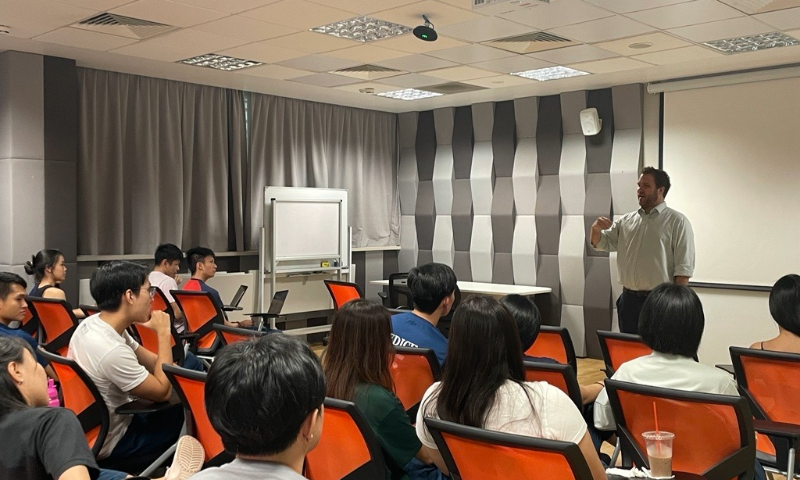
Why do you believe sustainability must be a core competency in health professional education today?
Healthcare is responsible for somewhere between 5–8% of global emissions. That means every health professional, whether they know it or not, is making decisions with a carbon impact. And climate change is already shaping the caseload: more respiratory disease, more heat stress, more extreme weather disasters. If we want resilient, high-quality care, we have to train clinicians who can diagnose, treat, and reduce the environmental footprint of the very systems they work in. And if we don’t teach this now, we’re sending graduates into practice unprepared for the world they’re inheriting.
What do you see as the most urgent challenges for healthcare systems when it comes to sustainability and climate resilience?
When it comes to big hospitals and health systems, sometimes having the evidence and ambitious targets just isn’t enough. The reality is messy, and health systems can be stubborn. I’ve worked with many clinicians who were ready to enact change, but had to push through many layers of bureaucracy to get there. That inertia can be frustrating. This means that leaders need to be willing to listen to those on the frontlines and foster a culture where environmental performance is seen as fundamental to healthcare quality — an extension of our core mandate to do no harm.
Another challenge lies in the invisibility of much of our impact. A significant share of healthcare’s emissions happens before a patient ever walks through the door, hidden deep within supply chains — in the production of medicines, the manufacturing of equipment, the transport of goods. Addressing this means bringing other industries into the conversation and setting new expectations for how we work together. And like any clinical programme, it starts with knowing the numbers. Yet too many hospitals still lack a clear baseline of their emissions, making it hard to act with precision.
The solutions are already out there. The task now is to weave them into the fabric of how health systems operate, so climate action becomes a core part of delivering safe, high-quality care.
What do you think is the biggest misconception people have about sustainable healthcare?
People often think sustainability means compromising on quality. In fact, low-carbon care is often better care. Switching anaesthetic gases, for example, can cut emissions and costs while maintaining or improving patient outcomes.
Another misconception is that it’s a “nice-to-have.” It’s not. Sustainability is about whether the system can keep caring for patients in a changing world. And when it comes to reducing emissions, people often think it’s just about energy use and recycling. In reality, the biggest opportunities are in clinical practice and procurement. Rethinking what we prescribe, what we purchase, and how we deliver care has a far greater impact.
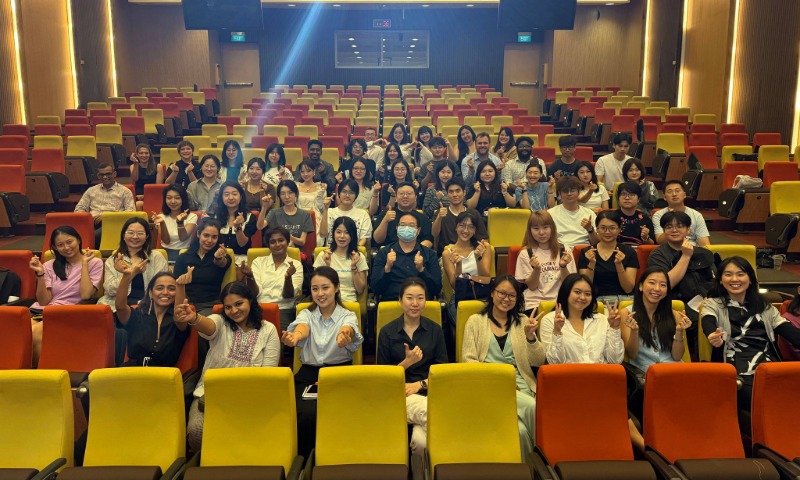
What role should universities and higher education institutions play in preparing the next generation of healthcare professionals for the climate crisis?
Universities are where the next generation of leaders are shaped – if we miss this chance, we’ve missed an entire generation. This is the place to teach systems thinking, climate-health literacy, and leadership skills. At NUS, it’s been a joy to see applicants and eventual students come not just from medicine, nursing, and public health, but also from engineering, economics, and business – because this is inherently a cross-sector problem. And this can’t be an optional module tucked away in the curriculum. It has to be mainstreamed into how we train health professionals, so they graduate ready to lead change from day one.
Ultimately, higher education isn’t just about teaching skills; it’s shaping the culture of the workforce that will inherit the climate challenge.
From your perspective, what knowledge and skills are most critical for healthcare professionals to develop in order to lead sustainable transformation in their organisations?
You need to understand the science and the tools to act on it. That means carbon literacy specific to healthcare. For instance, knowing the footprint of an anaesthetic choice or the environmental impact of a diagnostic pathway. At the same time, you need to be able to use the data in systems thinking to drive change. The great thing about the healthcare industry is that a decision in one clinic can ripple through the whole organisation and beyond. But none of it sticks without leadership and relationships. You need people around you who will come with you on the journey.
That’s exactly why we built the MSc and Executive Fellowship in Sustainable Healthcare at NUS. These programmes combine the science, the metrics, and the leadership training so that graduates leave ready to design, implement, and scale solutions in their own organisations, with the networks and confidence to make those changes stick.
How do you see the field of climate and health evolving in the next 5–10 years?
We’ll see climate change move from niche to mainstream in healthcare. In ten years’ time, we’ll look back and wonder how we ever measured quality without measuring sustainability – in the same way that safety indicators are now non-negotiable. We’ll also see new tools transforming the way we work. Digital health and AI will help us measure and reduce environmental impacts in real time. And most importantly, we’ll have a generation of clinicians who see sustainability not as an optional extra, but as part of their professional responsibility to protect health. That’s the shift that excites me most.