



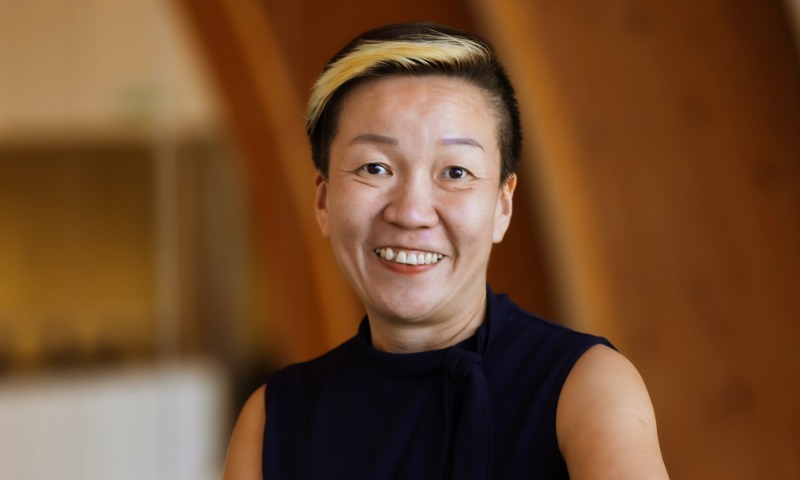
Professor May Tan-Mullins is a passionate advocate for environmental and social justice, and a proven leader in higher education. As Provost and CEO of the University of Reading Malaysia, she brings a wealth of experience cultivated through diverse leadership roles at prestigious institutions, such the University of Nottingham Ningbo China and James Cook University Singapore.
Professor Tan-Mullins’s contributions have been recognized with numerous provincial and municipal awards from the Chinese government, as well as the coveted Rockefeller Bellagio writing residency—a testament to the impact and significance of her work. Beyond academia, she is actively engaged in fostering sustainable business practices, having provided extensive training to senior leaders of Chinese enterprises on sustainability, and risk mitigation strategies within the context of Belt and Road Initiative projects. Professor Tan-Mullins further extends her influence as an executive committee member for The Association of Southeast Asian Studies UK. Her multifaceted engagement underscores her dedication to building a more sustainable and equitable future.
Recently, in an exclusive interview with Higher Education Digest, Prof Tan-Mullins shared insights into integrating sustainability into higher education, empowering students, and leading institutions toward equitable futures. She also shared her future plans, words of wisdom, and much more. The following excerpts are taken from the interview.
Hi Prof Tan-Mullins. Can you walk us through your career journey and what led you to become a leader in sustainability and higher education?
My career journey has been shaped by a long-standing interest in the relationship between environmental change, social justice, and governance. Trained as a political ecologist, I began my academic career focused on understanding how environmental challenges affect communities differently and how policy and institutions can either mitigate or deepen inequality.
Over time, as I moved into leadership roles across international higher education institutions in Asia, my focus expanded from research to institutional impact. Holding senior roles at institutions such as the University of Nottingham Ningbo China, James Cook University Singapore, and now the University of Reading Malaysia allowed me to see firsthand the powerful role universities play in shaping societies. This naturally led me toward leadership positions where I could integrate sustainability into teaching, research, operations, and community engagement-ensuring universities are not only centres of knowledge, but active contributors to sustainable and resilient futures.
What do you love the most about your current role?
What I value most about my current role is the opportunity to make a meaningful and lasting difference in students’ lives. Leading the University of Reading Malaysia allows me to work closely with colleagues to ensure our graduates leave not only with strong academic foundations, but also with the confidence, adaptability, and resilience required to navigate an increasingly complex and fast-changing world.
Watching students grow into thoughtful, capable professionals -and seeing our programmes recognised for graduate employability – reinforces the importance of aligning education with real-world needs. What makes this work especially rewarding is helping to shape an institution that recognises and nurtures diverse talents, supports individual success pathways, and places student wellbeing and positive societal contribution at the heart of everything we do.
What role do you think technology will play in shaping the future of sustainability and higher education?
Technology plays an important enabling role, particularly in expanding access to education, supporting collaboration across borders, and improving how we understand and respond to sustainability challenges. In higher education, it allows institutions to reach more diverse learners and to support flexible learning pathways that suit different student needs and life circumstances.
From a sustainability perspective, technology supports better monitoring, planning, and evidence-based decision-making. However, its real value lies in how it is used—to support inclusion, enhance learning, and build student capacity to adapt to uncertainty. Ultimately, technology should serve human and environmental wellbeing, rather than drive education in isolation from social purpose.
How do you think sustainability can be integrated into the curriculum of universities, and what benefits do you see for students?
Sustainability is most effective when it is embedded across the curriculum rather than treated as a standalone topic. This means integrating sustainability thinking into disciplines ranging from business and law to science, education, and the humanities.
When students engage with sustainability in this way, they develop systems thinking, ethical awareness, and problem-solving skills. Importantly, it also helps build resilience – students learn to navigate complexity, respond to uncertainty, and consider long-term consequences. These capabilities prepare graduates not just for employment, but for leadership and responsible citizenship in a world facing climate, social, and economic pressures.
What’s a book or resource that has had a significant impact on your thinking recently?
I continue to draw inspiration from work in political ecology and sustainability scholarship that explores power, equity, and justice. Classic works such as Small Is Beautiful by E.F. Schumacher remind us that economic and environmental decisions must be grounded in human scale, care for communities, and ecological responsibility. These perspectives are especially relevant today, as environmental challenges increasingly intersect with social vulnerability, food security, and energy access.
Such work reinforces my belief that sustainability education must remain rooted in human experience and social responsibility. Universities have a crucial role in helping students understand both the causes of global challenges and their capacity to shape meaningful solutions, equipping them with the knowledge, empathy, and resilience to act responsibly in a complex world.
How do you prioritize your time and energy as a leader, and what tools or habits help you stay on track?
For me, leadership begins with clarity of purpose – asking, “Why am I here?” I focus on initiatives that strengthen institutional resilience, empower staff, and help students thrive, always with a view toward long-term goals. I value trust, collaboration, and shared ownership, delegating thoughtfully and working alongside talented leadership teams to ensure decisions are both effective and inclusive.
What energises me most is staying connected to the heartbeat of the university: the classrooms, labs, and student journeys. I love a campus buzzing with activity and curiosity. Seeing students grow, engaging with their challenges, and understanding faculty perspectives keeps my leadership grounded. It ensures that every decision is not only strategic but also human-centred, responsive, and oriented toward real impact. In essence, leadership is about being agile and creating environments where people – and the institution itself – can adapt, flourish, and contribute meaningfully to society.
If you could travel anywhere in the world, where would you go and why?
If I could travel anywhere, I would go to a place that feels like home – and it’s the people who make it so. I’m drawn to communities that are curious, resilient, and collaborative, because being around them is inspiring. For me, travel is about connecting, learning, and being inspired by the people who give a place its life.
What is your biggest goal? Where do you see yourself in 5 years from now?
My biggest goal is to ensure that higher education continues to be a force for resilience, opportunity, and inclusive development. Over the next five years, I hope to see the University of Reading Malaysia firmly established as a leading international campus—one that combines the University of Reading’s global academic reputation with deep local impact, shaping lives and communities alike.
For me, true success is seeing students grow into confident, adaptable, and socially responsible individuals, ready to make a positive difference in the world. I want every student to feel that their time at UoRM has mattered—that it has opened doors, nurtured their potential, and inspired them to contribute back to society. I hope they carry a sense of pride in being part of this community and a lifelong connection to the university that shaped them.
What advice would you give to someone just starting out in their career in sustainability and higher education?
Build a strong disciplinary foundation, but remain open to interdisciplinary learning and collaboration. Sustainability challenges are complex and require both technical expertise and human understanding.
Seek out institutions and mentors that value impact, integrity, and long-term thinking. Most importantly, stay values-driven – higher education has a critical role in developing resilient, thoughtful graduates who can lead positive change, and that responsibility should guide your career choices.