


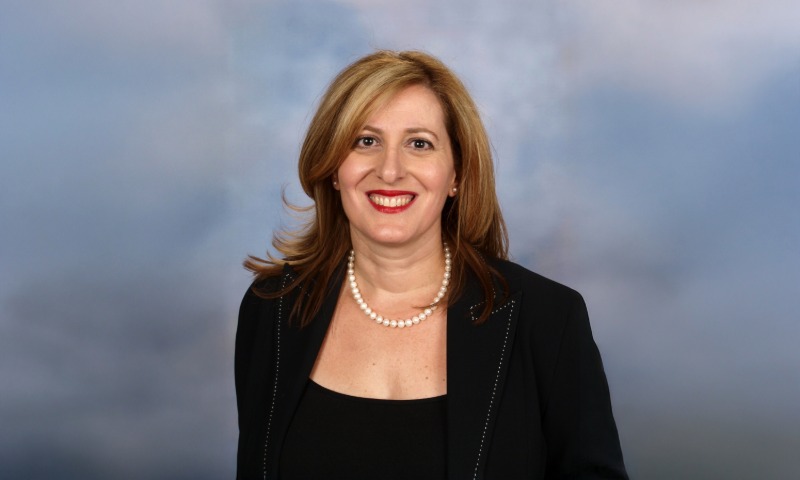
Helene Hiotis has over 30 years of experience in education, beginning her teaching career in 1989. She is currently Principal of Bentleigh Secondary College, a vibrant government school known for innovation and excellence. Helene is passionate about developing effective educators who lead with creativity. Holding multiple qualifications including a Master’s in Educational Leadership, she actively contributes to educational boards and conferences. A lifelong learner and advocate for public education, Helene believes every teacher is a leader and strives to foster a supportive, inspiring environment where students and staff thrive.
Recently, in an exclusive interview with Higher Education Digest, Helene shared insights into her journey from teaching to leadership, emphasizing walking through unpredictability like “walking in the rain.” She blends creativity with STEM, advocates hands-on science paired with AI, and lives by the mantra of keeping “the child at the centre” of every decision. She also shared her personal hobbies and interests, future plans, words of wisdom, and much more. The following excerpts are taken from the interview.
Hi Helene. What led you to transition from teaching to school leadership?
My transition from teaching to school leadership grew out of the same mindset I recently described in Walking in the Rain: A principal’s reflection published in School News Term 4 2025: Every day begins with intention yet rarely goes to plan. A parent arrives early, anxious. A teacher needs five minutes that turn into twenty. A student’s silence in the hallway says more than their words ever could. And still, the bell rings, and the day begins. Students enter with their individual strengths and magic and staff connect instinctively to create a safe, inclusive learning space. Like walking through the rain, every drop is different yet together they form something whole and alive that is school culture. As a teacher, I learned early that education is rarely predictable. Rather than stepping around that unpredictability, I felt drawn to walk through it.
Leadership offered me the opportunity to extend that presence beyond my own classroom. I wanted to help create the conditions where teachers felt supported to navigate complexity, where relationships sat at the centre of practice and where school culture was shaped intentionally rather than reactively. Much like choosing to walk in the rain rather than rush for cover, moving into leadership was a conscious decision to remain present in the difficult moments. to listen and support others when things did not go to plan.
In my role as principal, I see leadership as collective and relational. It is about mentoring others, building trust and responding thoughtfully to the everyday unpredictability of school life. At times we get it wrong and learn from it. The rain never stops, but when we walk through it together, it becomes the very thing that shapes resilience and connection. That belief is what led me from teaching into leadership, and it continues to guide how I lead each day.
What do you love the most about your current role?
What I love most about my role is the privilege of being present in moments that matter. No two days are the same, and within that unpredictability lies the real work of leadership listening and walking alongside students and staff as they navigate both challenges and successes.
I love seeing growth unfold in others: a teacher finding confidence in their practice, a middle leader stepping into their voice, a student reconnecting with learning because they feel seen and supported. Being able to help shape a culture where relationships come first, where high expectations are paired with care, and where people feel safe to learn from mistakes is deeply rewarding.
At its heart, my role allows me to influence not just outcomes, but how we arrive at them. It is about building collective efficacy, nurturing trust, and modelling what it means to show up—even on the hard days. Like walking in the rain, it is not always comfortable, but it is meaningful. And that sense of shared purpose and presence is what I love most.
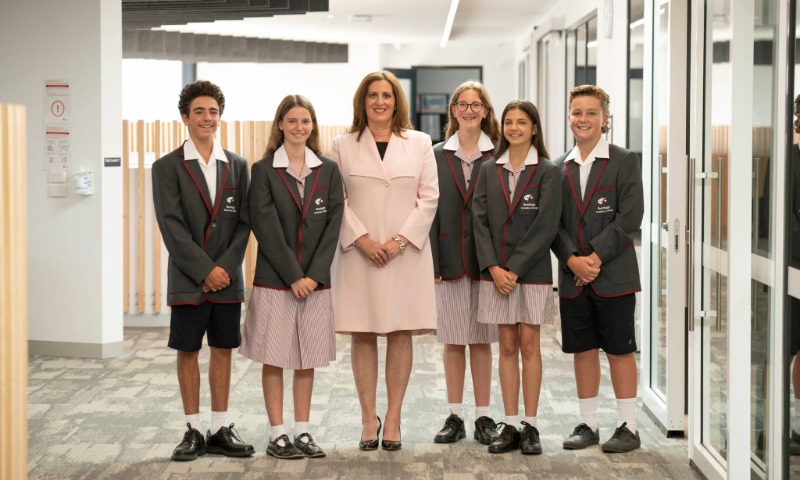
Will AI replace hands-on science experiments in schools by 2030?
Hands-on science is fundamentally about curiosity and discovery. When students mix chemicals, build circuits, or observe reactions in real time, they are not just learning scientific concepts; they are experiencing science as something alive and sometimes unpredictable. That physical engagement sparks curiosity in a way no AI simulation alone ever could.
Hands-on experiments invite students to ask questions, make mistakes and problem-solve in the moment. They develop fine motor skills, collaboration and a deeper understanding of cause and effect. The excitement of “What will happen if…?” is at the heart of scientific thinking, and it is often those moments that ignite a lifelong love of learning.
AI, however, has an important complementary role. It can enhance hands-on learning by helping students model complex systems, analyse real-time data, simulate scenarios that are unsafe or impractical in a school lab. Used well, AI expands curiosity rather than replacing it allowing students to test ideas before, during, and after physical experiments.
The future of science education is not a choice between AI and hands-on learning, but possibly a powerful partnership between the two. Hands-on experimentation grounds students in real-world experience, while AI extends their thinking and opens new possibilities. By keeping learning tactile, relational and inquiry-driven, schools can ensure curiosity remains at the centre of science education no matter how advanced technology becomes.
In your opinion, how should schools blend creativity with STEM education?
Schools should blend creativity with STEM by treating imagination as essential, not optional. Creativity is what turns knowledge into innovation. When students are encouraged to design, question, experiment and reflect, STEM moves beyond formulas and facts and becomes a way of thinking about the world.
This blend is most powerful when paired with problem-based learning. When students tackle real-world challenges, design sustainable solutions, build prototypes, code with purpose, or analyse meaningful data they are encouraged to think both creatively and scientifically. Failure becomes part of the process, not something to avoid, and curiosity is actively rewarded.
Creativity flourishes when students are given voice and choice. Allowing multiple pathways to demonstrate understanding through models, digital tools, visual design or storytelling, recognises that innovation rarely looks the same for every learner. Collaboration across disciplines, particularly between STEM and the arts, strengthens this connection, showing that creativity and logic are partners, not opposites.
In my role as Science–Drama Coordinator for Science Teachers’ Association of Victoria (STAV), a program I initiated in 1993 and led for twenty years, I have seen firsthand how creativity deepens scientific understanding. Students don’t just learn abstract concepts; they perform them. One memorable example was a science–drama production exploring chemical bonding through a playful retelling of Romeo and Juliet, reimagined as the love story of sodium (Na) and chlorine (Cl). By turning ionic bonding into a narrative, students brought science to life. They understood attraction, electron transfer, and stability; not because they memorised definitions, but because they experienced the concept through movement and performance.
This approach demonstrates that creativity is not an add-on to STEM; it is a vehicle for understanding. When students are encouraged to explain scientific ideas through drama, design or storytelling they develop confidence, communication skills, and conceptual depth. Science becomes not just about right answers but about making sense of the world in meaningful ways.
Blending creativity with STEM prepares students for a future that values innovation, and adaptability. Whether in a laboratory, classroom or on a stage, learning is most powerful when students are invited to think and create. In my view STEM is truly STEAM, with the Arts fully integrated.
Are there any particular books, articles, or resources that have significantly influenced your thinking or approach?
Leonardo da Vinci’s Seven Principles of Thinking (often called the Da Vincian Principles) are habits of mind drawn from his life and work. They are commonly used in education and leadership contexts.
The Seven da Vincian Principles were articulated and popularised by Michael J. Gelb. They come from his book: How to Think Like Leonardo da Vinci: Seven Steps to Genius Every Day (1998).
Leonardo da Vinci himself did not formally list these principles; Gelb distilled them from Leonardo’s notebooks, life, and working methods.
The 7 da Vincian Principles
- Curiosità (Curiosity)
An insatiable curiosity about life and a commitment to lifelong learning.
- Dimostrazione (Demonstration)
A commitment to test knowledge through experience, persistence and learning from mistakes. Learn by doing and reflecting.
- Sensazione (Sensation)
The continual refinement of the senses, especially sight, as a means to enhance experience and understanding.
- Sfumato (Embracing Uncertainty)
A willingness to embrace ambiguity, paradox, and uncertainty; and be comfortable not having all the answers.
- Arte/Scienza (Art & Science Balance)
The balance between logic and imagination, science and art. Think holistically by blending creativity with analytical thinking.
- Corporalità (Embodiment)
The cultivation of physical health, grace, and balance as essential to clear thinking.
- Connessione (Connection)
Recognition of the interconnectedness of all things and systems thinking where you are able to see patterns, relationships, and the bigger picture.
I found this one particularly compelling because it captures the imagination and curiosity that Leonardo da Vinci exemplified throughout his life.
As a teacher and leader, you need to be curious, test evidence-based practices, seek to understand and embrace uncertainty, balance logic with imagination, and value both good health and the interconnectedness of school culture. Dancing in the Rain, reflects this.
Do you have a personal mantra you live by?
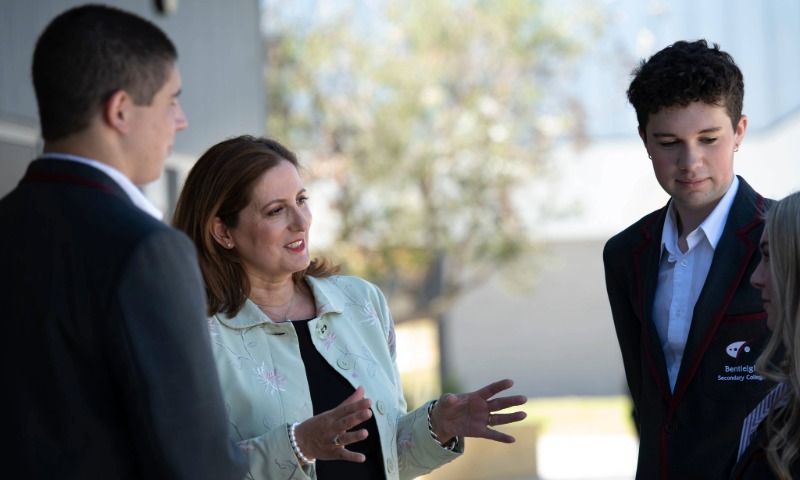
My personal mantra is always to keep the child at the centre of every decision. In every policy, conversation, or strategy, I ask myself: how does this impact the student’s learning, well-being, and sense of belonging? By staying focused on the child, even in the most complex situations, I ensure that every choice supports their growth, curiosity, and potential
What are some of your passions outside of work? What do you like to do in your time off?
Outside of work, I love activities that allow me to be creative and expressive. I enjoy painting, which gives me space to slow down, reflect, and explore ideas in a personal, tactile way. I also love dancing salsa. It’s energetic and a wonderful way to connect with music and movement. Both painting and dancing help me recharge and bring balance to my life outside of school
What is your biggest goal? Where do you see yourself in 5 years from now?
My biggest goal is to continue fostering a school culture where curiosity, creativity, and relationships are at the heart of learning and where every student and teacher feels supported to reach their full potential. Over the next five years, I see myself continuing to grow as a leader who inspires and mentors others, particularly in embedding innovative, student-centred practices across the school.
What’s your advice for young teachers starting out?
Laugh a lot, breathe deeply and celebrate the small wins. Learn from every challenge, keep your sense of humor and remember: loving the work doesn’t mean it’s always easy. Take care of yourself, enjoy the chaos and let teaching remind you why you chose this path.