


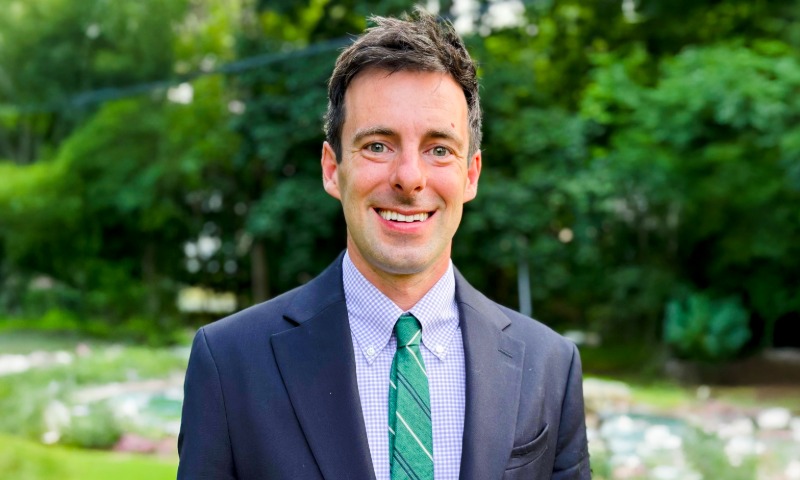
Noah Giansiracusa is an associate professor of mathematics at Bentley University, visiting scholar at Harvard, and co-host of the AI in Academia podcast. He is the 2026 recipient of a national communication award for “bringing mathematical ideas and information to nonmathematical audiences,” an honor shared by past recipients including Nate Silver, Roger Penrose, and Martin Gardner. Noah has appeared on CNN and BBC and written for Washington Post, Scientific American, TIME, Wired, Boston Globe, and others.
Recently, in an exclusive interview with Higher Education Digest, Noah shared insights into his background and expertise in mathematics and data science. He discussed his passion for explaining complex algorithms to students and the public, and his work as a visiting scholar at Harvard and associate professor at Bentley University. Noah also talked about his books, podcasting, views on AI’s impact on society and academia, and much more. The following excerpts are taken from the interview.
Hi Noah. Please tell us about your background and areas of expertise.
I started my professional journey in pure mathematics, which is the very theoretical kind of math where you come up with theorems and proofs about abstract concepts. In the late 2010s I noticed that many of my students were majoring in math because they wanted to do data science, so I decided to head in that direction myself. But what I found myself most drawn to, more than traditional academic research, is helping my students make sense of the data-driven algorithms that we all encounter in life but which few if any of us really understand. This became a real passion, I loved the sleuthing aspect of trying to figure these algorithms out even when the companies behind them were reluctant to spill many details, and I loved finding ways of explaining these complex algorithms to my students in ways that made them seem understandable and manageable. At some point I realized I could do this for the broader public, not just my own students, and that’s what I mostly do now and I love it!
What do you love the most about your current role?
I love that I spend my days talking to people in so many different areas and roles, academics in a range of fields but also professionals like journalists and congressional staffers, people I never thought I’d be interacting with when I first went into mathematics. I also love that I get to do so much public speaking and popular writing—academia is great, but I really come alive when I get to share my insights with people outside the ivory tower.
How do you think algorithms will continue to shape our society in the next 5-10 years?
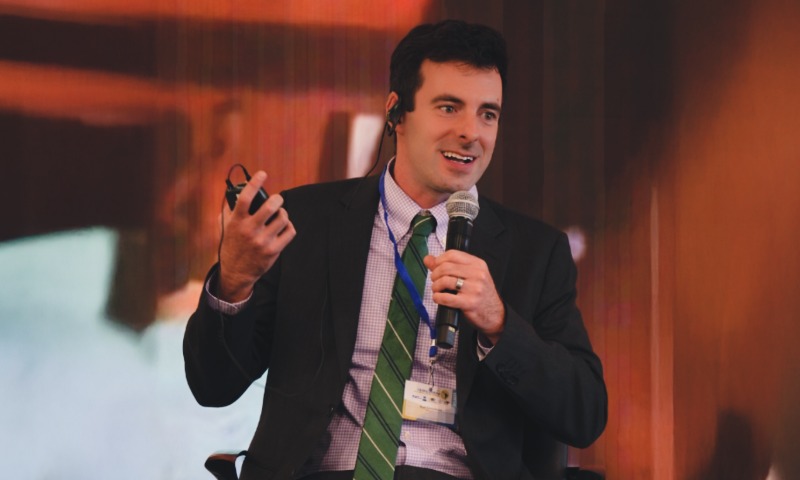
Wonderful question. I think it’s pretty clear that we’ll mostly be talking about AI when we talk about algorithms (perhaps that’s already the case), so the question is really about how AI will shape society, and that’s the trillion dollar question, very hard to answer but very important to think about. In broad strokes, I think one of the main movements we’ll see is a continuation of all the uses we’ve seen the past 20 years in the “surveillance capitalism” era of the internet, but everything will be more individualized: ads won’t just be targeted based on what you click on social media or search in Google, they’ll be woven into chatbot conversations and they’ll be served up around the web based on the intimate conversations you have with chatbots. There will be plenty more good and bad coming from AI to be sure, but that’s a big theme that I think is nearly undeniable and inescapable.
What impact do you think AI will have on academic and research?
This might sound silly but I think it’ll be somewhat similar to the impact of email—not necessarily in scale, AI will almost surely be bigger, but in terms of the general direction of the impact. What I mean is that email drastically sped up communication—researchers didn’t have to wait days for letter correspondence, journals could send out papers for review and reviewers could send back reports faster, etc.—so research has certainly sped up due to email, but at the same time I think we all feel inundated, that every day we have so many emails to catch up on that we barely have time for research any more. I suspect AI will be similar, it will speed things up so much that we all end up so busy trying to keep up that we end up with even less time to think deeply about research the way we used to. Hopefully I’m wrong and AI frees us up to think more slowly and deeply, but based on past technologies like email I’m just not too hopeful about that.
What inspired you to write your books, and what do you hope readers take away from them?
The first book, How Algorithms Create and Prevent Fake News, came out of the classroom. I was teaching a 1st-year seminar on data & society in Spring 2020 when the first pandemic lockdowns occurred. My students were sent home and we finished the class remotely, and while doing so we all had so many questions about what was happening and what we were seeing online and what news we could trust, so I pivoted the class to focus on the role data-driven algorithms play in our information ecosystem. I had several students tell me they were sharing what they learned with their parents and siblings at home. That’s when I realized I could share this material with a much wider audience than one classroom, hence the book. For the second book, Robin Hood Math, I was just so tired of reading critiques of big tech and what algorithms are doing to society without seeing any concrete suggestions for how people can resist the algorithmic influences and take back control of their lives—so I decided to write a book explaining how people of all backgrounds can use math to do this, how we can take back algorithmic power from the rich and give it to the rest of us.
How did you get involved in podcasting, and what do you enjoy about it?
Due to my books I had been invited on a few shows as a guest, but I never thought about hosting a show. Then one of my colleagues, Gaurav Shah, the head of academic technologies at my university, said he was planning on launching a podcast around AI in higher education and he heard one of my podcast appearances and thought we’d make a perfect pair. He’s a great guy, really smart and really kind and really fun, so it’s wonderful working with him. And he’s got a more practical and more optimistic outlook than me regarding AI and technology in general, so while we get along great there’s a healthy contrast between us that I think works well as co-hosts. The best part of podcasting really is spending time with my co-host, and meeting and spending time with the guests. Even if nobody listened to the show, it would be worth it for that.
Have you had any mentors or role models who have influenced your career path?
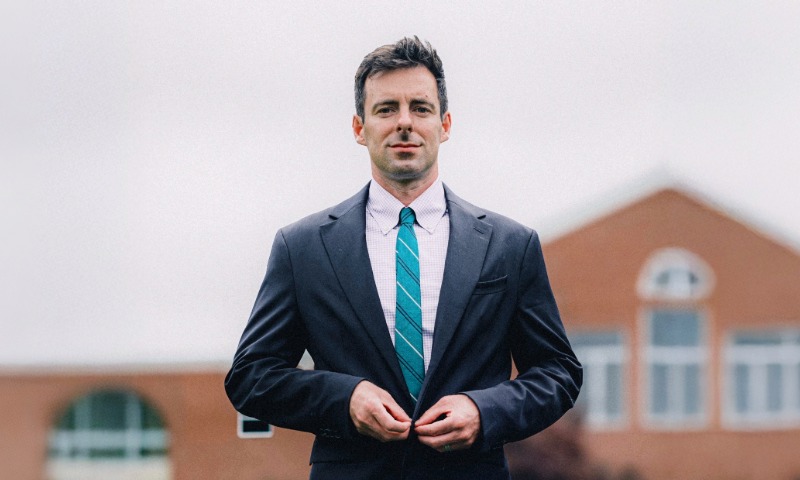
Yes! What seems to happen is that my career keeps taking these winding paths with unexpected twists and turns, and each time it does I somehow manage to find a wonderful mentor that’s perfect for whatever it is I’m doing or aspiring to do at the time. In college this was my math professor Jim Morrow, who recently passed away and whom my latest book is dedicated to, and my physics professor Gerald Seidler whom I’m still in touch with. In grad school it was my PhD adviser, Dan Abramovich, who has remained an important mentor for many years. In my early postdoc and tenure-track years it was a colleague Angela Gibney. In my latest career phase I feel like it’s less about an individual mentor and more about a whole community of people—some who have supported me more generously than I deserve, others don’t even know me but they serve as inspirations and role models. If I had to single out just a couple, I’d say the economist Paul Romer and my literary agent Luba Ostashevsky—both somehow saw a potential in me before anyone else (even myself!) saw it.
What is your favorite quote?
I tend to write very long rambling emails—I don’t know why, I just can’t seem to help it—and I recently saw a marvelous Mark Twain quote that has made me think about that: he wrote a lengthy letter to a friend and began “My apologies for such a long letter, I didn’t have time to write a shorter one.” (Some claim the quote has earlier origins, but you know how these things go…) You have to think about this quote for a minute, but it’s spot on.
What are your long-term career aspirations, and how do you see yourself evolving as a leader over the next five years?
Fascinating question, I’m so focused on the moment I haven’t thought about this! Honestly, I love what I’m doing so much that I just want to keep doing it as long as I can! I would like to help others join me on this career path though—I keep hearing from other academics who want to write books and do media appearances but don’t know how to break into that world—so I think I’ll focus more on mentorship in coming years and find more ways to share with others what I’ve learned about making this professional pivot from academia to public spotlight.
What advice would you give to aspiring leaders looking to drive positive change in your field?
In every discipline there are plenty of wonderful ideas that could make the world a better place, the challenge is getting these ideas out of academic journals and into the public’s imagination. Don’t overlook the importance of communicating ideas, not just creating them.