



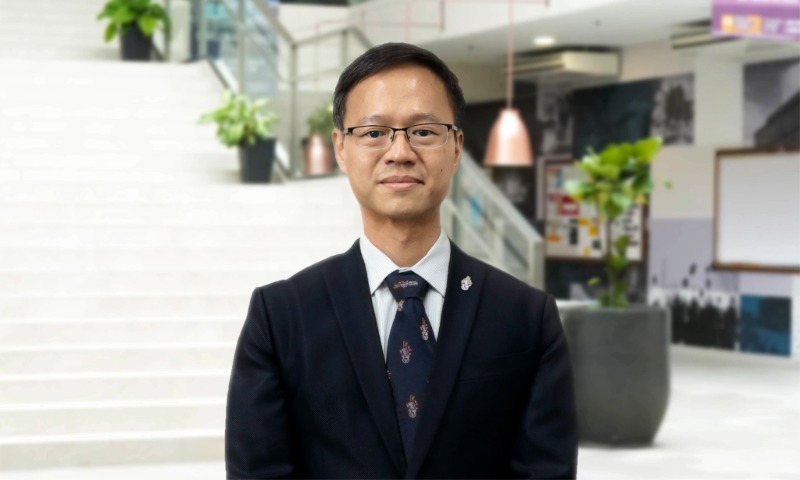
Professor Suan Hui Pu is currently Head of School of Engineering at the University of Southampton Malaysia (UoSM). Professor Pu has extensive experience in academic leadership especially in the context of transnational education. He has provided leadership over various foundation, undergraduate and PhD programmes in engineering. He has chaired several institution committees, including the Student-Staff Liaison Committee and the Special Considerations Board. Professor Pu is the leader of the Smart Manufacturing and Systems Research Group (SMSRG) and his current research interests include flexible electronics and sensors, wearable sensors for health monitoring, and electronics packaging. He is also the UoSM School of Engineering’s AI Champion.
Recently, in an exclusive interview with Higher Education Digest, Professor Pu shared insights into what it means to be an “engineer” in the 21st century, and how higher education should evolve to reflect that identity. The following excerpts are taken from the interview.
Hi Professor Pu. What drives your passion for engineering education, and what do you love most about your current role?
What has sustained my interest in engineering education over the years is the opportunity to contribute to something that is both intellectually rigorous and deeply practical. Engineering, at its core, is about solving real-world problems, and education plays a central role in shaping how future engineers approach those problems.
In my current role, what I value most is the ability to work closely with colleagues and students to co-create the future of the School of Engineering. We are looking into new innovative project spaces that support our programmes and also student-led competitions.
I find it particularly rewarding to support academic staff in their development, whether in teaching, research, or engagement, and to see students grow in confidence and capability over the course of their studies.
How do you see the future of engineering education evolving in view of the AI revolution, and what opportunities do you see for universities to adapt and thrive?
Engineering education is entering a period of significant transformation. One of the most visible drivers is the rapid advancement of AI and automation. Tools that can solve complex problems almost instantly are already changing how engineers work, and this inevitably raises questions about how we teach.
In my view, this does not diminish the importance of foundational knowledge. On the contrary, a strong understanding of first principles becomes even more important when students are using powerful tools. They need to be able to interpret results, question assumptions, and exercise judgement—skills that cannot be outsourced to technology.
There is an opportunity for universities to rethink how learning takes place. Rather than focusing solely on procedural problem-solving, we are placing greater emphasis on design, systems thinking, and open-ended challenges, where AI becomes a tool that enhances, rather than replaces, learning.
At the University of Southampton, we have launched an AI skills training programme for all undergraduates, equipping them with AI skills, ethics and creativity. This goes beyond basic prompting skills to ensure they are fluent in using AI tools effectively and responsibly within their domain of expertise.
What do you think is the most important thing that universities can do to train industry-ready engineers?
Engineering education must not exist in isolation, and our programmes must reflect the realities of professional practice. This goes beyond occasional consultation. It involves establishing structured mechanisms—such as advisory panels, collaborative projects, and input into curriculum design—that allow industry perspectives to inform what we teach.
My own experience in our Industry Advisory Council has been particularly valuable in ensuring that programme outcomes remain aligned with emerging trends and workforce needs. At the same time, our academic staff benefit from these interactions, as they are inspired to steer their teaching and research directions.
That said, industry readiness is not only about technical skills. Employers consistently highlight the importance of communication, teamwork, adaptability, and ethical awareness. Universities are well placed to develop these attributes through carefully designed modules and courses.
Ultimately, the goal is to produce graduates who are able to grow and lead the way in any technological revolution of the future over the course of their careers.
How do you think universities can work to create a more inclusive and equitable environment for students?
One important element is recognising that students come from different educational and socio-economic backgrounds, and that these differences can influence access to opportunity. Contextual admissions can play a role here, by allowing universities to consider achievement within the context of a student’s circumstances, rather than relying solely on standard metrics.
However, access is only the first step. We must also ensure that students feel supported throughout their studies. This includes inclusive teaching practices, effective personal academic tutoring, and pastoral support structures that recognise the varied challenges students may face.
In my own roles—whether as a senior tutor or through involvement in special considerations processes (extenuating circumstances)—I have seen firsthand how important it is to approach each case with empathy and careful judgement. Creating an inclusive environment is not about lowering standards; it is about ensuring that all students have a fair opportunity to succeed.
What is your biggest goal in leading your School, and what are your immediate priorities?
My overarching goal is to build a School that is academically strong, forward-looking, and well-connected to both industry and society.
In the immediate term, this involves consolidating the delivery of recently introduced programmes while seizing the opportunity that new programmes present for rethinking how we structure curricula and to introduce innovations that reflect current and future needs.
Looking ahead, I am particularly interested in developing innovative programmes and regional partnerships that build on our strengths as an international campus of a UK university in Malaysia. There is significant potential to collaborate with industry, government, and academic partners across the region to address shared challenges and create new opportunities for our students and staff.
At the same time, people remain at the centre of everything we do. Supporting staff development, fostering collaboration, and maintaining a positive working environment are all essential to achieving our longer-term goals.
What advice would you give to early-career professionals looking to make a positive impact in engineering education?
My advice would be to approach your career with passion, curiosity and intentionality. You have to ask yourself why you aspire to be an academic and what positive change do you want to make in that role.
First, focus on building a strong foundation in your discipline. Credibility in engineering education is grounded in subject expertise, and this underpins both teaching and research.
At the same time, be open to developing your approach to teaching. Student cohorts are changing, and there is increasing scope for teaching innovation, whether through new pedagogical approaches, the use of technology, or more experiential forms of learning. Small, thoughtful changes can have a significant impact on student engagement.
In terms of research, I would encourage early-career academics to think about how their work can be both academically rigorous and impactful. This may involve interdisciplinary collaboration or engagement with industry and external stakeholders.
Finally, pursue your career in an institution that projects values consistent with your own and seek out opportunities to contribute to your academic community. Leadership and service roles, even at an early stage, provide valuable insights into how institutions function and how change can be implemented.