



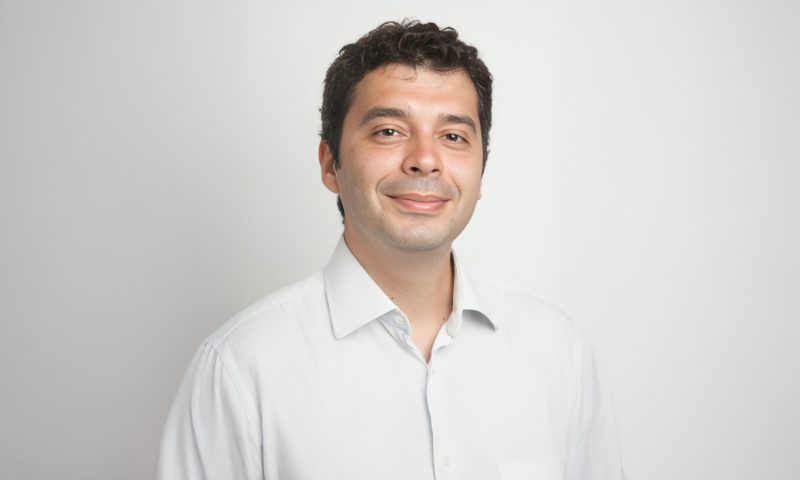
Hugo Horta is an Associate Professor at the Faculty of Education at the University of Hong Kong. His career path is international, non-linear, and multidisciplinary. During his PhD, he spent time in the US and the Netherlands. Following his doctoral studies, he completed a two-year postdoctoral fellowship in Japan. He then worked for the Portuguese government, where he was appointed as the national delegate to the European Commission on human resources and mobility. He also served as a researcher and deputy director at a research institute in Portugal. Hugo Horta is currently the Chairperson of the Consortium of Higher Education Researchers (CHER), one of the Editors-in-Chief of the journal Higher Education, and a member of the Steering Committee of the Higher Education Research Association (HERA). Additionally, he is the director of the Consortium for Higher Education Research in Asia (CHERA). His primary research interests focus on the intersecting issues of knowledge production, researchers’ education, careers, mobility, productivity, and collaboration.
In a recent interview with Higher Education Digest, Hugo Horta discussed his experience in doctoral education, international academic exchange, and higher education policy. He also shared his views on how digital platforms, open science, and artificial intelligence are reshaping research collaboration, mentorship, and the future of doctoral programs worldwide.
Could you walk us through your professional journey and what inspired your focus on doctoral education and research development?
I completed my doctorate at Instituto Superior Técnico, which was then the Faculty of Engineering of the Technical University of Lisbon (it later merged with the University of Lisbon). Although my PhD was based in Portugal, I spent most of my time abroad, in the Netherlands (at the University of Twente) and in the United States (at Carnegie Mellon University). After concluding my PhD, I spent nearly two years as a postdoctoral researcher funded by the Japanese government at Tohoku University. I then returned to my home country, Portugal, where I served as an advisor to the Secretary of State of the Ministry of Science, Technology, and Higher Education for a year and a half. Following this experience in policymaking, I returned to my alma mater, where I worked as a deputy director of a research center and as a researcher. In 2014, I was offered a position as an assistant professor at the University of Hong Kong, where I have been ever since, now holding the position of associate professor. Like many others, my career trajectory has inspired or at least influenced my research interests. I have always enjoyed research, and in Portugal, during my bachelor’s degree, students were already exposed to research experiences, which sparked my interest in pursuing research. During my PhD, I became more aware of issues affecting knowledge production and scholarly activities in academia. I noticed that many of these issues were related to doctoral education, its socialization processes, and the career evolution of doctorate holders after graduation. This led me to become equally interested in the experiences and structures of doctoral education and how these influence the future trajectories of doctoral students and graduates. I am also interested in the context that frames their experiences, as well as their decision-making concerning employment, mobility, and internationalization.
What are some of the key challenges doctoral graduates face today when transitioning into academia, industry, or alternative career pathways?
Doctoral graduates face an increasingly competitive labor market, not only in academic settings—which remain the most desirable for many—but also in industry and government sectors. This competition varies from country to country; in nations with more technologically advanced industries and larger corporations, PhD graduates often find it easier to secure jobs in these sectors. In countries where such opportunities are scarce, migration to other countries becomes a viable option, often leading to brain drain. However, it’s important to note that industry jobs tend to be more specialized, primarily favoring specific fields of knowledge, particularly those in STEM. Not all doctoral graduates are interested in or prepared for roles outside of research-oriented jobs and sectors. During their doctoral studies, students are often socialized into adopting a researcher identity, aligning with scientific and academic values and norms that may not necessarily correspond to those prioritized in industry or other sectors. There is a need for better alignment between the training and preparation provided by universities and the expectations of employers in non-academic sectors. Employers, too, need to better understand the benefits that PhD graduates can bring and recognize that successful integration may require adapting work roles and activities to the unique skill sets of these graduates.
What role should institutions play in preparing PhD students for careers beyond the professoriate?
Many universities worldwide are already offering courses, workshops, and other training opportunities designed to prepare doctoral students for careers outside the higher education sector. However, a common issue is that many PhD students entering traditional doctoral programs are primarily interested in academic careers and, as a result, pay little attention to these offerings. It is also worth noting that some of these courses, workshops, and training programs are not particularly effective in preparing students for roles in other sectors. Often, they are led by academics who have limited knowledge of the needs and work dynamics in industry, government, and non-profit organizations. There is a growing number of professional doctoral programs, some of which are industry-focused or developed in collaboration with industry. However, in most countries, these programs are still relatively few and do not always deliver the expected outcomes. More doctoral programs should be established in partnership with government and industry, training students in research in a way that prepares them for these sectors. For example, the output of these doctorates might not necessarily be publications in international peer-reviewed journals but could include patent applications or the design and development of prototypes.
From your perspective, what are the most pressing systemic challenges facing higher education today, particularly in doctoral training and research ecosystems?
Incentives are crucial in this context. Currently, most countries emphasize supply-side incentives. Public policies fund scholarships and fellowships for PhD students, while universities aim to increase their PhD student numbers, viewing them as assets to boost research productivity. More publications enable universities to engage more deeply in research and compete in global university rankings—a competition involving both universities and countries. Families and students are attracted to PhD programs based on human capital theory, particularly the belief that more education leads to higher salary premiums. This focus has led to a rapid increase in the number of PhD students in many countries, with some attending programs at universities that may lack the capacity to provide quality education. Consequently, these students graduate and add to the growing number of PhD holders who, particularly in more scientifically and economically advanced countries, already struggle to find stable and secure jobs in higher education (and increasingly in other sectors as well). Many are forced to take fixed-term contracts that are insecure and often poorly paid relative to their qualifications. The focus of public policies needs to shift more towards the demand side, creating conditions for non-academic sectors to employ PhD graduates. For example, employment policies for PhD graduates could be part of state reforms, where PhD graduates are hired to serve in public organizations, contributing to the qualifications of state institutions and offering a set of skills and competencies often overlooked in public service. These positions could be research-focused or not, as PhD graduates, if well-trained, have the ability to manage and provide scientifically-informed solutions.
What shifts do you believe are needed to make research-intensive education more inclusive and sustainable?
I believe significant advances have been made in making doctoral education more inclusive and accessible. There is an increasing number of PhD students from lower socio-economic backgrounds, more women pursuing PhDs—including in STEM fields where the gender gap, though still present, is slowly declining—and a growing number of ethnically diverse groups participating in doctoral studies. Compared to figures from the late 20th century, we can observe a major and positive trend in this regard in many countries worldwide. The issue of sustainability is more complex to address because it is highly path- and context-dependent. However, one thing is clear: the sustainability of doctoral education must be grounded in offering high-quality education and training during doctoral studies. It is also essential to maintain high levels of demand for doctoral graduates, as doctoral education is not only about what graduates can offer to the labor market and society from a civic perspective (as is the case with bachelor’s and master’s level education), but also about contributing to scientific progress and the sustainability of science, which is critical to knowledge societies around the world.
How do global mobility trends, such as postdoc migrations or international academic exchange, impact research productivity and career advancement?
Mobility is essential, and while all forms of mobility, including virtual mobility, are relevant, there is nothing quite like the physical mobility of people for both short and long periods. Moving to different places allows individuals to experience new cultures, societies, and ways of thinking, encounter new ideas, and build their own knowledge base. This process is not entirely possible without mobility, as demonstrated by my studies on academic inbreeding. One needs to experiment and be exposed to different environments to learn more and gain a broader understanding of the world. Mobility stimulates creativity and fosters interests that may lead to groundbreaking research and integration into international and global scholarly communities. A period of mobility outside one’s institution, particularly abroad, should be an important consideration in promotion and tenure decisions in academia. It is crucial to ensure that those who are mobile are guaranteed safety and the freedom to learn autonomously in their host institutions. These host institutions should be prepared to create conditions for favorable visits and/or the integration of newly hired academics from elsewhere. This approach ensures that both individuals and institutions benefit the most from mobility.
In what ways can digital platforms or hybrid models support cross-border research collaboration and mentorship?
I believe digital platforms and hybrid models can play a crucial role in supporting collaborations and mentorships. These platforms are particularly important for individuals or groups who lack access to local resources and mentoring. They can ensure that such individuals benefit from mentors elsewhere who can train and guide them in their studies. Regarding research collaborations, digital platforms have revolutionized the way collaborations and even supervision work. For instance, while employed at the University of Hong Kong, I successfully supervised three doctoral students at Portuguese universities, despite the distances and different time zones. These supervisions were highly successful, resulting in several co-authored publications and distinguished PhDs. Additionally, digital platforms are excellent for broadly disseminating research results, making them accessible to those who may have difficulty accessing journal publications due to their institutions not subscribing to expensive publisher packages.
As we move into an era of AI, open science, and digital scholarship, how must doctoral programs evolve to remain relevant and impactful?
This is a complex question to answer. While the exact impact of AI on doctoral education remains uncertain, one thing is clear: there is a need to integrate AI-related technologies into doctoral programs. This includes teaching PhD students how to use AI, as well as addressing the ethical and other concerns that may arise from its use—or overuse. Open science, which I closely associate with the development of digital platforms, is already a reality and will become increasingly central to the work and training of PhD students. This is particularly true for those in less developed countries, where resources are more scarce. When implemented effectively, open science can play a crucial role in leveling the playing field and enhancing the contribution of PhD students to knowledge production, including the incorporation of indigenous knowledge that can greatly benefit the global knowledge base.
How can universities balance the push for research productivity with the mental health and well-being of graduate researchers?
Universities are involved in their own competitive landscapes, and while they strive to balance productivity with mental health and well-being, achieving this balance is challenging. This issue is influenced by various factors, including context, type of university, and sometimes the field of study and discipline. However, much also depends on how PhD students, graduates, and academics perceive their surroundings and the expectations placed upon them. These perceptions can vary significantly by region and country. In countries like China, competition is a fundamental aspect of society, and the labor market is becoming increasingly competitive as the number of tenure-track jobs and vacancies diminishes. This has affected both prospective and current PhD students, leading them to focus primarily on publishing during their doctoral studies. This narrow focus can be detrimental, as it may cause students to overlook other crucial aspects of their PhD education. If these elements are not learned and internalized during this stage, it can result in academics who are less concerned with teaching, community engagement, and mentoring future students. I have had students ask me about starting publications in our first meeting after their acceptance into the PhD program. If students are so driven to publish because they see it as the key to academic recruitment, they are likely to spend their entire doctoral program in a state of anxiety and stress, which can have severe consequences for their mental health and well-being. All the recent projects I have researched indicate that students are aware of the strain on their mental health, but they feel they have no choice because the competitive labor market overshadows all other concerns. In this context, universities have limited options, as the core issue relates to recruitment policies that need to be reformed.