



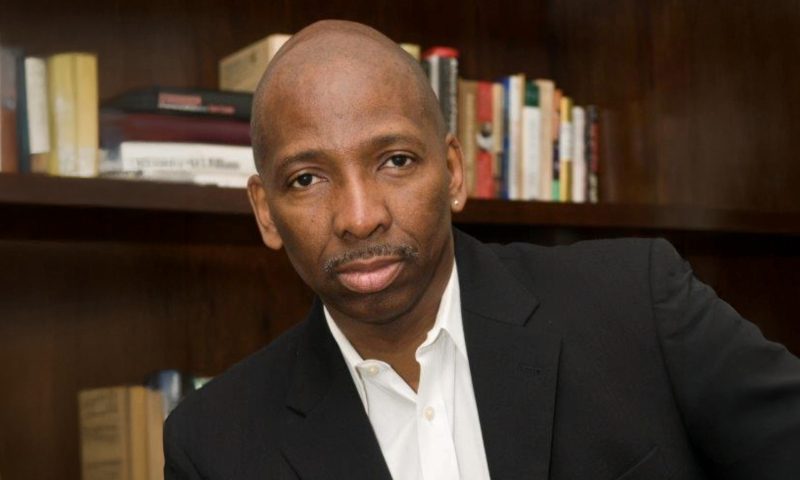
Frank E. Dobson, Jr., serves as Chief Diversity Officer at Otterbein University, where he also teaches English. Frank has worked in numerous administrative and teaching roles across the country, including at Lafayette College, Wright State University, and Vanderbilt University. Frank has published scholarly work on gender, race, and class, and two novels, Rendered Invisible (2010) and The Race is Not Given (1999). Frank recently co-authored (with Jasmin Dobson) a book for young readers, A Leader with Courage: The Impact of Congresswoman Cardiss Collins (2023). Frank loves working with students, community service, and spending time with family.
In a recent interview with Higher Education Digest, Frank E. Dobson discussed his experience in inclusive academics and DEI. He shared his views on DEI strategy in higher education, advancing institutional goals around diversity, DEI priorities shift, and many more.
How have your personal experiences shaped your approach to building inclusive academic communities?
My personal experiences have helped to shape my approach to building inclusive academic communities in that I utilize my experience as a first-generation college graduate. That experience, of being a college student from a working-class background, informs my decision-making and approach as I seek to shape academic communities that are infused with the spirit of The Beloved Community and the concept of Ubuntu (“I am, because we are”). For example, years ago, I attended a conference on “working-class academics.” As an African American, I expected that many of the conference attendees would be people of color. That was not the case; the majority of attendees were white. During the conference, I gained an increased sense of kinship with fellow scholars who, at first glance, might seem very different from me. However, I became acquainted with the stories of academics whose parents, like mine, worked as domestics or in factories. My institution, Otterbein University, has a new DEI plan. We call it our “Belonging Plan.” Its title is ‘Belonging, Tied Together: Otterbein Now.” Part of the title is taken from a speech by Dr. Martin Luther King, Jr., in which he speaks about our, “being tied together in a single garment of destiny.” My personal experiences help guide me as I seek to create a sense of belonging for all.
How do you define a successful DEI strategy in a higher education context today?
A successful DEI (or, Belonging) strategy today is one that must be cross- institutional. I have worked on several DEI strategic plans. The most successful ones were those that included input from across the institution. Those plans took the time to listen to all university constituencies. The committee that helped guide and write the plan was composed of faculty, staff, and students. We held listening sessions, utilized research, and studied the institutional saga. We also made sure to listen to alumni, community members, and colleagues from neighboring campuses. A successful diversity plan is one which brings together the campus community to begin to ask questions about “how might we” make our school more inclusive and welcoming. Thus, the implementation of the plan must reflect that spirit of inclusiveness. Finally, the plan must be widely shared, internally and externally, so that it can be seen as part of the institution’s mission and values.
What are some key challenges institutions face in operationalizing equity and inclusion across departments and campuses?
Three of the challenges that institutions face in operationalizing equity and inclusion across departments and campuses are the following: one, cultivating and maintaining ongoing collaborative relationships between units within the institution; and two, extending support to departments as they work to implement their goals and strategies outlined within the DEI plan. Thirdly, there must be deadlines for the implementation of the stated goals, with periodic revisiting of the goals to gauge progress and evaluate the ongoing feasibility of the goals, given the dynamic nature of college campuses. It is important that a DEI plan and its initiatives are seen as “boundary busting” programs and policies that help campus members discover more ways to work collaboratively. The reasons for this are multiple, including the following: shared funding, the probability of increased buy-in and participation, and, most importantly, an increased sense of collaboration within the institution.
How does your office collaborate with academic leadership, faculty, and student affairs to advance institutional goals around diversity?
My office collaborates with academic leadership, faculty, and student affairs, which reflects our institutional commitment to collaboration. My office sees itself as one which serves the entire university community; indeed, my office acts as “the eyes of the campus,” offering insights that other offices and units may not know. My office is one of service and advocacy, and a big part of “advocacy” is the articulation of perspectives that may have been overlooked by others within the institution.
What role does intersectionality play in designing inclusive policies and programs on campus?
The role that intersectionality plays in designing inclusive programs and policies on campus is the recognition that all humans possess or carry intersectional identities. In his work, The Fire Next Time, the author James Baldwin states, “colour is not a human or personal reality; it is a political reality.” This statement by Baldwin speaks to intersectionality in that it is both an acknowledgment of difference, but also a statement about our common humanity. An informed sense of intersectionality is crucial to the designing of programs and policies which honor and respect the varying and multiple identities of campus members, while also offering guidance to the entire campus.
How can institutions better support underrepresented faculty and staff in their professional development and retention?
One way to better support underrepresented faculty and staff is to make sure that there are campus faculty and staff affinity groups that help them interact with their peers who come from similar backgrounds. Another way to support underrepresented faculty and staff is to sponsor leadership or professional development initiatives, which, while perhaps open to all, recruit underrepresented faculty and staff for participation within these programs. The last thing is to make sure that mentoring is in place for underrepresented faculty and staff to increase their sense of belonging.
How are you seeing DEI priorities shift as institutions become more global and digitally connected?
I agree that DEI priorities have perhaps shifted as institutions are becoming more global and digitally connected. There is a sense in which our digital connectedness can divide us, particularly if that connectedness serves to conceal those things that distinguish us. The arrival of the digital classroom, for example, can be seen as a factor that minimizes difference, reducing it (the distinctiveness of our students) to a screen and text. However, I would submit that becoming more global, more connected, also necessitates the work of DEI. The work of DEI is a continuous call back to the recognition that there are those who seemingly have been rendered invisible or silenced. DEI is simply a set of strategies to help ensure that they will be seen and heard, acknowledged. To quote the late Ruth Bader Ginsberg, “We will all profit from a more diverse, inclusive society, understanding, accommodating, even celebrating our differences, while pulling together for the common good.”