



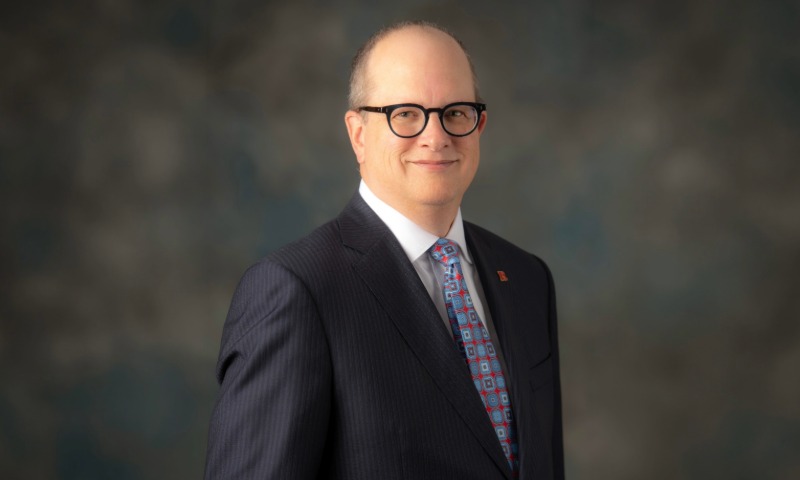
Michael E. Zwick, Ph.D., is the Senior Vice President for Research at Rutgers University, a Professor of Genetics at Rutgers-New Brunswick, and a fellow of the American Association for the Advancement of Science (AAAS). As Rutgers University’s Chief Research Officer, he oversees a university-wide research enterprise with nearly $1 billion in sponsored awards. He leads the Office for Research (300 staff, $80 million budget) and serves as Rutgers’ chief research officer and institutional official for the Human Research Protection Program (HRPP) and Institutional Animal Care and Use Committee (IACUC). His people-focused leadership centers on cultivating emerging leaders who bring strategic clarity, operational rigor, and partnership skills to transform 20th-century research universities into agile, innovative 21st-century institutions. Together, the teams he leads foster a culture of purpose, accountability, and achievement that aligns with the university’s tripartite mission of teaching, research, and public service, empowering faculty, students, and staff to reach their highest potential.
Recently, in an exclusive interview with Higher Education Digest, Michael shared insights from his journey as an adoptee whose early curiosity about nature and heredity led him to genetics, and now as Senior Vice President for Research at Rutgers University, where he oversees a nearly $1 billion research enterprise. On the future of research, Michael emphasized that institutions that streamline processes, measure contributions across teaching, research and service, and create space for collaboration will attract top talent. His advice to emerging scholars is that leadership is a skill built through training and experience, and the greatest joy comes from enabling others’ research and ensuring no one is left behind as we redefine the research university together. The following excerpts are taken from the interview.
Hi Michael. Every research leader’s path starts with a question that refuses to let go. What early scientific or human question first pulled you into genetics and research, and how has it evolved into your mission today?
My curiosity fueled my path to a career in genetics research and arose as a confluence of two distinct influences. The first is that I am an adoptee. All adoptees, to some extent, feel that they are a natural experiment in the interplay between nature and nurture. For me, a natural curiosity about nature and the processes of heredity was the outcome. The second was a belief developed in high school that genetics would be an important area of future discovery. I remember a strong desire to be involved, and this shaped my academic pursuits.
What part of your role as Chief Research Officer gives you the deepest sense of purpose today?
Our shared core values of the Office for Research team, respect, simplicity, collaboration, and excellence, underlie everything that we do. We view ourselves as a key member of every Rutgers faculty member’s team. Together with Rutgers faculty, we seek to generate knowledge and solve problems that impact the everyday lives of our neighbors in New Jersey and beyond. Catalyzing an environment where successful collaborations can thrive brings me a deep sense of purpose.
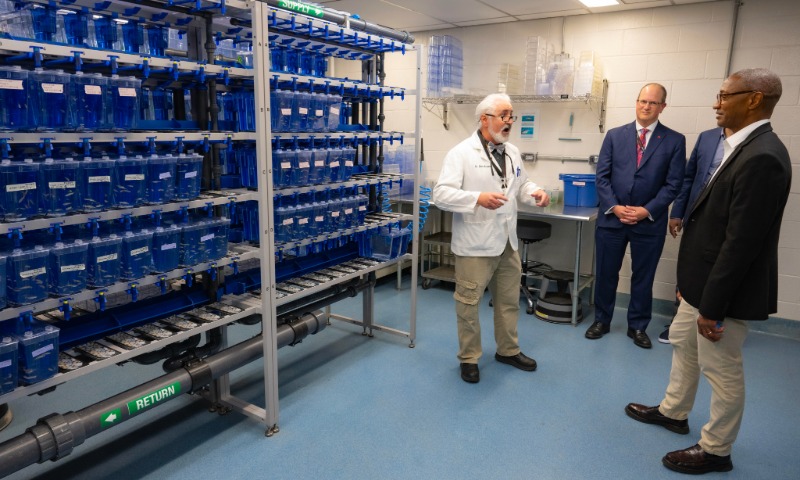
Research universities are being asked to be more agile without losing academic rigor. What structural change will define whether institutions thrive or stall by 2030?
Lasting success comes from relationships, not transactions. Yet research is a highly regulated process, and when done at scale, it requires an enormous number of transactions throughout the research lifecycle. Collaboration between researchers, trainees, and staff is essential for success. Those institutions that can perform transactions efficiently in a collaborative environment that embraces simplicity and operational excellence will have more time to establish and enrich key relationships. These are the institutions that will thrive in the 21st century.
Open science, data sharing, and reproducibility are reshaping norms. What practice in research conduct will be unrecognizable five years from now, and why?
The practice of scientific research has always required data sharing and reproducibility. Reproducibility is best achieved by testing novel hypotheses or predictions that arise from prior research. At present, the practices and publication delays associated with scientific publication hamper progress. A revolution in scientific publication could radically transform the nature of open science and the generation of knowledge.
The next generation of faculty and researchers has different expectations of work and impact. What cultural or operational shift will universities need to attract and retain top research talent?
Public universities need to embrace their tripartite mission more consciously: they teach, pursue research to generate new knowledge, and provide public service. The convergence among these parts of their tripartite mission provides opportunities and challenges. Impact should be assessed through contributions to teaching, research, and public service. Universities need to develop improved, streamlined approaches to measuring faculty contributions without burning out their faculty and staff. Deliberate experimentation and innovation are needed if we are to evolve the very old structure of a university to meet the challenges of the 21st century. Universities that simplify processes, measure outcomes, and provide room for experimentation will be the ones that succeed in attracting and retaining top research talent and most effectively meet their tripartite mission.
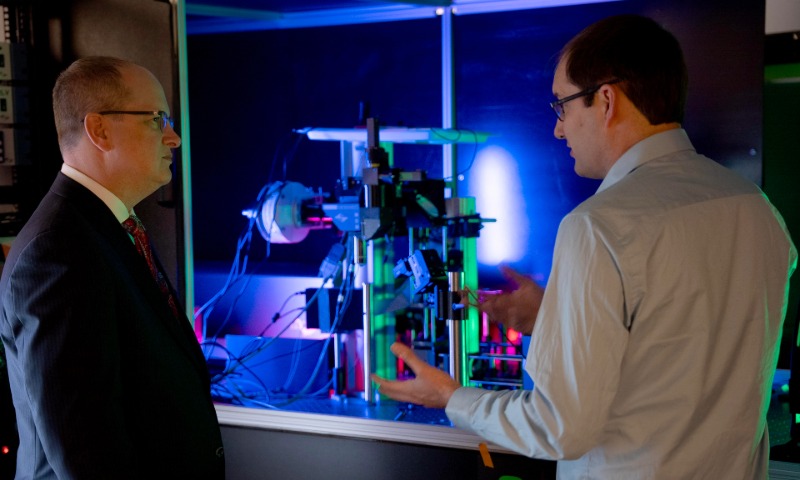
Leaders are shaped by what they read when no one is watching. What book has most influenced how you think about discovery, uncertainty, or leadership, and why do you return to it?
I have been most influenced by Getting to Yes: Negotiating Agreement Without Giving In. Emphasizing interests over positions and aiming for win-win outcomes reinforces the idea that lasting success comes from relationships, not transactions. I return to it because it speaks to my vision for how universities need to build teams to pursue their most important endeavors. If we cannot succeed together, we will fail separately. These ideas in this book fuel my motivation to ensure that we succeed together and do not leave anyone behind.
The intensity of research leadership demands mental space to reset. What personal ritual or habit helps you step back, gain perspective, and return with clarity?
Regular exercise is essential for me to be at my best. I enjoy running, especially along the Delaware & Raritan Canal. A run not only gives me time to reset but also often lets me imagine novel solutions that elude me at work.
What is your biggest goal? Where do you see yourself in 5 years from now?
As an academic and former naval officer, I have drawn on my unique career path and lived experiences to prepare myself for the most complex leadership roles. I enjoy leadership roles where I can work with fantastic teams that collaborate to achieve excellence. Five years from now, I plan to continue in challenging leadership roles with teams that are redefining the 21st-century research university.
If you could give one message to a postdoc or assistant professor wondering if leadership is for them, what would you tell them about the responsibility and joy of enabling others’ research?
I advise them that leadership is a skill developed through training, contemplation, and lived experience. Seeking opportunities to develop their leadership skills will benefit their personal, academic, and research activities. In the process of improving their leadership, they will identify mentors and role models who can help them develop their academic and research careers. These mentors and role models will help them explore whether they seek greater responsibility and desire to enable others’ research. If the answer is yes, then they will be well prepared to pursue the opportunities that will surely arise during the course of their career.