


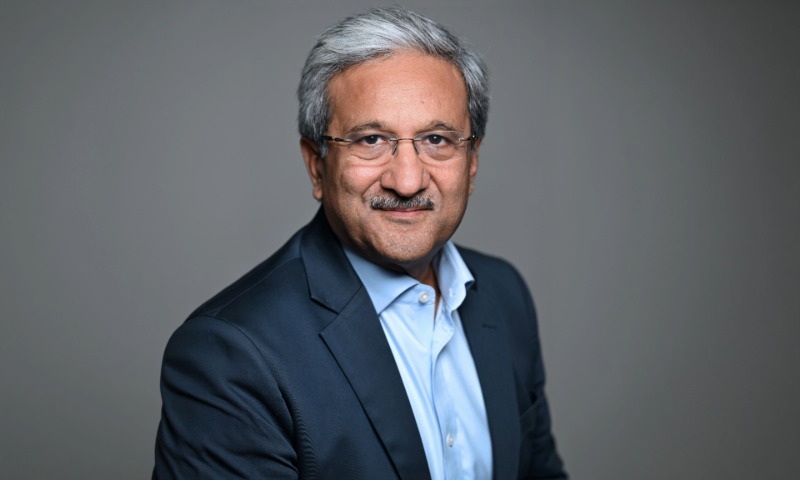
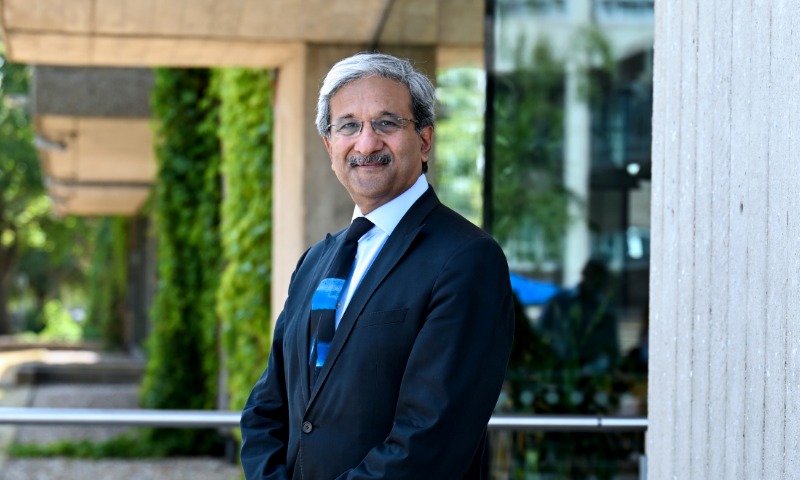
Ashley Braganza is Professor and Chair of Business Transformation at Brunel University of London and Founder and Co-Director of its Centre for AI: Social and Digital Innovation. He created the UK’s first non-technical MSc in AI Strategy and hosts The AI Adoption Podcast, whose guests have included parliamentarians, chief executives and AI start-up founders. A Fellow of the British Academy of Management, he has published over 100 papers and three books, and has completed more than 50 transformation projects with FTSE 100 companies, UN agencies, and public bodies.
Recently, in an exclusive interview with Higher Education Digest, Professor Ashley Braganza shared insights from a career built on transformation, from discovering self-direction during his MBA to founding Brunel’s Centre for AI: Social and Digital Innovation and creating the UK’s first non-technical MSc in AI Strategy. On AI, he believes universities and companies must shift from supplying static skills to cultivating “constantly-reflexive” graduates who can learn, unlearn, and relearn in real time as work changes. His advice to emerging leaders is to master tenacity: brilliance opens doors, but it is persistence through ambiguity and setbacks that actually delivers change. The following excerpts are taken from the interview.
What was the defining moment that set you on this trajectory of transformation?
Looking back, it was my MBA at Strathclyde Business School. I arrived expecting to acquire a set of management techniques. Instead, I discovered something far more valuable: myself. It was the first time I understood that I could set my own boundaries and then push past them, that no one else was going to set my goals or decide how far I could go. That was mine to determine.
It sounds simple, but it was genuinely transformational. Up to that point, like many people, I had allowed the ambitions others held for me to shape my direction. Strathclyde was where I took hold of my own trajectory. I realised I could build the skills and the confidence I needed, and that the responsibility for doing so rested with me. It was an act of self-discovery in the sense of seeing my then self clearly and deciding who I wanted to become. That experience awakened the need to keep testing myself, to keep pushing at the edge of what I think I am capable of. That restlessness has never left me. Every role I have taken on since, in academia and in business, has really been another expression of it.
What part of your current role energizes you most, and why does it still feel like meaningful work?
Engaging with people, especially with senior leaders who are wrestling with real problems. I founded Brunel’s Centre for AI in 2018, and as its Co-Director, I spend much of my time with executives, policymakers and students who are all facing the same question from very different vantage points, namely, what does artificial intelligence actually mean for societies, organisations, and people and how do we preserve human dignity, values and equity as these technologies become ubiquitous?
AI is one of the most pressing and challenging issues of our time. It is moving faster than our conceptual models can keep up with, which makes it endlessly interesting. I love working alongside academic colleagues to tease apart the assumptions, to challenge and overturn the conventional ways of thinking that no longer serve us. There is real intellectual pleasure in that. And the part that gives the work its meaning is helping people make sense of it all, guiding someone from a position of anxiety or confusion to one of clarity and confidence, whether that person is a chief executive or a first-year student. Watching people move from bewilderment to genuine understanding in a fast-changing field makes it meaningful rather than merely busy work.
Looking five years ahead, what single shift will most redefine how universities and companies collaborate on talent?
The balance of power between supply and demand. For most of their history, universities taught students and then supplied their graduates to employers, with employers having little or no say in the taught content. Curriculum design and delivery sat almost entirely with the university. That is changing.
In the next five years, employers will exert far more influence from the demand side. They will specify, much more precisely than before, the hard and soft skills they want in the people they recruit, and they will look to universities to supply graduates who meet their needs. Whether that relationship becomes genuinely collaborative is, to my mind, still an open question. Employers may prove very demanding in terms of their expectations of universities, and the interesting tension is whether universities will be in a position to push back or simply have to acquiesce.
There is a second shift running alongside it, which is the changing expectations of students themselves. In the UK, students may become more powerful still, choosing very deliberately where they spend their tuition fees according to which university meets their needs most exactly. They will expect the levels of service they receive from any other provider, because they increasingly see knowledge, the core product of every university, becoming a commodity with Large Language Models at their fingertips. Universities that understand this early will be the ones that thrive.
How will the definition of “work-ready graduate” change by 2031, and what should institutions do now?
I think the very phrase “work-ready graduate” will become redundant, because the nature of work itself is changing fundamentally under the influence of AI and robotics. Preparing someone for jobs makes little sense when those jobs may not exist five years from now.
The phrase I believe will gain currency by 2031 is the constantly reflexive graduate. That, for me, is the only enduring capability, the one that will see current and future graduates succeed. As each successive wave of change arrives, be it economic, technological, or social, it will be the graduates who can perceive the trends early and learn to ride them, rather than be knocked over by them, who flourish. Note that I say reflexive rather than reflective. Reflection looks back and makes sense of the past, whereas reflexivity is the capacity to adjust yourself, your behaviours, actions, and mindset in real time, as you live through an event and while conditions change around you.
Institutions’ strategies follow directly from that. We need to stop designing curricula around static bodies of knowledge and start deliberately cultivating adaptability, teaching students how to learn, unlearn, and relearn, and building the confidence that will enable them to keep doing so throughout their working lives. The universities that will remain attractive are the ones that treat reflexivity itself as a graduate attribute worth developing and assessing.
What’s one shift in governance or quality frameworks you believe will move from “pilot” to “mandatory”?
For me, the clearest candidate is the assurance of responsible AI use, moving from something institutions pilot voluntarily to something accreditation bodies and quality frameworks require as a matter of course. At present, most universities are still experimenting, with policies here, working groups there, and guidelines enforced to differing degrees. Within a few years, I expect regulators and accreditors to ask institutions to demonstrate, formally, ways in which AI is embedded and governed in teaching and assessment, and how they assure the integrity of the qualifications they award in an AI-saturated environment.
The same logic applies to AI literacy as a graduate outcome. Evidencing that graduates can use these tools capably and critically is, today, considered innovative. In a few years, these skills will become an expected standard against which programmes are judged. Institutions would be wise to build the governance and the evidence base now, while it is still a source of distinction, rather than scrambling to retrofit it once it becomes a requirement.
What book, film, or thinker outside your field has most influenced how you approach people and change?
This may surprise people, but the figure who has shaped my thinking most is Madonna. She is a living example of someone able to reinvent herself, over and over again, across four decades, and to do so while performing at the very highest level every single time.
I do not admire novelty for its own sake. It is the discipline underneath it, the consummate professionalism, and the willingness to let go of a formula that is still working in order to become something new. Most people and most organisations struggle enormously with that. They cling to things that made them successful long after these have stopped serving them. Reinvention is uncomfortable because it asks you to risk your reputation and start again as a beginner. Madonna reminds me that sustained relevance is not an accident. It is a deliberate, repeated act of transformation, backed by real craft and hard work. Change is not a single event you survive; it is a capability you build and keep exercising for as long as you want to stay relevant.
What kind of work makes you lose track of time, and what does that tell you about your core strengths?
Starting something up and seeing it thrive years later completely absorbs me. That might be a new role or an idea that has not been done before. I have been fortunate to hold many positions that were “firsts” that meant building things from a blank sheet, with no template to follow and no well-worn path to tread.
Founding Brunel’s Centre for AI was one of those. It began with a handful of people and a tiny budget and had to be imagined into existence. Creating the UK’s first non-technical AI Masters was another as was launching The AI Adoption Podcast. In each case, there was no map, and that’s energising. The blank page does not frighten me; it excites me. I am at my best in ambiguity, at the very front end of things, where the challenge is to bring order and direction to something that does not yet exist. Give me a well-established, smoothly running operation, and I will want to change it. Yet give me something that has never been attempted, and I come alive. Creation, rather than administration, is where I do my most instinctive work.
What is your biggest goal? Where do you see yourself in five years from now?
I think of goals as mountains. You may have climbed many tall peaks, and once climbed, they are behind you. They belong to the past. The mountain that matters is the one you have not yet imagined climbing, the one that appears on the horizon and simply has to be faced. That, for me, is always the biggest and most exciting challenge.
My biggest goal is, in a sense, still out there waiting for me in the future, as yet unnamed. I am wary of pinning myself too precisely to where I will be in five years’ time, because the most exciting climbs are the ones I cannot see from here. I can say with some certainty that there will be another mountain, and that not knowing its dimensions yet keeps, in part, the whole endeavour worthwhile.
What’s one unglamorous skill in transformation or leadership that you wish more young talent would master early?
Tenacity. It is one of the least discussed qualities in leadership, and the one I wish more young talent would master early.
Transformation and leadership are not, in reality, a sequence of inspiring moments. They are long, often unglamorous work, full of setbacks and long stretches where nothing seems to move. The exciting launch is the easy part. It is the willingness to keep going long after the initial energy has drained away that actually delivers change. It is working through plateaus, scepticism and the inevitable moments when it would be far easier to give up. I have led major change programmes with senior teams across large organisations, and the ones that succeeded were rarely the cleverest ideas. Rather, they were the ones someone had the sheer persistence to see all the way through. My advice to anyone starting out is to build that muscle deliberately by learning to be comfortable with discomfort and to keep taking the next step when the outcome is still uncertain. Brilliance opens doors, but tenacity carries you through them. It is the quiet, stubborn quality that, in the end, separates those who talk about change from those who actually achieve it.