

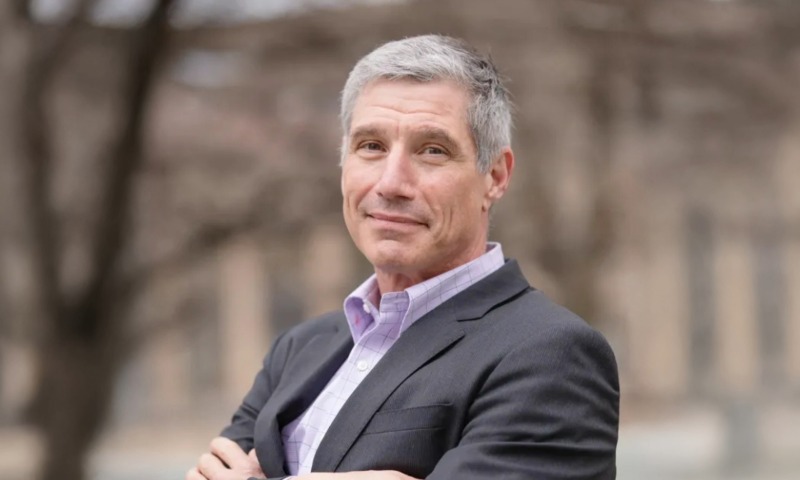
Daniel Greenstein, Ph.D., is Chief of Industry Transformation at Ellucian, where he leads higher education system strategy and collaboration to accelerate transformation across the global education landscape. Dan has extensive experience in public higher education and philanthropy, most recently serving as Chancellor of Pennsylvania’s State System of Higher Education (PASSHE), where he led a bold system redesign improving access, affordability, and student outcomes across 10 universities. He also led Postsecondary Success at the Bill & Melinda Gates Foundation and was Vice Provost at the University of California Office of the President, advancing system-wide research initiatives, online learning, and data analytics.
Recently, in an exclusive interview with Higher Education Digest, Dan shared insights into how his journey from classrooms to boardrooms shaped his mission as Chief of Industry Transformation — why inertia, not AI, is higher ed’s biggest threat, and his advice for leaders: get close to the work, move between altitudes, and redesign credentials to signal competence. The following excerpts are taken from the interview.
You began as a teacher and faculty member before moving into system leadership. What did the classroom teach you about higher education that boardrooms and policy tables never could?
The reach and impact. You don’t see it from a policy table. You see it in a classroom. Whether it was 300 students in an intro history lecture at Glasgow, ten around a seminar table, or 1-on-1 in a tutorial, you watch in real time what higher education does to a life. Not just intellectually. In the way people come to understand themselves and what’s possible for them. Being present with students, available to them, connecting with them; that’s the “product”. Those moments are what ultimately shape student success. It’s the magic of higher education. Multiply that interaction across faculty, across the country or the world – make assumptions about the quality of interactions, the training and support available to faculty – and you’re looking at one of the most powerful instruments of human and social development ever built. I still teach today. Mostly mid- and senior -career professionals, in conferences, at invited talks, in occasional training programs for higher ed leaders. I love it, and am convinced I learn more from the “students” than they learn from me. Boardrooms can tell you whether the system is working or not. “Classrooms” – however constructed – tell you why it matters.
What do you love about your current role?
I’m 65. The runway behind me is a lot longer than the one in front, and I’ve become deliberate about where I spend the time I have left. Higher education changes lives. I’m pretty sure it saves some. It’s also facing significant headwinds, and historic opportunities. And since I don’t want my grandchildren growing up in a world without a high-functioning post-secondary sector, the question for me is where I can be most useful right now. How can I help support, evolve, refresh, and enliven the industry I love and am passionate about? How can I help higher ed leaders identify, address, and manage their greatest challenges and realize their most significant opportunities so their institutions continue to serve students and their communities?
What I love about being Chief of Industry Transformation is that it lets me scale. Ellucian’s technology is genuinely best-of-breed – Gartner’s Magic Quadrant agrees. But technology only delivers if leadership engages with it as an agent of change. That means doing business, governing, and leading differently. Sitting at the intersection of leadership support, strategy, and the power of technology, data, and AI has been one of the most productive periods of my professional life. I get to be close to the work while operating at altitude at the same time.
Demographic shifts, AI, and value skepticism are colliding. What’s the single biggest threat to public regional universities in the next five years — and the opportunity hidden inside it?
Inertia. That’s the threat. Demographics, AI, and skepticism are among the forces bearing down on us, creating both challenge and opportunity. Inertia is what makes us slow to respond to them. Since the middle of the twentieth century, US higher education has expanded dramatically. We opened our doors to the baby boomers and their children. We changed the face of our student body as women’s and civil rights advanced. We swelled in size, enrollment, programmatic breadth, and research portfolio thanks to prodigious public investment. And we performed. We advanced research and produced the skilled workforce the nation needed to remain competitive. Public funding flowed, students kept showing up, and even as state per capita appropriations started to slip, perhaps in the 1990s, enrollment growth and tuition increases masked it. By 2010, the mask came off. Demographic, financial, and increasingly, political pressures required a new discipline. We had to learn to “sell”, to “hustle” for enrollment, for investment, for public support. We had to learn to grow into new areas by dialing back in ones that had become unproductive; to work by trade-off rather than by addition.
And while we certainly have learned, we were slow to do so. That is what is showing up today: financial and operational distress that is increasingly widespread and in decline, with public support.
Regional publics got hit particularly hard, in part because the demographics are so unfavorable; the costs so fixed, and the opportunities to diversify revenues so relatively limited. That’s even more reason to move with greater alacrity. And yet, ask any regional public to introduce and scale a new credentialing program, strategic enrollment management plan, or wrap-around student supports. The answer is typically measured in years. In a labor market that re-prices skills every twelve months, that’s not slow, that’s structurally non-competitive. And it’s at the heart of the value skepticism we keep complaining about.
The opportunity hidden inside this is enormous. There’s a 50-year-old who’s been laid off and needs to get competitive again. There’s a credential gap for first-gen and underserved students that nobody is closing. And when it comes to AI, most institutions are asking how to integrate it. Wrong question. The right question is how to build the institution around it. The schools that figure that out get to reach populations we’ve never reached. The ones that don’t will keep losing ground to organizations that aren’t waiting on our committees.
By 2030, what will the credential mix look like for students seeking economic security?
The mix in 2030 will look a lot like today’s: degrees on one side, a growing layer of non-degree credentials stacked alongside them as people move through their working lives engaging in “lifelong learning”. What needs to change isn’t the shape of the mix. It’s the signals that credentials within it send.
Right now, non-degree credentialing is the Wild West. Anyone can issue one. The Burning Glass Institute recently published some pretty sobering research, showing how few non-degree credentials deliver a real wage bump. Students increasingly need credentials that clearly connect learning to workforce outcomes. By 2030, I hope we will have coalesced more around “credentials of value” – that is, credentials that the labor market recognizes as evidence of mastered competence. I also hope that we will do the same with degrees. A BA in history tells an employer where you went, not what you can do or what you know. We need transcripts that say something meaningful about competence, and degrees that are transparent about what’s actually inside them. If we get that right, the credential becomes information again rather than just a signal.
Career paths in higher education aren’t linear anymore. Should aspiring leaders plan to move between institutions, systems, and philanthropy?
I like to say careers are made in retrospect. Mine was, anyway. Looking back on it, it’s possible to tell a story about how the different roles connected in some logical, purposeful way. The advice I give to young professionals is the same advice I wish I’d given my younger self – pursue the work that matters to you – pursue your north star – do it well, with energy, and optimism, and let the moves come.
For me, it has been important to move between roles operating at different altitudes. Sometimes on the ground, sleeves rolled up, building and improving organizations that serve students and their communities. Sometimes operating with a national purview, looking across the landscape, and learning through the experiences of others.
The combination has been powerful. When I built things, I built them better because I’d seen the broader picture. When I worked at altitude, I had sharper instincts because I’d been close to the ground. Aspiring leaders should consider that movement, perhaps more than the sequencing of particular industry roles.
What book on education, history, or leadership has the most underlining?
Anything by Brené Brown. Dare to Lead and Rising Strong are the two I keep coming back to, and they’re heavily marked up. I’m an academic by training and technocrat by reflex. It’s very easy for me to retreat into that side of my brain in a leadership role. Brené Brown’s work on courage, vulnerability, and trust is what reconnects me with the human side of leadership.
I have a North Star. I see it clearly. Brené Brown helps me navigate toward it in a way that’s open, humane, and team-centered. Someone once told me a leader’s job is to create the space for people to do their best work. I’ve amended that over the years to include building a team of people that do their best work together, investing in each other’s success. That’s the higher-leverage leadership style and the one with the greatest impact. It’s arguably also the hardest to pull off, which is why I keep returning to Brené Brown.
Philanthropy has shaped post-secondary reform for 20 years. What role should foundations play in the next chapter — and what should they stop doing?
I’m in awe of philanthropy, and not just because I worked at Gates. Philanthropy can do things no one else in the higher ed ecosystem can. It can stand above the fray. Convene the difficult yet vital conversations. Ask the hardest questions. It can fund experimentation, build an evidence base under, and drive adoption of tools, processes, and approaches that improve student and institutional outcomes. And because it can put its dollars to work patiently, without worrying about a dollar return on investment, it can explore impact in areas that others won’t even see potential in, let alone try.
A small example. In 2020, PASSHE began exploring whether, by integrating several low-enrolled institutions, it could sustain and hopefully grow opportunities for their students. The ECMC Foundation funded the work. I don’t remember the grant size, but the signal it sent was ten times its dollar value. It told PASSHE constituencies, the Board, Pennsylvania’s General Assembly, and the field that the hard questions we are asking about the viability (or should we say inviolability) of historic organizational constructs were nationally significant, potentially critical to the future of a thriving postsecondary sector, and worth taking seriously. Foundations create that kind of lift.
In the next chapter: the hard questions involve
- higher education’s organizational and governance models – are they appropriate for the current environment? Do they operate with the right clock speed?, and
- the broken or strained business models, how they can be “fixed” so that quality, career-relevant postsecondary education is available to all, irrespective of zipcode?
Technology, data, and of course artificial intelligence will have a significant role to play – helping institutions operate more efficiently while improving the student experience. So will policy innovation at state and national levels. These are all areas where philanthropy is and I hope will continue to be active.
And philanthropy is uniquely positioned to keep asking who’s being left behind. In a moment of neo-tribalism and retreat into ideologically tight communities, somebody has to hold the long view on lifting up the people we’re forgetting.
What is your biggest goal? Where do you see yourself five years from now?
The older I get, the less ambitious I become in the conventional sense. What I think about now is how much I can leave on the field in the time I have left. The goal is impact, and I define impact through institutional success: accessible, affordable, sustainable, career-relevant, high-quality post-secondary education that expands opportunity and changes lives for the better. The framing I used at Gates still holds for me – ensuring that post-secondary education remains a bridge to opportunity for all.
In five years, I want to have scaled the strategic and analytical work I do in support of change agency and change leadership in higher education – through any platform that lets me reach more higher ed professionals, more boards, more state policymakers globally, – those are the folks carrying the heaviest loads.
If a 25-year-old told you, “I want to make colleges work better for first-gen students,” what would you tell them to do this year?
Get in the game. I cut my teeth in a classroom. That was right for me, but it’s not the only door. Student affairs, financial aid, a start-up building AI-powered student supports or transfer tools or cost transparency – any of these put you close enough to the work that you can feel two things at once: the real impact of a well-functioning higher education system on a first-gen student’s life, and the real inertia that keeps us from delivering it more often. Until you’ve felt both, you don’t understand the problem you’re trying to solve. Pick a spot on the ground. Start this year.