



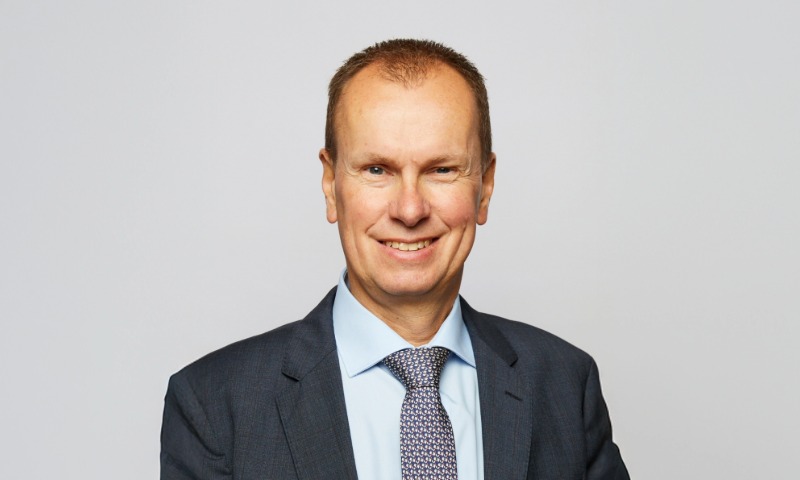
Simon Pawson is a Professor and Associate Dean at Torrens University Australia, leading the Blue Mountains International Hotel Management School (BMIHMS) — the largest hotel school in Australia and consistently ranked #1 in Oceania. His career has been defined by building bridges between higher education, industry, and community, with a focus on creating world-class student experiences and driving innovation in hospitality and tourism education. As an academic leader, he has successfully guided large-scale strategy development and curriculum reform, achieved outstanding student retention and progression outcomes, and strengthened BMIHMS’s global reputation through strategic engagement with industry and accreditation bodies.
Simon is passionate about mentoring emerging scholars and fostering a culture of research excellence; under his leadership, Torrens University Australia’s Tourism and Hospitality Research Cluster has been recognised at “world standard.” Beyond the university, he has contributed actively to the profession as Deputy Chair of THE-ICE and through leadership roles at national and international forums such as CAUTHE and AHICE. His long-standing work in Cambodia on sustainable tourism and social justice reflects his belief in leadership with purpose — advancing education while supporting communities, conservation, and cultural heritage. With foundations in five-star hospitality and a career in academia since 2004, he brings both practical insight and scholarly expertise to university leadership. His interests span adaptive and values-driven leadership, curriculum innovation, sustainability, and the future of global hospitality and tourism education.
Recently, in an exclusive interview with Higher Education Digest, Simon shared how his journey from a family zoo to five-star hotels shaped a calling to develop global hotel leaders at BMIHMS. He argues that by 2030, AI will transform hotel operations, but human interaction will remain irreplaceable in luxury experiences. True sustainability, he says, must be embedded across all hotel functions by 2028, not limited to green policies. BMIHMS scales AI by co-creating curriculum with industry so graduates are job-ready and AI-proficient. Inspired by adaptive leadership, he champions mobilizing teams through uncertainty and leading with purpose beyond the organization to advance social and environmental justice. The following excerpts are taken from the interview.
Hi Simon. Your career bridges five-star hospitality and academic leadership, from industry practice to Associate Dean. Thinking back to your first role in hospitality, what was the moment you realized education — not just service — was your calling?
It actually started long before my first role in hospitality, which was back in 1988 at Pelican Shores Resort in Port Macquarie. My parents opened a zoo in Port Macquarie in 1979, Kingfisher Park, and from a young age, I helped out at the zoo. My love of working with other people and working in tourism stemmed from there, and after completing my year 10 work experience at a motel in Port Macquarie, I knew this was what I wanted to do. I also know my experience at The Armidale School in the 1980’s taught me about the importance and value of service to others, and this has remained with me throughout my career.
What do you love the most about your current role?
I have been exceedingly lucky to have a wonderful career. This industry has provided me with so many fabulous opportunities. What gets me out of bed every morning is knowing that my team and I will be developing the next generation of global hotel leaders, and in my book, that’s a privilege.
Hospitality and tourism were reshaped by the pandemic and are now being reshaped by AI, sustainability demands, and Gen Z travelers. By 2030, what part of the traditional hotel experience will be unrecognizable?
It depends on what you mean by traditional experience. Artificial intelligence is reshaping the workforce, but what it can’t do is replace service through human interaction in our hotels. Sure, the industry is leveraging AI to improve how we utilize data and develop strategy across multiple functions such as revenue, sales, marketing, etc., but I don’t believe traditional hotel experience will be lost. We are already seeing rapid growth and demand for luxury hospitality experiences and increased hotel investment in key markets such as Japan, where experience through human interaction remains paramount.
Sustainability is moving from CSR to core operations. What will separate hotel brands that truly embed sustainable tourism from those that greenwash by 2028?
By 2028, I would argue that sustainability will no longer be a differentiator simply because you have a recycling policy, bathroom towel reuse cards, or remove plastic straws. What the real differentiator will be is whether sustainability is visibly embedded in how a hotel operates, leads, employs people, and makes decisions every day. In other words, how can you demonstrate sustainable practice in all facets of hotel operations? It’s similar to our hospitality curriculum. Do you have sustainability as a standalone subject, or do you embed it across all subjects as it applies to that particular component of hotel management?
International education and global mobility remain critical for hotel schools. What is one policy or geopolitical shift you’re watching that could most disrupt or accelerate hospitality education?
Australia has a significant opportunity to strengthen its position as a premium global study destination by ensuring student migration settings support both integrity and long‑term sector growth. The government’s focus on lifting standards and addressing concerns around migration practices is an important step toward protecting the reputation of Australian education.
At the same time, it is essential that these measures continue to enable high‑quality international students to choose Australia with confidence. Institutions such as Blue Mountains International Hotel Management School, one of the country’s leading premium providers, play a critical role in developing the skilled talent that supports Australia’s hospitality and tourism industries — particularly in regional areas.
We are hearing from key markets that prospective students are becoming hesitant to apply for visas due to concerns about higher refusal rates and the potential loss of their $2,000 application fee. This signals an opportunity for closer collaboration between the government and the sector to ensure that genuine students are not discouraged from choosing Australia.
A balanced, well‑communicated approach will protect Australia’s reputation, support quality providers, and ensure a strong pipeline of future talent for industries that rely on international graduates.
Australia’s education and tourism futures are closely linked — and with continued partnership, both can thrive.
Many schools are stuck in AI pilot mode. What separates academic leaders who scale AI for student impact from those who stay in experimentation?
The strength of BMIHMS is its ability to co-create its curriculum and teaching practice with its industry partners. The School’s focus is on understanding industry applications of AI and then ensuring students are being trained on how AI is utilized in the specific context. The School has just renewed its undergraduate and postgraduate curricula and the focus has been on embedding industry AI applications in the relevant subjects. This all comes down to delivering job-ready graduates to industry – something that BMIHMS has done very effectively for the past 35 years. The school trains its graduates to move into management roles, where AI competency is now expected. We need to be agile in terms of AI advancement, otherwise we run the risk of our graduates not being equipped with the knowledge and skills required to be successful leaders in the hospitality industry – and this now includes AI proficiency.
Leaders in hospitality live and breathe experience design. Is there a book, film, or travel experience that sits on your desk or in your mind and still shapes how you think about service and leadership?
There are people and literature that continue to inspire, and perhaps too many for this article! Anthony Bourdain has always been a source of inspiration. His passion for storytelling about food, destinations and culture remains infectious – and these are experiences. Kevin McCloud and his passion for house design have often helped me think about how I talk about careers in the hotel industry. I have also had the privilege to train under some outstanding hotel general managers, Ted Wright from the Regent Sydney, Patrick Griffin from Orient Express’s Observatory Hotel Sydney, who taught me so much about service and luxury accommodation, and Peter Tudehope from Radisson Hotels. All have inspired and shaped my leadership and abilities to develop our next generation of hoteliers. I also want to comment further on leadership. Back in 2006, I started teaching with Dr Jill McRae, who has now become a close friend. Dr McRae is a Harvard Kennedy School graduate who introduced Professor Ronald Heifetz’s research and teachings on adaptive leadership. Relating Heifetz’s work to my career and reflections on how I may have approached leadership challenges differently inspired me to become a practitioner of adaptive leadership. Applying adaptive leadership continues to help my team and the School navigate complex challenges where solutions are not immediately clear and cannot be solved through simply applying known technical expertise. For me, effective leadership is less about providing answers and more about mobilizing the smarts of my team to adapt, learn, shift behaviors, and confront difficult realities in times of uncertainty and change – and in our sector, there continues to be plenty of uncertainty. I also respect that central to adaptive leadership practice is your distinction between problems which can be solved with existing knowledge, and adaptive challenges, which require new thinking, collaboration, and transformation – and this is the space I enjoy leading in.
Luxury, sustainability, and education intersect in your work. Is there a hotel, destination, or community project you’ve visited that, for you, embodies the future of hospitality?
Again, so many. The innovation in both the industry and hospitality research is electric at the moment. Here at Torrens and BMIHMS, our tourism and hospitality researchers are pioneering work in the area of sustainable luxury, and it’s very exciting to see this cutting-edge research come to life. I also want to comment on Australia as a destination. Our uniquely relaxed Australian take on experience, service, and luxury has differentiated us from the rest of the world and, for many years, has made Australia a highly desirable country to visit. Australian-trained hoteliers who embody this ‘Australian hospitality mindset’ are now sought after worldwide for these traits and their operational excellence. I honestly believe the work we are doing and the innovation in our tourism and hospitality education sectors embody the future of the industry.
Many professionals want to move from industry into academic leadership. What three capacities should they be building in hotels today if they want to lead a school tomorrow?
Firstly, understanding and passion toward the importance of training and development is critical. Experiences are created and delivered by people, and training remains a key component of this. Secondly, developing a genuine intent for wanting to help others become their best selves and ensure they have opportunities to grow. Finally, and this is something I remain absolutely convinced of. As a leader, it’s important to have a demonstrable purpose beyond just the organization itself. Leaders have remarkable opportunities not just to do good for their organizations, but also to do good in society, for communities, or for the environment. To truly secure stakeholder trust and to inspire followership, leaders must demonstrate their ability and active contribution toward social/environmental justice causes and corporate social responsibility (CSR) initiatives. It’s also critical that we help our future leaders understand the importance of leading with a higher purpose, and the best way to do that is by ensuring we are leading with a higher purpose.