



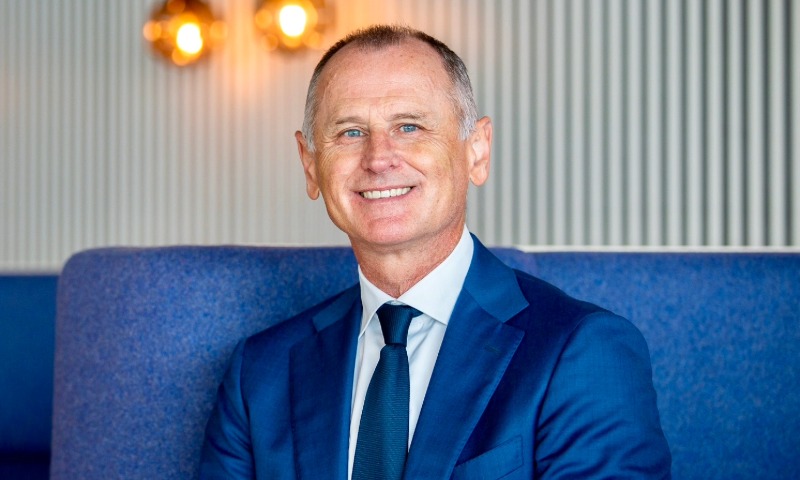
Professor Aleks Subic is Vice-Chancellor and President of Torrens University Australia, Australia’s largest private university with a national footprint. Previously, he served as Vice-Chancellor and CEO of Aston University in the UK, and held senior executive roles at RMIT University and Swinburne University of Technology. An internationally recognised higher education leader, Professor Subic has chaired major global and national innovation, industry, and research bodies, and is recognised among the world’s top 2% scientists (Elsevier/Stanford). His work focuses on innovation ecosystems, industry engagement, digital transformation, social mobility, and economic development through education and research.
Recently, in an exclusive interview with Higher Education Digest, Prof Subic shared insights into his shift from engineering academic to global university leader. Looking ahead, he wants Torrens to redefine “work-ready” through the Torrens Career Advantage: adaptability, digital fluency, critical thinking, entrepreneurial capability, and the ability to work alongside AI, preparing students for continuous reinvention, not just a first job. For academics aspiring to VC roles, he advised building an institution-wide perspective, leading through influence and trust, and developing strong external engagement and commercial acumen gained through industry, government, and global innovation networks. The following excerpts are taken from the interview.
From Executive Dean of Engineering to leading universities in Melbourne, Birmingham, and now across Australia, your career spans continents, and sectors. Thinking back to your earliest days as an academic in engineering, what was the moment you realised university leadership — not just research — was where you could create scale?
Early in my academic career, I realised that the greatest impact came not from individual research projects alone, but from building partnerships and innovation ecosystems where universities, industry, government, and communities could work together to solve complex challenges, transform organisations, and drive meaningful socio-economic impact. It was that ambition to create change at scale, beyond the boundaries of a single discipline or institution, that ultimately drew me toward a leadership career.
At RMIT University, I played a key role in establishing the Advanced Manufacturing Precinct with world-leading additive manufacturing and Industry 4.0 capability. At Swinburne, I led development of the Factory of the Future as the national Industry 4.0 Hub initiative with Siemens and CSIRO. Those experiences showed me that universities can become catalysts for industrial transformation, workforce capability, and economic growth.
That perspective later shaped my work at Aston University, where I led the creation of the Birmingham Innovation Precinct as part of the Birmingham Knowledge Quarter and West Midlands Investment Zone strategy. Seeing universities act as anchor institutions for regional transformation reinforced my belief that leadership can shape not only institutions, but cities, industries, and future generations.
Congratulations on your new role as Vice-Chancellor and President at Torrens University Australia. What do you love about leading a university at the intersection of industry, innovation precincts, and global education right now?
What excites me most is that universities are no longer operating at the edges of industry and innovation – they are becoming central to them.
Torrens is uniquely positioned because of its strong industry orientation, national footprint, and connection to a global education network. That creates enormous opportunities to rethink how education is delivered and how students engage with work and lifelong learning.
Across my previous leadership roles, I have seen firsthand the transformative impact universities can have when they position themselves at the centre of innovation, industry, and community ecosystems. At Aston University, I led the transformation of our campus into an innovation precinct as a major platform for collaboration across AI, digital technologies, and health innovation, supported by partnerships with organisations including Microsoft, Adobe, and Capgemini. But innovation alone is not enough. Equally important is the social impact universities create through education, opportunity, and inclusion. Through these partnerships, Aston strengthened its position as one of the UK’s leading universities for social mobility, ranked 2nd in the UK, demonstrating how universities can simultaneously drive economic growth, innovation and life-changing opportunity for individuals and communities. To me, that combination represents the true purpose of a modern university.
The future belongs to universities that can seamlessly integrate education, employability, innovation, and enterprise.
With innovation precincts, digital transformation, and social mobility in your DNA, what do you think about the impact Torrens can make on Australia’s skills and innovation landscape over the next 5 years?
Australia’s future competitiveness will depend on how effectively we develop advanced skills at scale, accelerate innovation, and improve productivity. Universities have a critical role to play in that transition.
I believe Torrens has the opportunity to become one of Australia’s leading real-world universities – deeply connected to industry, committed to widening access and transforming lives through education, and relentlessly focused on student success in response to the rapidly evolving needs of the workforce and society.
Through my leadership roles chairing the global 4th Generation Universities network with Elsevier and the GFCC Global University Research and Leadership Forum, I have worked closely with universities internationally that are redefining their role around real-world impact, place-based innovation, and socio-economic transformation. Combined with Torrens University Australia being part of Strategic Education Inc., a US-based global education group at the forefront of digital transformation in education and workforce development, I believe Torrens is uniquely positioned to evolve as a leading next-generation university – globally connected, deeply industry-integrated, digitally enabled, and highly responsive to the rapidly changing needs of learners, industry and society.
I believe Torrens is exceptionally well positioned to evolve in that direction over the next five years, integrating seamlessly higher education, vocational education and lifelong learning within a highly industry-connected model that expands opportunity, responds rapidly to workforce transformation, and prepares students for long-term career success in an emerging AI-enabled economy.
Torrens is part of Strategic Education Inc., a global education group. How will the economics of higher education shift in the next five years between public, private, and global providers?
Higher education is entering a period of significant structural change driven by technology, changing student expectations (and indeed public expectations) and rising economic pressures.
Students increasingly want flexibility, employability, lifelong learning pathways, and clear return on investment. Institutions that are agile, industry-connected, and globally networked will be better positioned to adapt. Traditional higher education operating models are challenged.
Private and global providers will continue to grow because they can often move faster and innovate more rapidly in response to industry needs. At the same time, public universities remain vital national institutions with deep research capability and civic missions. The rapidly changing socio-economic environment demands diversity of institutions and models that offer greater opportunities and choice.
Ultimately, the future will not be defined by public versus private. It will be defined by which institutions can demonstrate genuine value, relevance, and impact in people’s lives.
You’ve led digital transformation across universities and national taskforces. In your view, what is the single biggest mindset shift leaders must make when AI moves from tool to teammate?
The biggest shift is moving from seeing AI as automation to understanding it as augmentation.
The real transformation is not simply about efficiency. It is about how AI changes the way humans learn, work, create, and make decisions.
At Aston University, I approached AI as an institution-wide transformation, by embedding AI capability into every degree programme, and through employability and digital literacy initiatives. Torrens has embraced AI as an enabling platform, and we are actively scoping our next horizon.
My broader work through the Australian Prime Minister’s Industry 4.0 Taskforce and the National Industry 4.0 Skills Committee reinforced that technology transformation is ultimately about people and capability, not technology alone.
Graduates of the future will not compete against AI. They will compete based on how effectively they work with it.
Leaders carry mental models with them. Is there a book, paper, or engineering concept that sits on your desk and still shapes how you think about systems and leadership?
Systems engineering has probably shaped my thinking more than anything else, particularly the idea that optimising individual parts does not necessarily optimise the entire system.
Universities are highly complex, interconnected organisations. Sustainable transformation requires leaders to understand how academic, operational, financial, and human systems interact, influence one another, and at times create competing tensions. Effective leadership depends on navigating those interdependencies thoughtfully – aligning people, strategy and culture in ways that resolve tensions, unlock capability, and enable institutions to move forward with clarity and purpose in a sustainable manner.
I have also been strongly influenced by the Triple and Quadruple Helix models of innovation, which emphasise collaboration between universities, industry, government, and community. Much of my work, from Industry 4.0 initiatives in Australia to the Birmingham Innovation Precinct in UK, has reinforced that innovation and success at scale emerge through connected ecosystems rather than silos.
Through this integrative way of thinking and working new frontiers emerge. This is what ecosystem leadership or frontier expanding leadership is all about. That’s the blueprint of future leadership at Torrens and SEI Inc.
Music, sport, or art often reveal how leaders decompress. What is one non-academic pursuit that keeps you grounded when board papers pile up?
I have always enjoyed sport because it reinforces team success, discipline, resilience, and endurance. It reminds you that sustained performance comes from consistency rather than intensity alone.
I also enjoy hiking in the countryside, travelling and exploring cities, cultures, architecture. Some of my best thinking happens outside formal work settings, simply observing how people, communities, nature, culture, and public spaces interact and shape life.
For me, there has never been a sharp distinction between work and life. The experiences that inspire and ground me personally are often the same ones that shape how I think professionally about leadership, universities, and the kind of society we want to create. They continually reinforce the broader purpose of higher education – not simply to deliver qualifications, but to improve lives, expand opportunity, strengthen communities, and create a positive and lasting difference in people’s lives and society more broadly.
Looking five years ahead, what is the impact you want Torrens to make on how “work-ready” is defined when AI reshapes entry-level jobs across every industry?
The definition of “work-ready” will change profoundly over the next five years.
Technical or content-based knowledge alone will no longer be enough. Graduates will need adaptability, digital fluency, critical thinking, entrepreneurial capability, and the ability to work effectively alongside AI systems within rapidly changing work settings.
At Aston University, we embedded industry placements and “Power Skills” across all degree programs, including digital literacy and AI, innovation and entrepreneurship, sustainability, inclusive leadership, and professional readiness. Aston has evolved into a leading UK university for graduate outcomes and employability.
I want Torrens to build further on that type of model by deeply integrating employability, industry experience and real-world problem solving throughout the student journey. Universities must prepare students not just for their first job, but for continuous reinvention across their careers. We call this the Torrens Career Advantage – our blueprint for the future of work.
Many academics aspire to executive leadership. What three capacities should they be building in their faculty roles today if they want to lead at VC level tomorrow?
First, they need to develop an institution-wide perspective rather than viewing leadership solely through the lens of their own discipline or faculty.
Successful academic leaders understand deeply the interplay between the academic strategy, people, finance, operations, and how to connect effectively across the whole enterprise.
Second, they need to lead with clarity through influence rather than authority. Universities are collaborative environments, and leadership depends heavily on trust and alignment.
Third, they should build strong external engagement and strategic commercial perspective. Modern university leadership sits at the intersection of education, industry, government, and society.
My own leadership journey was shaped significantly by work beyond the university sector – through industry partnerships, work on government bodies, and global innovation networks. Those experiences broadened my perspective from institutional leadership to system-level impact.