


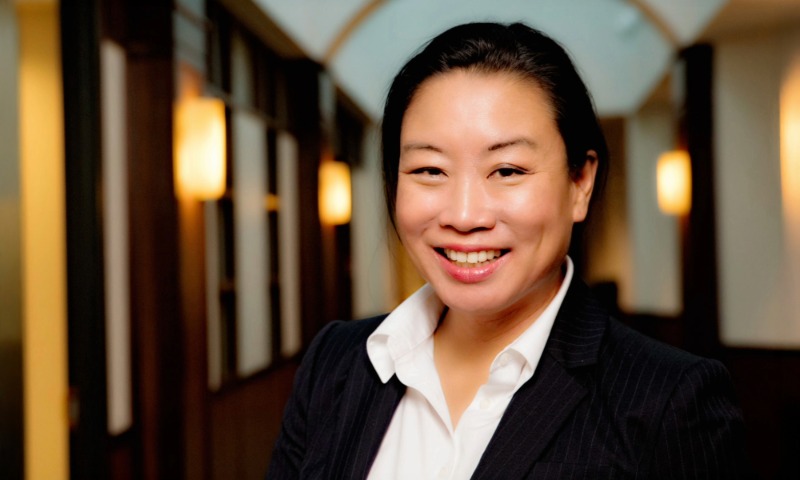
Maria Toyoda is president and CEO of WASC Senior College and University Commission (WSCUC). She joined WSCUC March 2025. Toyoda brings strategy expertise and political acumen cultivated over nearly three decades in higher education. As executive VP and provost at Western New England University, Toyoda led strategy and financial sustainability efforts and oversaw several key areas. She previously held roles at Stanford, Villanova, and Suffolk universities. A distinguished international finance and government scholar, Toyoda has spearheaded interdisciplinary programs domestically and abroad. Toyoda earned a bachelor’s degree in human biology from Stanford and master’s and doctorate degrees in government from Georgetown.
Recently, in an exclusive interview with Higher Education Digest, Maria shared insights into her passion for driving accreditation reform and improving student outcomes. She revealed that her experience in teaching, advising, and working directly with students has been a significant motivator, helping her understand the challenges students face and the importance of prioritizing their needs. Maria emphasized that accreditation is shifting its focus from inputs to outcomes, with a growing emphasis on transparency, accountability, and student success. She also advised institutions to prioritize student needs, align their mission with their audience, and track progress to drive innovation and improvement. The following excerpts are taken from the interview.
Hi Maria. With your extensive experience in higher education leadership, what sparked your passion for driving accreditation reform and improving student outcomes?
The times in my career I spent teaching, advising, and working directly with students. Advising, especially, helped me understand the challenges students face and how important it is to really understand what students need to succeed. The experience has stayed with me. As I’ve moved into accreditation work, that student-centered perspective has remained the most motivating part of the job.
How do you see the role of accreditation evolving in response to growing demands around transparency, accountability, and student outcomes?
Accreditation has been shifting away from its traditional focus on inputs and more toward outcomes. The question I keep coming back to is: what are students actually leaving college with? What did they learn, did they complete, and are they prepared for what comes next? At WSCUC, we try to keep those questions at the center of our work. That means carefully examining evidence and data, and also having conversations with institutions about what the information is telling us and where improvement is needed. Accreditation should help institutions better understand how they’re serving students and how they can continue to improve.
In an era marked by increasing competition in accreditation reform, what are your agency’s biggest differentiators?
One of WSCUC’s biggest differentiators is our strong focus on outcomes. Our standards are intentionally written to reflect what institutions should be able to demonstrate. That means things like student learning, student success, and institutional effectiveness. This allows institutions with very different missions to meet the standards in ways that make sense for them. Another area where we stand out is transparency. Over the years, we’ve built public data tools, including our Key Indicators Dashboard, that provide information on student outcomes such as completion, debt, and earnings. The goal is to provide students, institutions, and policymakers with better information on outcomes and value.
How can we balance the demand for innovation and new delivery models with the need for effective institutional oversight?
I don’t see the solution as an either-or. Accreditors need to be flexible enough to evaluate new models, including competency-based learning, apprenticeships, and other emerging approaches. At the same time, quality matters, as do outcomes. My view is that innovation and experimentation should be encouraged, but it must be grounded in empirics and backed by a real commitment to student success.
How has the use of data evolved in U.S. accreditation in recent years?
I think the biggest shift has come from collecting data for reporting purposes to using data to actually drive action. Colleges already sit on a great deal of data, but they often need help turning that information into decisions and improvements. At WSCUC, that’s been a major focus through our Better, Better Conversations work, and through KID, our public dashboard. We’ve also added measures tied to earnings, debt, and return on investment, because questions about cost and value are now central to any conversation about higher education.
As the higher education landscape continues to evolve, what do you believe are the most significant trends shaping the industry?
A few things stand out to me. One is the growing pressure around accountability and public value, especially regarding employment outcomes, student debt, and affordability. Another is the changing student population. More adult learners are entering higher education, and they often come with very different needs and life circumstances than traditional students. Institutions have to understand those learners better and design support around the reality of who they are serving now.
What kind of work are you doing internationally? How are you hoping to work with institutions outside of the U.S.?
WSCUC works with a growing number of institutions outside the United States, and they go through the same accreditation process and meet the same standards as our U.S. members. They’re part of the same peer-review system and participate in the same professional development and improvement work that we offer to all of our institutions. Our core questions about quality, student learning, and institutional integrity are universal. Our international institutions are also seeking a like-minded peer group, and global recognition of their excellence. Given my own background in international education, I find that cross-border work especially meaningful.
Are there any particular books that have significantly influenced your thinking or approach?
I’m a pretty voracious and eclectic reader. Nicholas Nassim Taleb’s various books shape a lot of my thinking, as does a lot of scholarly work on brittle systems, cascading failure, and complexity. Albert Hirschman’s works on development have also been influential. Weapons of Math Destruction by Cathy O’Neil is a must-read. It’s not so much the subject matter but the way of thinking that I glean from my favorite works.
As an accreditation leader, how do you stay ahead of the curve in terms of industry trends and innovations?
I pay close attention to the work our institutions are doing. WSCUC works with a very diverse group of colleges and universities, and they’re often experimenting with new ideas and approaches. Watching that work up close gives me a great sense of where the sector is heading. WSCUC also remains engaged with the broader higher education community through webinars, convenings, and other discussions. Data also plays an important role. When institutions and accreditors have access to better data, they can have better conversations about what’s working and where improvement is needed. I wish we, as a sector, could have more conversations about how values are embedded in the data we collect and use.
What advice would you give to institutions looking to stay ahead of the curve and drive innovation while working in concert with their accreditor?
Start with your students and check your mission against your audience. Know who they are, understand what they need, and be clear about the outcomes you’re trying to improve. It’s not about innovation for its own sake, it’s making sure your mission is aligned with the students you serve, that meaningful changes are aligned with your mission, and that you track your progress and be prepared to show evidence of improvement. You should consider your accreditor as a good interlocuter who needs to stay informed of your plans.