



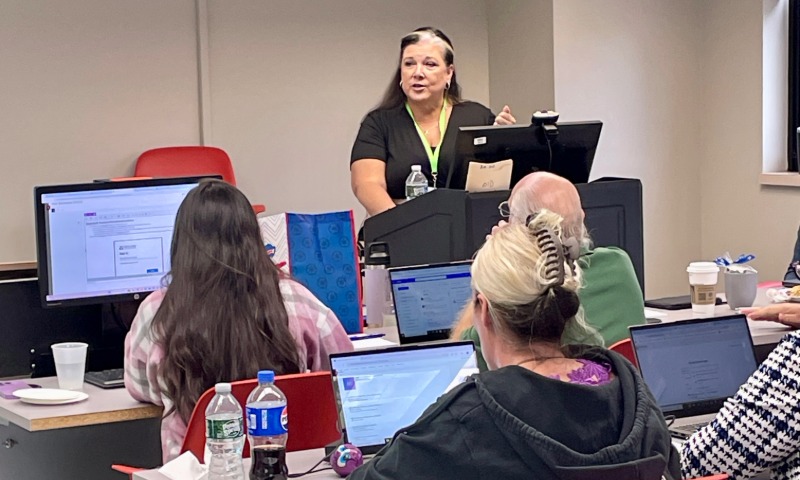
Lisa A. Clark, Ed.D., is the Associate Vice President of Academic Transformation at Blackboard LMS. Named one of the Top 50 Voices to Follow in Higher Education for 2026, she is recognized for her thought leadership in AI, pedagogy, and academic transformation. Dr. Clark serves on the Board of Directors of the United States Distance Learning Association and speaks internationally on the future of teaching, learning, and digital innovation.
Recently, in an exclusive interview with Higher Education Digest, Lisa shared insights into her passion for transforming higher education. Looking ahead, Lisa sees AI and technology transforming higher education by rethinking teaching, learning, and assessment, and emphasizes the importance of developing skills like adaptability, curiosity, and sound judgment. She also shared her personal hobbies and interests, future plans, words of wisdom, and much more. The following excerpts are taken from the interview.
Hi Lisa. What sparked your passion for transforming higher education, and how did you develop your expertise in digital learning and academic transformation?
Spending over 20 years in higher education gives you a pretty solid view of how much this space continues to evolve. I started in computer science and then spent more than a decade teaching digital media at the university level and creating online content, so innovation was always part of my world. I was constantly thinking about how to redesign content, how to make it more engaging, how to push it forward. Over time, that naturally expanded into broader questions about transformation inside courses and across institutions. What I do today really feels like the culmination of all of that. It’s not something I planned step by step. It just evolved…and honestly, it’s a beautiful fit.
What do you love the most about your current role?
I love being on campuses, whether in person or virtually, and working alongside educators who care deeply about their students. There is something incredibly powerful about seeing how thoughtfully implemented technology can remove barriers and expand opportunity. When used strategically, platforms like Blackboard can open doors to engagement, accessibility, and new approaches to assessment. I also find this current moment in higher education fascinating. The acceleration of AI and emerging technologies is reshaping long-standing assumptions, and being able to research, write, and speak to that while helping institutions think strategically about it, is both energizing and meaningful.
How do you see AI and technology transforming higher education in the next 5 years?
Immeasurably, but not in the way people sometimes assume. I do not think the biggest shift will be about automation. I think it will be about how we rethink teaching, learning, and especially assessment. We’re already starting to question whether a single test or assignment really captures learning. I see us moving toward more of an “evidence over time” approach and looking across curriculum instead of keeping everything siloed. AI is prompting us to revisit foundational questions about what learning looks like and how we measure it. That’s where the real transformation is happening.
What are the key skills educators need to develop to lead in a rapidly changing educational landscape?
This may sound simple, but an open and adaptable mindset is foundational. We are navigating a level of change that naturally brings uncertainty, especially with AI’s rapid
emergence in education. Higher education is at the precipice of meaningful assessment reform, influenced in part by AI and digital transformation. The professionals who will have lasting impact are those who focus first on purpose and pedagogy rather than tools.
Beyond that, I think educators need sound judgment. Leaders need the ability to ask deeper questions about pedagogical impact, equity, and long-term institutional mission. Curiosity, ethical awareness, and a commitment to lifelong learning will distinguish leaders who guide thoughtful innovative transformation from those who simply react to trends.
Are there any particular books, articles, or resources that have significantly influenced your thinking or approach?
I regularly engage with organizations such as EDUCAUSE and the United States Distance Learning Association (USDLA), as they constantly surface thoughtful analysis on emerging trends. The Horizon Report remains a valuable source for sound research and understanding the broader landscape of higher ed. One recent influence has been Dr. Ethan Mollick’s book, Co-Intelligence: Living and Working with AI, which frames generative AI as a collaborative partner rather than a replacement. That perspective strongly influenced my reframing of Bloom’s Taxonomy for the AI-era. I’m also looking forward to diving into Super Shifts by Ja-Naé Duane and Steve Fisher, which explores how technologies are reshaping industry and leadership mindsets and provides a playbook for navigating transformational change.
What’s a favorite quote or mantra that guides you in your work?
As silly as this sounds, I have always loved this quote, “We are the music makers, and we are the dreamers of dreams.” Now, grant it, I heard this spoken by Gene Wilder in the original Willy Wonka and the Chocolate Factory, and for years, I thought that was its origin (I know now this is the first two lines of “Ode” by Arthur O’Shaughnessy). For me, it always represented creativity and the expansion of thought, hope, and inspiration…an unbiased view of how great one can become.
Another one, by Eleanor Roosevelt, I had written on a sticky note which I kept attached to the side of my computer monitor for years: “The future belongs to those who believe in the beauty of their dreams.” For me, this was about believing in my abilities without restriction. Of course, there are many other influences – Nelson Mandela to Maya Angelou to John Dewey to Lev Vygotsky – but I would say those are my favorite two.
How do you stay updated on the latest trends and innovations in digital learning and AI in education?
Three ways, really: reading, “playing”, and listening. I try to read through at least a couple of articles a week related to my work and research interests. By ‘playing’, I mean
experimenting and pushing the limits of technology. Whether it is inside Blackboard, testing the boundaries of AI, or checking out the latest tech innovation, real understanding comes from doing. Finally, I listen. For me, listening is about having conversations with instructors, academic leaders, and peers on how they are using technology and navigating transformation in real time. Some of the most valuable insights come from thoughtful conversations and asking follow-up questions about what is truly working and what remains challenging.
When you’re not leading academic transformation, what’s a favorite way to unwind and recharge?
My family is my greatest source of renewal. I have the most amazing blended family. My husband is my closest friend, my children are my life’s work, and my grandkids are my heart. Outside of work, I enjoy reading for pleasure, cooking for family and friends, and even crocheting some fun winter gear when I have some down time. Having creative outlets helps me keep everything in perspective.
What is your biggest goal? Where do you see yourself in 5 years from now?
These types of questions are always reflective for me and somewhat difficult, honestly, because my career has evolved in ways I would have never predicted. There have been broken paths and rebuilt bridges along the way. What I do know is that I want to continue to shape how institutions think about technology in teaching and learning. I am passionate about helping academic leaders navigate change in ways that remain grounded in pedagogy and student success. If that path evolves into a Chief Academic Officer-type role, I would welcome the opportunity. At the end of the day, I want to continue contributing to meaningful, strategic, and innovative change in higher education.
What advice would you give to professionals looking to make an impact in higher education and edtech?
Be prepared for change and be clear about why you are doing the work. Technology will continue to evolve and influence practice, and new tools will emerge, but institutional mission should remain constant. Stay on top of technology while maintaining focus first on purpose and student learning rather than chasing the next innovation. Spend time understanding the culture of higher education. Know its values, history, and its overall responsibility to learners. Meaningful transformation happens when innovation is aligned with mission, so approach change with intention, long-term thinking, and with responsibility.