

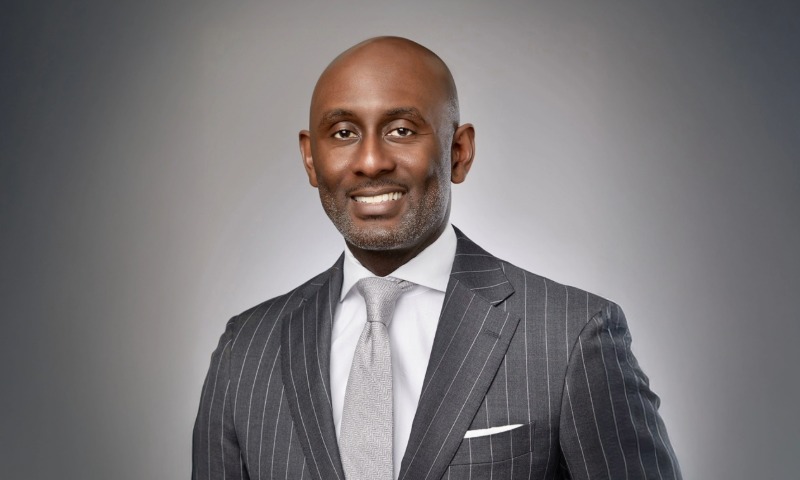
Dr. Travien L. Capers, a native of Varnville, South Carolina, serves as Director of Program Assessment at the University of South Carolina School of Medicine, where he has advanced academic quality for four years. With more than 15 years of higher education experience across four institutions, he brings strategic expertise in assessment, accreditation, and institutional effectiveness. A graduate of the University of South Carolina’s Emerging Leaders Program, Dr. Capers has been recognized by the South Carolina House of Representatives and serves on community boards.
Recently, in an exclusive interview with Higher Education Digest, Travien shared insights into his passion for academic excellence, his approach to assessment and accreditation, and his vision for the future of higher education. He also shared his personal hobbies and interests, future plans, words of wisdom, and much more. The following excerpts are taken from the interview.
Hi Travien. As a leader in program assessment, what sparked your passion for ensuring academic excellence and driving continuous improvement, and how did you develop your expertise in this area?
I have worked in higher education for approximately 15 years. My passion for academic excellence stems from a simple desire to live in a smarter, more thoughtful world. I began my career teaching as an adjunct faculty member and steadily worked my way through the ranks at several institutions, eventually moving into leadership roles. My expertise in assessment developed through immersion in the work itself. I learned a great deal from my predecessor here at Carolina, and I continue to learn from colleagues at other institutions. I believe in continually improving and refining my craft. I want to always get better at getting better.
What do you love the most about your current role?
What I enjoy most about my current role is that assessment provides a unique lens into every academic function within the institution. Through assessment, we gain insight into strategic planning, curriculum mapping, standardized testing, and clerkship training. Ultimately, we measure our effectiveness by what students show us through their performance and the feedback they provide. Their outcomes tell the story of how well we are fulfilling our mission.
As program assessment continues to evolve, what trends do you see shaping the future of higher education, and how can institutions prepare?
The most significant trend I see right now is the development of artificial intelligence. Academic communities are approaching it with appropriate caution, yet I find its applications in medicine especially compelling. While there are clear limitations to what AI can and should do in clinical settings, it has become an invaluable tool for interpreting complex data and supporting decision making.
What are the key skills program assessment professionals need to develop to lead in a rapidly changing landscape?
More than anything, this role has sharpened my attention to detail. Assessment methods may evolve depending on institutional needs, but the foundation remains the same: accuracy, clarity, and meaningful information. A disciplined mindset toward data and continuous improvement is essential.
Are there any particular books, articles, or resources that have significantly influenced your thinking or approach?
Our university is well connected internally, and the resources provided by our Office of Institutional Research and Assessment are broadly beneficial. Resource sharing through the AAMC has also been incredibly helpful in shaping my approach to our work. Professionally and personally, my thinking has been influenced most by a book that has little to do directly with my role at the School of Medicine: the Book of Proverbs. Its emphasis on wisdom, discipline, and integrity has shaped how I approach both leadership and life.
What’s a favorite quote or mantra that guides you in your work, and how do you apply it in your daily life?
I often say, “Every bird has its own tweet.” We all learn differently and bring unique experiences and perspectives. Those differences strengthen both our learning environments and our broader communities.
Many congratulations on being recognized as one of the Top 50 Voices in Higher Education 2026. Our readers would love to know the secret mantra behind your success.
There is no real esoteric secret to success. I believe in working hard and committing to continuous improvement in your craft. I value healthy professional relationships and ongoing development. Consistency, humility, and a willingness to learn go a long way. I am also grateful to Vevox for this recognition and sincerely appreciate the acknowledgement. It is encouraging to know that the work we do is seen and valued.
What are some of your passions outside of work? What do you like to do in your time off?
Outside of work, I most enjoy spending time with my family. I also love being outdoors, whether fishing or hunting, and I enjoy trying new restaurants and exploring new experiences.
What is your biggest goal? Where do you see yourself in 5 years from now?
My biggest professional goal is to serve as president of a small, private college. I still have ground to cover to be fully prepared for that role, but I have developed a professional plan to advance my career and have made steady progress. There are additional training, development, and credentialing ahead, yet I feel I am well on my way. I am not certain where I will be in five years. Every time I have tried to predict it, I have been wrong. While I may not know exactly what the future holds, I do know who holds my future.
What advice would you give to professionals looking to make an impact in program assessment, and how can they get started?
The best advice I can offer is to “go break some eggs.” Get involved in learning communities. The world of academics and assessment is more connected than ever. Take the lessons you learn from feedback and actively integrate them into your practice. Closing the gap is the most important part of the continuous quality improvement cycle. It demonstrates to students, instructors, and stakeholders that improvement is not only possible, but achievable.