


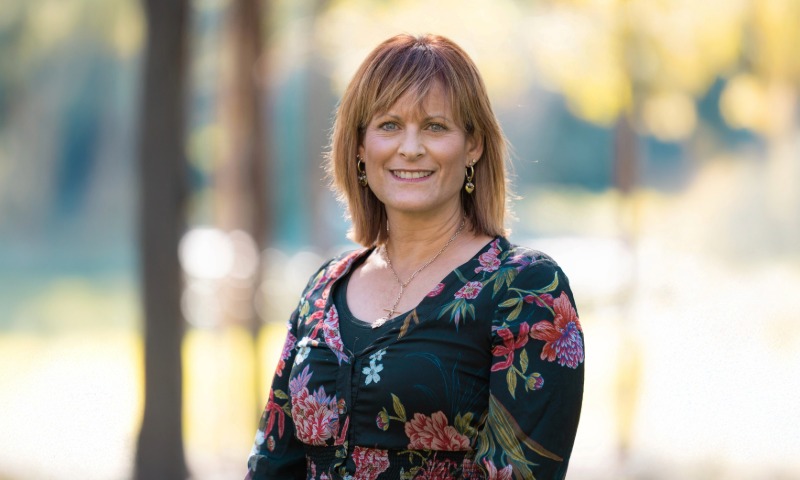
Professor Dominique Parrish became Deputy Vice-Chancellor (Academic) at Torrens University Australia in October 2023. Previously, she was Pro Vice-Chancellor (Learning and Teaching) at Macquarie University and held senior roles at the University of Wollongong. Dominique has led major initiatives in educational technology, work-integrated learning, microcredentials, and leadership development. She has collaborated with community and industry to create innovative courses and held senior leadership roles including President of ASCILITE, Senior Editor Journal of University Teaching and Learning Practice, Chair of the Australasian Journal of Educational Technology Management Committee, and Chair of the ASCILITE Technology Enhanced Learning Accreditation Standards Steering Committee.
Recently, in an exclusive interview with Higher Education Digest, Dominique shared insights into her passion for education, leadership, and empowerment, highlighting the importance of empathy, authenticity, and purpose in shaping the future of higher education. She also shared her personal hobbies and interests, future plans, words of wisdom, and much more. The following excerpts are taken from the interview.
Hi Dominique. What drives your passion for education and leadership?
My passion for education and leadership is rooted in a lifelong belief that education is the greatest equalizer. That it has the power to transform lives, enhance social and economic mobility, and open doors that might otherwise remain closed for individuals particularly those from previously disadvantaged backgrounds. From the time I was five years old, I knew I wanted to be a teacher. That early aspiration evolved into a lifelong commitment to empowering students and supporting the educators who guide them.
Throughout my career, I’ve seen firsthand how education can change trajectories not only for individuals but for entire communities. That’s what continues to drive me. Leadership, for me, is about creating conditions where both teachers and students can thrive, where curiosity is nurtured, achievement is celebrated, and equity is central. It’s the opportunity to make a tangible difference every day, and to help others do the same, that fuels my passion and purpose for my leadership in higher education.
What do you love the most about your current role?
What I love most about my current role is the opportunity to make a meaningful difference every single day. I’m deeply motivated by the belief that the work we do has a direct and lasting impact on both students and staff. Knowing that our efforts contribute to creating better learning experiences, improving student outcomes, supporting and empowering our staff, strengthening our communities, and expanding opportunities for young people is incredibly rewarding. I also take great pride in contributing to the growth and ongoing prosperity of the organisation I work for, helping to build its capacity, reputation and sustainability so that we can continue making a positive impact well into the future.
I also feel privileged to work alongside passionate, dedicated, and talented colleagues. The people I work with inspire me, their commitment to excellence and genuine care for our students reinforce my own sense of purpose. Being part of an organisation that values education as a force for transformation, and having the chance to influence that mission in a tangible way, truly makes this role fulfilling for me. Ultimately, it’s the combination of purpose, people, and possibility that I love most about this role.
What do you think is the most significant challenge facing educational institutions today?
One of the most significant challenges facing educational institutions today is navigating the profound disruption brought about by new and emerging technologies and other rapid advancements such as the current perceived threat of artificial intelligence alongside the rapidly changing world of work. As technology continues to redefine industries, roles, and the skills required to succeed, education must evolve to remain relevant, not only in what we deliver, but in the value we contribute to society.
Another significant challenge lies in balancing innovation with purpose: embracing the opportunities AI and digital transformation offer, while ensuring we continue to foster the uniquely human qualities such as creativity, critical thinking, empathy, and ethical reasoning that machines cannot replicate. Educational institutions must reimagine how learning is designed and delivered so that students are not only prepared for the jobs of today, but equipped to thrive in a future defined by adaptability, ambiguity and the imperative for lifelong learning.
Ultimately, our relevance as educators will be measured by how well we prepare individuals to contribute meaningfully in a new landscape, both as skilled professionals and as engaged, responsible citizens.
What role do you think AI will play in shaping the future of higher education?
I think AI will play a transformative role in shaping the future of higher education, I also think it will provide significant opportunities for us to enhance the way we teach, learn, and support our students. At Torrens University, we’re already using AI to deliver more personalised learning experiences, such as tailoring content to individual student needs and using predictive analytics to identify and support students at risk, including understanding the specific factors contributing to that risk. We’re also leveraging AI to provide 24/7 academic assistance and exploring how AI can mark, provide feedback, and grade assessment tasks. Our early studies suggest these systems can deliver more timely, actionable, and valuable feedback for students.
AI is also helping make education more accessible. Translation tools, captioning, and other accessibility features are breaking down barriers for diverse learners globally including non-native speakers and students with disabilities. Similarly, AI supports the idea of borderless classrooms and lifelong learning, enabling more flexible, inclusive, and globally connected education experiences. However, these opportunities come with challenges. Academic integrity and assurance of learning are increasingly key concerns for higher education providers and their regulators. With detection tools becoming less reliable, we need to rethink assessment design and focus on authentic learning outcomes as the best safeguard for integrity. We must also address inequity, as not all institutions have equal access to AI tools or expertise which risks a widening gap across universities and regions.
There are also ethical dimensions to consider: privacy, consent, and the responsible use of student data. At Torrens University Australia, we’re proactively examining how to establish strong safeguards to ensure transparency and protect students from potential harm. Finally, AI is prompting us to reimagine academic roles and the future of work in education. While some fear displacement, I see the greater opportunity in partnership, where AI augments human capability and enhances research, teaching, and creative practice, rather than replacing them. In short, AI’s role in higher education will be as powerful as we allow it to be. The challenge is to harness its potential responsibly with integrity, equity, and humanity at the centre of our approach.
What mentors or role models have had a significant impact on your career?
I’ve been incredibly fortunate to have had outstanding mentors throughout my career, each of whom has shaped my development as an educator and leader in unique ways. The person who first introduced me to higher education has been one of the most influential figures in my career and a true inspiration. I’m deeply grateful not only for her mentorship but also for her friendship. She played a pivotal role in shaping my professional path, opening the door to my first five significant roles in higher education and helping steer the focus of my PhD. Beyond that, she connected me with an incredible network of educators and leaders across the global higher education sector, many of whom I still keep in touch with today, even if sometimes only through LinkedIn or other social channels. Her belief in my potential and her generosity in sharing her knowledge and connections have had a lasting impact on my career and the person I’ve become as a leader.
My first Dean in higher education encouraged me to think beyond conventional boundaries and sparked in me a lifelong love for exploration, innovation, and critical inquiry. That early influence taught me that great educators don’t just deliver knowledge, they challenge assumptions and inspire curiosity. My first Executive Dean, a medical practitioner and toxicologist, had a profound impact on how I view balance and perspective. She taught me the importance of compartmentalising work and personal life, and through her professional experiences reminded me that some roles, particularly in education and health carry a deep responsibility because they touch lives in meaningful ways.
My current Vice-Chancellor has been an extraordinary mentor and role model. He has been generous in guiding my growth as a senior academic and leader, constantly encouraging robust, evidence-informed discourse about education and the pursuit of quality for all learners. What I admire most is his ability to balance empathy and care for people with the courage to make difficult decisions for the greater good of the institution. The authenticity, professionalism, and humanity with which he leads are qualities I deeply aspire to emulate.
What do you believe are the most important qualities of an effective educational leader?
I believe the most important qualities of an effective educational leader are empathy, appropriate self-management, and authenticity. Empathy is essential because education is ultimately about people be they students, staff or the communities we serve. A leader who listens deeply and understands the perspectives and challenges of others can create environments where individuals feel valued, supported, and empowered to contribute their best. Empathy builds trust, and trust is the foundation of any successful learning community. Equally important is appropriate self-management which I see as the ability to remain calm, reflective, and balanced especially in times of change or pressure. Educational leadership often involves navigating complex, competing demands and maintaining composure and perspective allows a leader to make thoughtful, evidence-informed decisions that serve both people and purpose. Finally, authenticity is what brings leadership to life. Being genuine and consistent, aligning words, actions, and values encourages others to do the same. Authentic leaders lead with integrity and transparency; they inspire confidence not through position, but through character and clarity of purpose. Together, these qualities create leaders who are not only effective, but who also cultivate positive and productive cultures of respect, collaboration, and continuous improvement, qualities that ultimately elevate teaching, learning and student success.
Can you share a book or resource that inspires you and why?
One book that has really inspired me is The Diary of a CEO by Steven Bartlett. I found it to be full of fresh, thought-provoking ideas about leadership, self-awareness, and how to effectively and authentically build and manage teams. What resonated most with me was Bartlett’s emphasis on leading with vulnerability, honesty, and empathy, which are all qualities that align closely with my own leadership philosophy and servant leadership approach. As a servant leader, I believe leadership is about empowering others to reach their full potential and creating the conditions for them to thrive. Steven Bartlett’s reflections reinforce the importance of putting people first, listening deeply, leading with purpose, and fostering trust and psychological safety within teams.
The book challenges conventional notions of success and reminds us that true leadership impact comes not from position, hierarchy or authority but from creating environments where people feel valued, inspired, and motivated to grow. I’ve found many of its insights directly applicable to leading in higher education, particularly in nurturing environments where staff and students have trust, are psychologically safe, and encouraged to innovate with openness and authenticity.
What are some of your passions outside of work? What do you like to do in your time off?
My greatest passion outside of work is my family. I’m married with three children, all of whom are now adults building their own lives and families. My eldest daughter lives in London with her husband and two young children, aged four and seven months. Although they’re a long way away, we stay closely connected and treasure every opportunity to visit. My second daughter also lives nearby with her husband and their one-year-old daughter, so I’m fortunate to see them regularly. Our son has recently moved out with his partner and lives about twenty minutes away, which means we can still catch up often. Family time, whether in person or on Facetime across time zones and locations is something I truly value and make a priority in my life no matter what else is occurring. Beyond family, I enjoy simple pleasures that allow me to recharge and find balance. I love watching movies, going bushwalking, spending time with friends, and travelling to new places I haven’t explored before. Experiencing different cultures and perspectives always reminds me of the richness of human connection which is something that continues to inspire both my personal and professional life.
What is your biggest goal? Where do you see yourself in 5 years from now?
My biggest goal is to continue working in a role that truly fulfills me. A role where I feel I’m continuing to grow, develop, and make a meaningful difference. I’m passionate about contributing to the kind of positive future I want for my children and grandchildren, and for the generations of learners who will shape our world. At the moment, my current role continues to provide that sense of purpose and satisfaction. It challenges me, allows me to contribute to something greater than myself, and aligns closely with my values. If that remains the case, I could certainly see myself still here in five years. That said, I’m always open to new opportunities that align with my goals and sense of purpose. Should the right role present itself, one that enables me to extend my impact and contribute more broadly to the higher education sector then I could see myself in that role which may be a Vice-Chancellor or Senior Deputy Vice-Chancellor position.
Looking further ahead, I imagine transitioning into a stage of my career where I can work more flexibly, perhaps through advisory or contract roles in which I can continue to contribute in ways that feel meaningful and aligned with my values. I’ve learned over the years, and I firmly believe, that everything happens for a reason. Each opportunity, challenge, and experience has brought me closer to where I’m meant to be, and I trust that will continue to guide my journey.
What advice would you give to someone just starting out in the field of education?
My advice to anyone just starting out in the field of education is to begin by understanding your values, work out what truly matters to you, and be able to clearly articulate it for yourself. Once you know your values, let them guide your decisions, your interpersonal relationships, and your practice. Live those values every day, in everything you do. They will become your compass, especially in moments of challenge or change.
Education is an incredibly rewarding profession, but it also requires constant growth and reflection. Engage in regular reflective practice, ask yourself what worked, what didn’t, and what you could do better next time. Never be content with mediocrity; strive to achieve the very best that you want to achieve, not just what others expect of you or say you are capable of.
Most importantly, stay curious and open to learning. Every student, colleague, and experience will teach you something new if you let it. And remember that making a difference doesn’t always happen in big, dramatic moments, it often happens quietly, through the consistency of care, integrity, and effort you bring to your work every day. Finally, if you lead with authenticity, empathy, and purpose, your impact will extend far beyond the classroom and you’ll help shape lives, communities, and the future itself which I consider one of the most rewarding aspects of any career.