



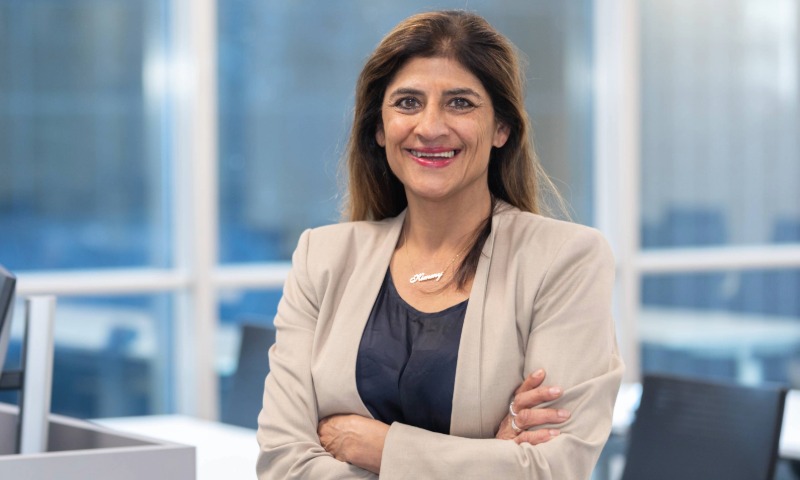
Dr Kim Soin is an experienced higher education leader and consultant, specialising in organisational transformation and academic innovation. As the founding Dean of SP Jain London School of Management, she established the institution’s academic vision and strategy. Formerly Associate Dean at the University of Exeter, she now works as an independent consultant, advising boards and driving change across the sector, including in the development of New Degree Awarding Powers. She brings extensive expertise in leadership, curriculum innovation, and future-focused higher education policy.
In this exclusive conversation with Higher Education Digest magazine, Dr. Kim shares her remarkable journey as the Founding Dean of SP Jain London School of Management and the visionary leadership that brought a new institution to life in one of the world’s most competitive higher education markets. With deep expertise in organisational transformation, Dr. Soin discusses how AI and emerging technologies are reshaping business education, the challenges of regulatory compliance, and the evolving expectations of modern learners. Below are the excerpts of the interview.
Could you walk us through the key stages of your career and the choices that shaped your path into higher education leadership?
My career has been a journey from research excellence to shaping the future of institutions. I began as an academic at King’s College London, where I expanded programmes, drove widening participation initiatives and led undergraduate admissions during a period of rapid growth.
At Exeter and Winchester, I stepped into senior leadership: as Associate Dean of the Doctoral College at Exeter, where I was part of the team that established the College, and later as Director of Postgraduate Research at Winchester, building doctoral strategy, leading major policy initiatives and chairing quality committees.
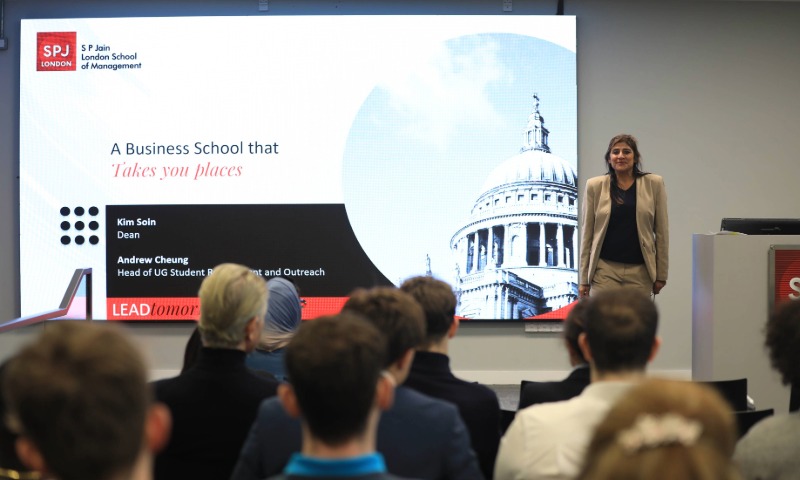
In 2022, I became the Founding Dean of SP Jain London. Although new in the UK, the School was the fifth campus of the established SP Jain Global group, with campuses in Singapore, Dubai, Sydney, and Mumbai. As Founding Dean, I collaborated closely with global colleagues across curriculum design, recruitment and governance to ensure the London campus both reflected the group’s values and met the expectations of the UK’s higher education framework. Over three and a half years, I led the School from concept to full operation — securing Office for Students (OfS) registration, programme validation, progressing toward New Degree Awarding Powers (NDAPs) and embedding an innovation-led culture, underpinned by the group’s academic track record.
Each stage of my career represented a widening lens — from shaping research and curriculum to shaping institutions themselves. A constant force throughout has been my commitment to building learning ecosystems that anticipate the future, not simply respond to it.
What have been the greatest challenges you’ve faced in transitioning from research/academic roles into senior leadership and launching a new campus in London?
Launching SP Jain London was a complex yet exhilarating journey — an intricate orchestration of identity, regulation and strategy that often unfolded all at once. It required teamwork, clear communication, and a great deal of strategic foresight.
The first challenge was around identity. Establishing a new campus in one of the world’s most competitive business school markets meant building governance, culture and reputation from scratch — while ensuring alignment with a global group that already operated four successful campuses. I leaned into my disciplinary background in organisational transformation, which proved invaluable in shaping the foundations of a new institution while working closely with global leaders to ensure coherence across locations.
Regulation formed another major pillar. I led the London campus through OfS registration, secured the UKVI licence, and initiated the NDAPs process — building on the established academic infrastructure of SP Jain Global.
Market entry brought its own complexities. London is crowded and mature, so we needed to articulate a distinctive identity: a model that blended global mobility, AI-enhanced pedagogy and student-centred design, while staying true to the parent institution’s DNA.
Operationally, I oversaw the development of every critical pillar, working collaboratively with teams across the global network — from faculty recruitment and curriculum design to research strategy and industry engagement. The real challenge was not a single obstacle; it was bringing multiple complex systems into harmony under the scrutiny of a sophisticated and competitive market.
How do you see AI, machine learning, and emerging technologies reshaping pedagogy, student experience, and assessment in business schools over the next decade?
During my time as Founding Dean, SP Jain London positioned itself as a rapid adopter of purposeful innovation — using AI only where it enhanced the quality, accessibility and personalisation of learning.
Pedagogically, we introduced AI tutors across undergraduate and postgraduate courses. These systems used analytics to personalise learning, enabling students to progress at their own pace and receive targeted support when they needed it most.
For the student experience, we combined adaptive, technology-enabled learning with rich intercultural exposure across campuses in London, Dubai and Singapore. A distinctive feature of the model was genuine mobility: London students could undertake terms in Singapore and Dubai, and students from those campuses could spend a term in London — creating a globally diverse learning ecosystem. The multi-campus experience set us apart, giving students access to a genuinely global education footprint.
In assessment, AI supported authentic, project-based evaluations designed to mirror real-world business challenges and reinforce academic integrity.
We also invested in professional development to equip faculty for evolving roles as facilitators, mentors and ethical guides in AI-enriched classrooms.
Ultimately, AI allowed us to personalise learning at scale and gave faculty the space to focus on what only humans can do — fostering critical thinking, leadership and ethical judgement. Our aim was never to use AI for its own sake, but to amplify the impact of educators.
In your view, what are the biggest structural pressures facing business schools today?
Business schools today operate at a complex intersection of regulation, market forces and technological disruption.
For new entrants like SP Jain London, navigating OfS oversight, NDAPs and visa compliance required strategic agility and deep regulatory expertise. Our case was strengthened by being part of an established global group with mature systems across multiple campuses.
Competition in the UK is intense. To stand out in a landscape dominated by Russell Group institutions and online disruptors, we differentiated through AI-enhanced pedagogy, global mobility and an education model centred on applied learning.
A notable success was student recruitment. Around 80% of our undergraduate students were British, joining despite low initial brand awareness. They were particularly drawn to the opportunity to study in multiple global cities, and strong word-of-mouth reinforced the School’s appeal.
Technological disruption, particularly generative AI, continues to accelerate expectations around personalisation and employability, pushing schools to rethink traditional models.
Financial sustainability also remains a core pressure. We drew on SP Jain Global’s infrastructure to keep operations lean while building a foundation for long-term growth.
What’s your leadership philosophy, and could you share one or two initiatives or decisions you are most proud of during your Deanship so far?
My leadership philosophy is both inclusive and strategic. I believe in building a shared vision, empowering people to innovate, and ensuring governance is an enabler rather than a constraint.
Several initiatives defined my tenure as Dean:
AI-Integrated Curriculum: Embedding AI tutors, project-based assessment and meta-learning frameworks across programmes to support deeper learning.
Global Learning Ecosystem: Leveraging the multi-city model across London, Dubai and Singapore to build culturally agile and globally mobile graduates.
Institution Building: Leading OfS registration, NDAPs progression, faculty recruitment and brand positioning — transforming a vision into an operational reality.
Much of this work was delivered through close collaboration with colleagues across the global campuses. I see leadership not as solitary direction, but as aligning people, systems and cultures across borders to achieve a shared purpose.
Outside of your academic and administrative commitments, are there passions or values that keep you grounded?
My leadership has always been deeply informed by a commitment to equality, diversity and inclusion — democratising education to create a level playing field and ensuring graduates are equipped for a volatile, uncertain, complex and ambiguous (VUCA) world.
I’m passionate about the power of interdisciplinary learning to tackle complex societal and business challenges. Innovation happens at the intersections between disciplines, cultures and perspectives.
Beyond the institution, I’m sustained by cultural and intellectual pursuits: engaging with policy debates through Times Higher Education and HEPI, writing, and maintaining deep academic networks.
For me, leadership is rooted in values, community and contributing to a more equitable academic landscape.
What advice would you offer to current students and early-career professionals who aspire to leadership roles in academia or the business education field?
My advice is simple: don’t wait for a title. Leadership begins when you learn to connect strategy, people and values — and use that combination to shape the institutions the future demands.
Build Breadth Early: My leadership readiness came from working across research, teaching, governance and strategy.
Translate Between Worlds: The ability to bridge regulatory, academic and industry contexts is an invaluable asset.
Embrace Change: Whether launching programmes or establishing a campus, comfort with ambiguity is essential.
Champion Inclusion: Leadership without purpose is hollow — EDI has always been central to my work.
The best leaders align strategy, people and values to build institutions that reflect the future they want to see.