


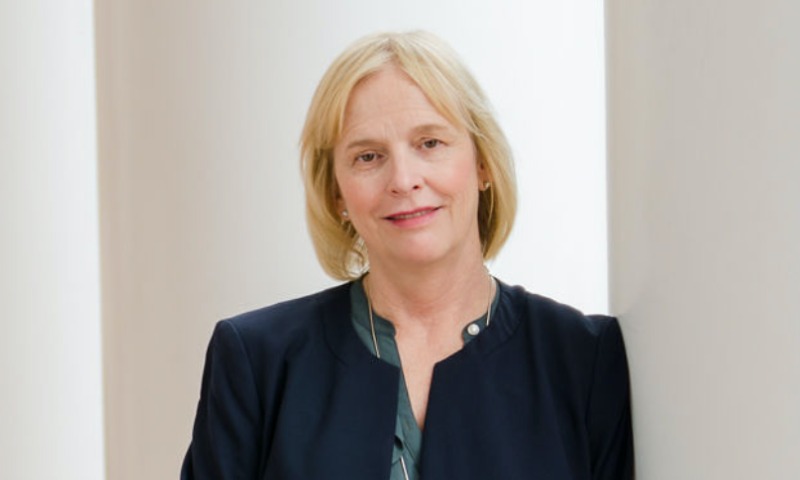
Wendy is Vice President and Associate Provost at Boston University, where she leads BU Virtual and the Institute for Excellence in Teaching & Learning, two units united by a mission to drive academic innovation and digital transformation for student and faculty success. BU Virtual partners with BU’s schools and colleges to expand and diversify academic offerings through a dynamic online portfolio for working professionals worldwide, while the Institute fosters innovative teaching, faculty collaboration, and interdisciplinary excellence. Together, these efforts advance high-impact learning experiences on campus and beyond.
With over 25 years of global experience in higher education, Wendy has led the design and growth of programs that align academic excellence with institutional impact and differentiation. Her expertise spans strategic management, program creation, and online education, from concept to delivery, guided by a strong belief in technology’s power to transform learning.
Before joining BU, Wendy served as CEO of UMGC Ventures, affiliated with the University of Maryland Global Campus, and as Divisional Vice President at Laureate Education, leading digital learning initiatives across 80 universities. She has also held senior roles at Carnegie Innovations, Houghton Mifflin Harcourt, Thomson Reuters, and the Silicon Valley edtech firm DigitalThink.
In this insightful conversation with Higher Education Digest, Wendy shares her perspectives on the evolving landscape of higher education and the leadership principles that drive her work. She discusses how innovation, collaboration, and human connection can transform teaching and learning and highlights the vital role of research universities in addressing global challenges, the impact of AI on academic rigor, and the importance of aligning purpose with progress. Below are the excerpts of the interview.
You have led initiatives at public and private institutions, edtech firms, and now at Boston University. Could you walk us through two or three turning points in your career that deeply shaped your philosophy in higher education?
Over the course of my career, in public and private universities, within edtech and in a variety of senior leadership roles in corporations and institutions, I have come to believe that education is most powerful when it meets learners where they are, in the rhythm of their lives or work, and connects to a broader purpose. That perspective did not happen in one defining moment but has evolved through a series of experiences that continue to enrich and inform my work in higher education.
I began my early career at an edtech startup in Silicon Valley, an experience that influenced how I think about innovation, leadership and the pace of change. That early exposure to entrepreneurship instilled in me a deep appreciation for mission clarity, the conviction that every decision, from design to product market fit to delivery, should tie back to a clear purpose. It also taught me that great ideas only matter if they translate into meaningful value and impact. These lessons remain relevant today, reminding me that universities, like startups, must stay curious, responsive, student-focused, and willing to evolve.
My time in industry, working in fast-paced corporate environments, brought me to nearly every region around the world. You learn to work strategically, navigate complexity, understand markets and customers in different contexts, make decisions in real-time, and lead teams with compassion and purpose, through ambiguity. You are accountable for results, you gain an instinct for experimentation, and you learn what it means to scale, using data and technology to improve outcomes. You also learn a lot about culture and how critical the human connection is in everything we do.
Some of my most meaningful and rewarding experiences have come from working inside of schools and universities around the globe. In Guanajuato, Mexico, I once was part of a team awarding certificates in software development and engineering to students who had come from all over the country. This piece of paper, for so many of these students, was their lifeline to a future. On another occasion, I hosted academic leaders from schools across Europe at our university in Paris to develop a global online MBA program. This was before online MBAs were common and it was a testament to the power of partnership, working across boundaries, leveraging new technologies, and collaborating in a multicultural and multilingual way to deliver a truly distinct offering.
I like to say that I have sincerely loved all of my jobs, and I feel fortunate that I have been able to see education through a variety of different lenses, from K12 to corporate learning to higher education, from the outside in, and the inside out. Whether we are supporting first generation students, reaching underserved populations or helping working professionals advance in their careers, the mission remains constant: to expand value, access, equity and impact for all.
Many institutions today are struggling with enrollment shifts, financial pressures, and changing student expectations. In your view, what is the greatest challenge facing research universities today, and how should they respond?
There are many pressures facing higher education today, as universities confront powerful forces of change – shifting demographics and enrollment patterns, questions about affordability and value, the rise of alternative credentials, financial pressures, rapid technological advancements, especially AI, and evolving expectations from students, employers and society.
For so many years, the university model has been remarkably resilient. But today, learners are more diverse, mobile, and outcome oriented, and they expect education that is flexible, relevant, affordable and connected to meaningful lives and careers. Meanwhile, we have many societal problems we are facing; from climate and health to global inequities that demand new forms of knowledge creation and collaboration.
The question is not whether higher education still matters, it does. It is how it must evolve to remain vital and thrive.
Research universities play a critical role in this evolution. We are the places that fuel discovery, drive innovation, and societal progress. How should we respond? For every university, the starting point may be different. I think the path forward lies in innovation and partnership. How can we better connect learning to real-world impact? How can we redesign our curriculum for the future? How can we embed interdisciplinary, industry-focused, experiential lifelong learning into our programs? How can we leverage our research strengths to address global challenges while offering flexible, personalized and applied learning pathways to support learners in reaching their goals?
As we look into the not-to-distant future, I think universities will increasingly become conveners of ecosystems, accelerating collaboration with other universities, and with industry, government, communities, technology leaders and global entities to sustain, scale and preserve academic relevance and excellence.
With BU’s new Institute for Excellence in Teaching & Learning emphasizing AI, how do you see AI and other emerging technologies transforming both online and in-person instruction over the next 5 to 10 years? How do you balance innovation with academic rigor?
Over the next decade, I see AI and emerging technologies reshaping the way we deliver higher education; not by replacing human instruction, but by amplifying it. The most impactful transformations will come from how these tools enable more personalized, data-informed, human-centered learning experiences, whether online or in person.
In the classroom, we are already seeing how AI can help faculty tailor instruction, inspire new forms of reflection, automate routine assessment and feedback, and offer insights into student engagement. AI agents and intelligent tutors have the potential of helping faculty and administrators open up capacity for what matters most: critical thinking, mentorship, creativity and judgment, collaboration and connection.
At the same time, we cannot lose sight of academic rigor. AI is not a shortcut, but a tool that encourages us to think about instruction and learning in new and different ways. At the Institute for Excellence in Teaching & Learning at Boston University, we are working closely with faculty and students to develop the fluency and frameworks to use these tools ethically, responsibly and creatively. Ultimately, the goal is not to make learning faster or easier, but more meaningful, equitable and future-ready. If we get this right, AI will not diminish the human element of education, it will make it stronger.
In leading BU Virtual and IETL, what is one project or result you’re most proud of? What leadership practice or decision was essential in making that possible?
I think that lasting impact comes from the ability to bring people together to build something that endures beyond any single project. At BU Virtual, this has meant creating the conditions for innovation: inventing new approaches, assembling diverse teams, fostering collaboration across schools and disciplines, and designing the structures that make new models possible at scale.
Through this work, we’ve developed not only new approaches to online program design and student engagement but also shared platforms and tools that are advancing online and hybrid learning experiences across the university. Our “online at scale” model represents a new approach to online education at an R1 university: rather than simply moving residential programs online, we’ve built a model that enables new programs at an affordable price point to new learner segments, still working in close collaboration with award-winning faculty to bring distinction and to reach new learners all over the globe.
Similarly, at the Institute for Excellence in Teaching and Learning, which we reimagined this year, we set out to create a magnet for teaching and learning innovation. We knew we needed a bolder vision and more strategic approach to impact teaching and learning across a large and diverse faculty. Early work has focused on convening the incredible teaching talent we have across the university, elevating exemplary practices, and mobilizing initiatives that drive greater student and faculty success for all in a rapidly changing world.
Equally important, we have worked in close partnership with faculty, deans and administrators, ensuring that innovation in teaching and learning is recognized as essential to our core academic mission and prosperous future.
To what extent do your personal values influence your strategic decisions? And do you have habits or interests outside of academia that help renew your energy or inspire creativity?
I love this question. My approach to leadership has always been shaped by how I experience the world beyond work, through poetry and photography (to name just a few). Each of these teaches me to slow down, to notice, and to embrace a moment. In poetry, which was introduced to me at a young age through my mother (a poet), I learned the power of language; how a poem invites discovery and understanding and can create a spark in people in surprisingly magical ways.
Photography, which was also a passion for my grandfather, taught me to look for perspective, to frame complexity, and to appreciate the interplay between light and shadow. “Stop and notice,” he would tell me, sometimes just at the crest of a wave or the petal of a flower.
This all informs how I lead teams, design strategy, build relationships, try new approaches, listen, learn, and make decisions. Today, when I need a little nourishment, I simply walk outside my office at Boston University to the esplanade on the Charles River. You might guess that I have captured quite a few photos from those excursions.
For students or early-career professionals interested in a future in higher education or edtech, what advice would you share? What mindset or skillset will be most critical in the coming decade?
I always hesitate to give advice. The world is advancing so quickly, and each of us must find our own path and learn to problem-solve in new ways. What inspires me most about the students and career professionals I work with is their passion, ambition, commitment, and curiosity.
If I were to share a few reflections, they would center on breadth, resilience, and perspective. Seek as much experience as you can across disciplines, understand strategy, markets, and customers. Learn how to build new programs, products and solutions that meet real needs. Know what it means to operate with a scarcity mindset, as we often become most creative when resources are limited. Contribute to a team and learn to lead one, even if only through influence, and understand your culture and how to make things happen. Work in organizations both large and small. Take a few risks. Say yes to opportunities that stretch you. And wherever you go, help build a positive and inclusive culture; that’s what sustains teams through change.
Innovation in higher education happens through influence, not authority. The pace of change means your experience will continually evolve. Be ready for that. The startup world, where I began, teaches you to be a little bold and that success depends on adapting and pivoting, on meeting learners, colleagues, and partners where they are and where they’re headed. Nothing is static, and that’s what makes the journey so rewarding.