



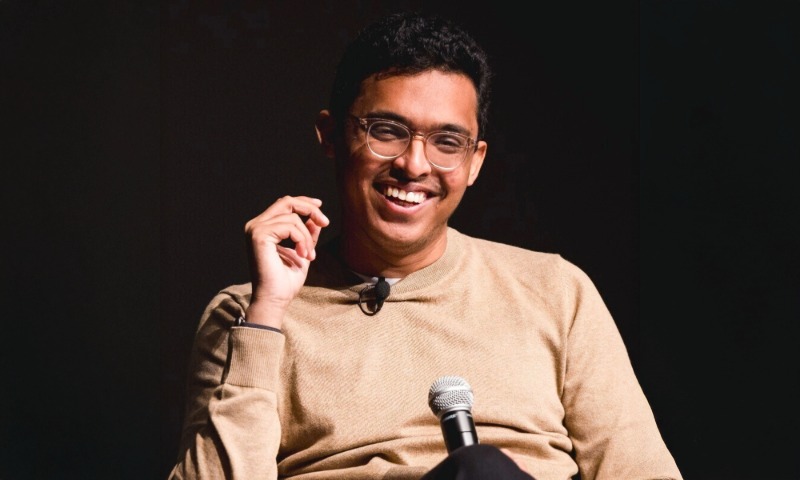
Sabih Bin Wasi is the founder and CEO of Stellic, a student success platform transforming how universities help students plan and achieve their academic goals. What started as a personal frustration with course planning evolved into a drive to reimagine how institutions support students through their most consequential years. Under Sabih’s leadership, Stellic has grown from a student-built prototype at Carnegie Mellon University to a comprehensive enterprise platform used by 80+ universities. As a lifelong learner at heart, he continues to approach every challenge with curiosity, creativity, and a deep belief in the power of higher education to transform lives.
Recently, in an exclusive interview with Higher Education Digest, Sabih shared insights into his passion for EdTech, Stellic’s mission to transform student success in higher education, and his views on leveraging technology to promote equity and access in education. He emphasized the importance of understanding the unique needs of students and institutions, and highlighted Stellic’s holistic approach to student success, which combines degree planning, audit, and advising tools into one unified system. Sabih also discussed the role of AI and machine learning in shaping the future of education, and the need for EdTech companies to approach the education sector with a deep understanding of its culture and values. The following excerpts are taken from the interview.
Hi Sabih. What drives your passion for EdTech and education, and how do you think it can be leveraged to create positive change?
My passion for EdTech comes from a deep belief in the power of education to change lives and the potential of technology to make that power accessible to everyone. Education is one of the most effective tools we have for social mobility. It opens doors, expands opportunity, and shapes futures. Yet too often, the people who could benefit the most from it face the highest barriers. My personal mission has always been to reach as many people as possible as deeply as possible, and education is one of the most scalable ways to do that.
Technology plays a critical role in unlocking that potential. It acts as an equalizer by removing complexity, lowering barriers, and surfacing opportunities for learners who might otherwise be left behind. Most students aren’t going to spend hours digging through course catalogs or mapping every possible path — and they shouldn’t have to. When technology does that work for them, it levels the playing field. It ensures that every student, regardless of background or starting point, can make the most of their education.
That belief is what drives me every day. EdTech isn’t just about better systems or smarter tools — it’s about creating lasting impact. It’s about giving more people the chance to succeed, and building pathways that make that success not just possible, but inevitable.
Please tell us about Stellic, its mission and vision. What sets it apart from other market competitors?
At Stellic, our mission is simple but ambitious: to make every student a success story. That means more than just helping students graduate — it’s about ensuring they have an unforgettable experience, transformational growth, and real readiness for life after college. If we can deliver those three outcomes at scale, we’ll have achieved what we set out to do. Our goal is to bring that kind of impact to 10 million students and beyond.
We don’t spend much time thinking about “competition” because, at the end of the day, everyone in this space is working toward the same mission: making higher education better. We see ourselves as one of many contributors to that effort. What makes Stellic stand out is how we approach the problem. Our platform combines the degree planner, audit, and advising tools into one unified system, giving students, advisors, and administrators a single source of truth. That means less time chasing information across disconnected systems and more time focused on meaningful progress.
This holistic approach, paired with the pace of innovation we bring to solving institutional challenges, is what makes Stellic unique. We’re constantly evolving our platform to remove barriers, connect people and data, and make student success not just possible, but expected.
What role do you think AI and machine learning will play in shaping the future of education, and how can EdTech companies leverage these technologies?
AI and machine learning will absolutely shape the future of education but at Stellic, we see them as tools, not solutions. Like the internet or other transformative technologies before it, AI’s real impact won’t be measured by what it can do today, but by the direction it’s headed. Its potential to fundamentally change how we work, learn, and make decisions is enormous. We believe the most meaningful outcomes will come when AI is additive to the work already happening, not a separate layer on top of it.
Our goal isn’t to build standalone AI products that sit on the sidelines, it’s to embed intelligence directly into the workflows that already power student success. When AI is woven into those core experiences, it stops feeling like a novelty and starts becoming an invisible force that makes everything simpler, faster, and more effective. Ultimately, AI should make education more human, not less. Used thoughtfully, it frees up time, enhances clarity, and gives institutions the capacity to focus on what matters most: guiding students, unlocking potential, and helping them succeed.
How do you think EdTech can be used to promote greater equity and access in education?
Equity in education starts with clarity. When students understand where they are, what’s ahead, and what’s possible, they’re empowered to move forward no matter their background or circumstance. Too often, learners get stuck not because of ability, but because the systems meant to support them are confusing and difficult to navigate. EdTech can change that by connecting people and data in ways that make progress visible, guidance accessible, and choices clear.
At Stellic, we’re focused on building tools that make education more transparent and collaborative. That might mean showing how one course can open new opportunities, or helping advisors quickly spot where a student might need support. When information flows freely and decisions are easy to understand, students feel confident, advisors feel effective, and institutions see stronger outcomes.
In the end, technology should make education simpler, fairer, and more personal. When every learner can see a clear path forward, and every advisor has the insights to guide them, equity stops being an aspiration and becomes a reality.
What role has mentorship played in your career development, and how do you mentor others?
Mentorship has been one of the most transformative influences on my career. In fact, Stellic is named after my own academic advisor — someone who fundamentally shaped how I think about purpose, impact, and applying my skills to work that matters. Good mentors don’t just give advice; they help you see possibilities you might not have seen on your own. They’re also one of the fastest ways to learn. Mistakes are inevitable, but learning from the experiences of others can help you avoid many of them and move forward faster.
I also believe mentorship is about teaching people how to think, not telling them what to do. Some of the most valuable lessons I’ve learned came from mentors who had completely opposing views. That forced me to weigh different perspectives, challenge my assumptions, and make my own decisions — something I think is essential for growth. In my own mentoring, I try to do the same. I focus on principles rather than prescriptions and share examples of what I call “unconstrained excellence,” helping people imagine what truly great outcomes look like so they can aim higher and achieve more.
How do you stay informed about emerging trends and innovations in EdTech?
For me, it starts with curiosity. I treat every conversation as an opportunity to learn, whether it’s with fellow founders, higher ed leaders, or our partners. That curiosity pushes me to ask questions beyond how institutions are using Stellic. I want to know what else they’re exploring, what’s exciting them, and what new ideas they’re watching. Those real-world perspectives from people solving problems every day are often the most valuable insights I get.
I also carve out time to step away from day-to-day operations and immerse myself in new thinking by attending conferences. They’re opportunities for deep, focused conversations and for seeing emerging ideas up close. Attending one or two each quarter helps me connect the dots, spot new opportunities, and stay ahead of where education trends are heading.
What are some key characteristics of successful EdTech entrepreneurs, in your opinion?
The best EdTech entrepreneurs know how to adapt to the unique world of education. Higher ed isn’t just another industry, it has its own culture, values, and ways of working. The people and institutions in this space care deeply about their mission, and if you come in trying to apply a purely corporate or traditional startup playbook, you’ll almost always miss the mark. You don’t need to come from an education background, but you do need to respect it and learn how it operates from the inside out.
It’s also essential to recognize that the people you’re engaging with — faculty, advisors, administrators, presidents — are driven by a purpose far deeper than profit. Their work is about shaping lives, expanding opportunity, and creating impact. Entrepreneurs who understand that and align with that purpose build stronger partnerships, design more meaningful solutions, and ultimately create products that truly resonate.
What is your favorite quote?
It’s hard to choose just one, but two quotes have stayed with me throughout my journey.
The first is a Persian saying: “This too shall pass.” It’s simple but grounding. In great times, it’s a reminder to stay humble and not take success for granted. And in tough times, it’s a reminder that challenges are temporary and that another period of prosperity is always ahead.
The second is from an iconic Apple ad: “The people who are crazy enough to think they can change the world are the ones who do.” Every time I hear it, it reignites my ambition and reinforces my belief that thinking big is the first step toward creating meaningful change.
What are your long-term career aspirations, and how do you see yourself evolving as a leader over the next five years?
Right now, my focus and aspiration are centered entirely on serving Stellic’s mission. As our team grows, our impact grows, and the scale of what we’re trying to achieve expands, my role as a leader has to evolve with it. One of my biggest priorities over the next few years is to build a culture where everyone has both the autonomy to do their best work and a shared understanding of what success looks like and how to achieve it. If we can align those two things — individual excellence and collective direction — we’ll unlock a truly multiplicative impact, where the whole is far greater than the sum of its parts.
Personally, I also want to stay close to the work that excites me most: reimagining our platform and finding ways to bring its value to millions more students. That’s how I see the next phase of my growth, as a leader who not only builds an environment where people thrive but also helps shape the future of the product and the impact it can have.
What advice would you give to someone looking to start a career in EdTech investing or education leadership?
My biggest piece of advice is to approach this space with a long-term mindset. Education isn’t a two- or three-year project, it’s a space where meaningful impact takes time. If you’re looking for quick wins, you’ll likely be disappointed. But if you’re driven by the idea of shaping lives, expanding opportunity, and solving deep, complex challenges, the work is incredibly fulfilling.
It’s also one of the few fields, healthcare being another, where you can align real economic value with real purpose. Whether you’re investing or stepping into a leadership role, staying connected to that deeper “why” is essential. It’s not just about spreadsheets or transactions, it’s about whether the problems you’re tackling truly inspire you and whether the solutions you’re backing make a meaningful difference. When you connect what you do to what drives you, you’ll not only be more effective, you’ll find far greater fulfillment along the way.