

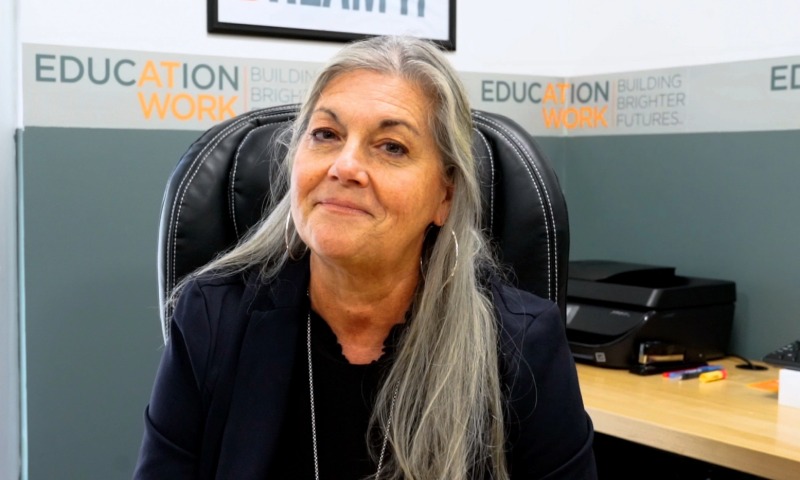
Jane Swift is CEO of Education at Work, a national nonprofit connecting college talent with Fortune 500 companies, and the former Governor of Massachusetts. She began her career as the youngest woman elected to the State Senate at 25 and helped shape the landmark 1993 Education Reform Act. As Lieutenant Governor and Governor (1999–2003), she oversaw its implementation, with Massachusetts later recognized as a national model for student achievement. In 2023, Secretary Cardona appointed her to the National Assessment Governing Board. Swift is a Trinity College graduate, holds six honorary doctorates, and has held fellowships at Harvard, Boston College, and Williams College.
Recently, in an exclusive interview with Higher Education Digest, Jane shared insights into her dedication to empowering students through career readiness initiatives. She highlighted Education at Work’s unique approach to work-based learning, which includes long-term opportunities, tuition reimbursement, and industry-recognized credentials. Jane also credited mentors like State Senator Peter C. Webber for their impactful advice and shared her future plans, words of wisdom, and much more. The following excerpts are taken from the interview.
Hi Jane. What inspired your dedication to empowering students through career readiness initiatives?
Two things – the first is my own personal experience as a Pell Grant student whose life was transformed through higher education and an internship I had in the Massachusetts State Senate that led to my ability to successfully start a career in public service. And then secondly, three decades later, observing the significant difficulties that my children and their peers, some of who had a similar background to mine, were having securing a pathway into internships and similar jobs like the one I had that provided significant economic and social mobility. I realized the dramatic changes in the economy now require students to have a lot more experience and career readiness preparation than most colleges and universities were able to provide.
What do you believe sets Education at Work apart from other organizations focused on work-based learning?
Education at Work partners with major companies across industries to place students into in-demand roles businesses need filled now that also help students gain skills and in many cases, an industry-recognized credential that leads to a great first job, either at the company they are working for while with Education at Work, or another opportunity. We’re different from traditional internship or short-term work-based learning opportunities because of our flexibility, long-term opportunities – many students work year-round for Education at Work, or for the full academic year – and tuition reimbursement. Our students are paid for their hours and they are eligible for up to $5,000 in tuition reimbursement to offset the cost of college.
We’re also different in how we’re approaching partners and thinking about opportunities for students – as AI continues to impact early-career talent, our partners are sharing with us that they need more workers who can fill roles that require 2-3+ years of experience but many new college grads don’t have that right out of school. We’re working with partner institutions and business to integrate work-based learning from freshman year, day one, so that students are working in jobs in their desired career fields as they are going through their academic studies, developing the industry-essential and durable skills they need to succeed.
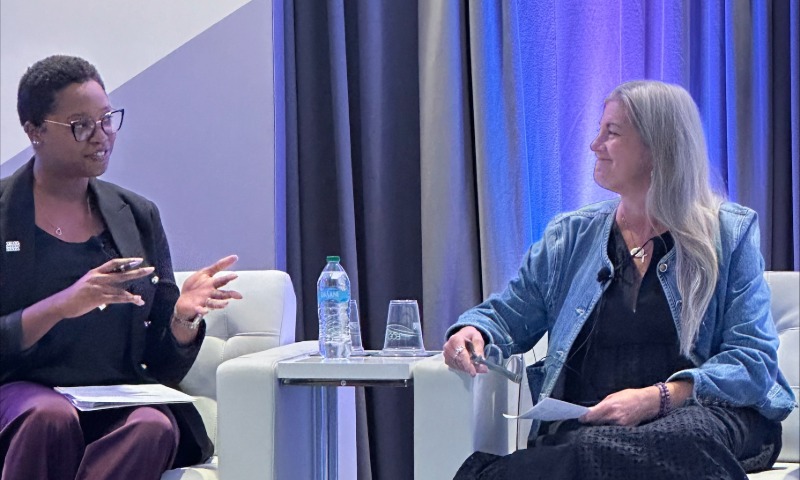
What professional development opportunities do you see as most valuable for leaders in workforce development organizations?
Because there is a need to understand both government and the private sector as a workforce development leader, I think it really depends on which perspective you bring to the work. I would say that if you bring the private sector experience, it would be really important to immerse yourself in how local and state governments in particular handle the many different upskilling and funding opportunities both in education and workforce verticals. And on the flip side, if you come as I did from public sector background, it’s incredibly important to immerse yourself in what is going on in the private sector so you can understand the velocity of change, the pressures private sector leaders are facing as they seek to balance preparing a new workforce for the challenges ahead with the financial demands to have a lean and effective workforce in place today.
What personal qualities or leadership attributes do you think are essential for driving mission-driven organizations like Education at Work forward?
Actually, they are some of the same durable skills or “noncognitive skills” as I heard Angela Duckworth professor at Penn calling them recently, that our young adults preparing for the workforce also need. A passion for lifelong learning – as I said, the private and also public sectors are experiencing rapid change, so staying up to date on all of those changes is incredibly important. I would also say you need to pair that passion for lifelong learning with a curiosity. I’m not a technologist, I didn’t major in a STEM field, but I am fascinated by the changes that tech and AI are bringing to the workforce and how they are going to impact individuals at every level of their career. That doesn’t mean that I deeply understand the algorithms being used, but I am deeply curious about how it works so I can understand its human impact. The last quality or skill I think is important is resilience — also something our students will need. This is a difficult sector right now, there’s a ton of attention and many challenges, but also many opportunities. Sometimes there are more challenges than opportunities, so you have to be resilient in order to find success.
How do you stay informed about trends and shifts in both education and the broader employment landscape?
So this is where I do think technology can be helpful but it can also drive you a little mad! I subscribe to a lot of listservs and read them assiduously. For political news and synthesis,there are some good listservs, several I follow from Axios. For the broader employment landscape, there’s a lot of great information that comes out of American Student Assistance and great data coming from the Burning Glass Institute, The Project on Workforce at Harvard, and Jobs for the Future. Where tech comes into play in a helpful way is that once you start liking and following some of these sources and clicking through their links, the algorithm will do the rest and start feeding you articles of interest. The challenge is that the deluge is mindboggling– once you train your algorithm, it can start to feel a little overwhelming with all the info that you’re being fed. And so one piece of advice I saw from a recent Axios article is understanding that you’re causing this for yourself – you’re being fed what you’re looking for, so try not to be overwhelmed. I also spice up my feed up with a fair amount of relaxing sports news so I am not totally immersed all the time in AI and workforce talent stories, as well as political news.
Have you had any mentors or role models who have influenced your career path?
I’ve had so many – the one that comes to mind is the state senator who preceded me, Peter C. Webber, who was a real mentor and role model. He told me one piece of advice that I have used so many times. It was in the context of a campaign, but you can apply it to anything that is hard to do or when you’re feeling discouraged: “You’re going to have a day when you’re going to be discouraged and you’re not going to want to go out and start campaigning. This is going to sound trite, but the best advice I can give you is to go out and start. And at some point your day is actually turned around.”
And that sounds so simple, but it’s so profound. I’ve shared it with my daughters and people I’ve mentored, too. Sometimes you just have to start, and even if you can only go through the motions for a bit, just getting started and creating forward motion is enough, and it will help keep you on track.
What is your favorite quote?
Something my Dad used to say to me, “Quitters never win and winners never quit.”
What are your long-term career aspirations, and how do you see yourself evolving as a leader over the next five years?
Because I’m a lifelong learner, I hope I will continue to evolve, but I don’t have long-term career aspirations because I’m 60 years old. Whether or not this job is my last job, this mission of helping young professionals figure out how to find social and economic mobility and establish themselves in careers that fulfill their passions and help them improve their communities, and contribute to society, is an extension of much of my public service, and the mentoring I’ve done for young women and young people who want to be politics or succeed in education throughout my life. So I think I will continue in this pathway for the duration of my career.
As for how I will evolve as a leader, I think I am going to need to be as agile, as resilient, and as tenacious as I’ve ever been, given what’s going on in the sector, and be willing to experiment and try new things. Even though I have been in leadership positions for three decades, I think that I’m going to have to stretch myself, as are many leaders, as the hiring landscape and the disruptions in our economy really challenge us all to find new ways to do things.
What advice would you give to students seeking to maximize their career readiness and opportunities?
For middle and high school students, I would encourage them to begin exploring their interests and gaining a deeper understanding of their passions, skills and strengths, and how those may relate to career pathways. Knowing those things going into college will set you up for success in being able to choose the right programs and relevant work opportunities that can give you the experience and skills needed to land a great first job that leads to long-term economic mobility.
For today’s college students, my strongest advice is to prioritize gaining career-aligned work experience as early as possible—ideally beginning in their first year of college. Too often, students wait until junior or senior year to pursue internships or other work-based learning opportunities, but employers are increasingly looking for candidates with two to three years of relevant experience when they hire for entry-level roles. That means students who start building those experiences right away not only stand out but also feel more confident and prepared when they enter the workforce. From freshman year onward, every opportunity to connect academic learning to real-world work helps students develop and refine their skills, explore career interests, and demonstrate to future employers that they are ready to contribute from day one. Also, graduates should not shy away from using and developing fluency with artificial intelligence tools. As AI rapidly transforms the workplace, students who gain early exposure to applying these technologies will be far better positioned for current roles and the jobs of the future.