

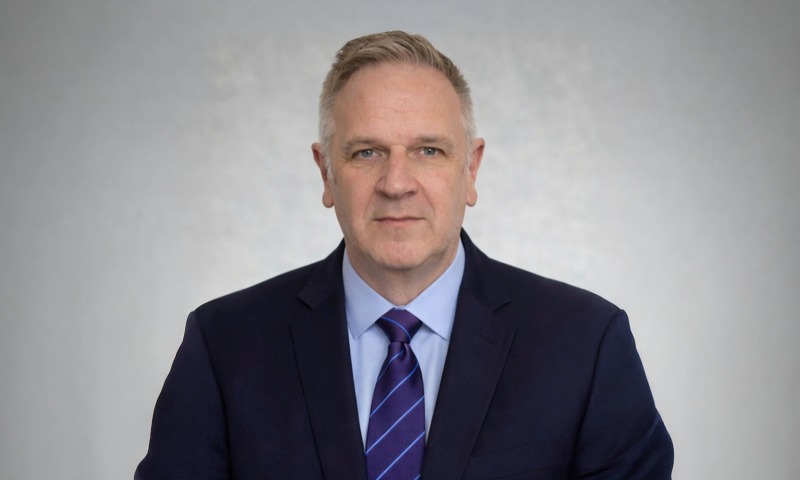
Anthony (Tony) Owen is Head of Market Development for Europe and the USA at Dublin Business School (DBS), where he leads international recruitment, market expansion, and strategic partnership development across key European markets and the United States. With over 25 years’ experience in international education and marketing, he has built partner networks and recruitment strategies spanning agent channels, institutional collaborations, and progression models, including 3+1 and 2+2 pathways.
Prior to joining DBS, Tony held senior international recruitment and marketing roles at Wrexham University and spent many years at International House Madrid, where he led large-scale growth and brand positioning in a regulated education environment. He has also served as an International School Auditor for International House World Organisation, assessing governance, academic delivery, compliance, and student experience globally.
Tony’s work is underpinned by an interest in digital transformation and responsible innovation; in 2023, he completed an MSc in Digital Marketing, with research focused on the use and adoption of AI as assistive technology in student recruitment and admissions.
In an exclusive conversation with Higher Education Digest, Tony talks about building sustainable international growth through trust, clarity and long-term partnership thinking. He shares how structured pathway models and strong governance frameworks protect both student experience and institutional reputation, and explores the practical role of AI as an assistive tool that enhances human judgement rather than replacing it. Below are the excerpts of the interview.
Your career has focused on international market development. What pivotal experiences shaped your journey into global higher education, and what milestones stand out most?
My journey into global higher education has been shaped by a simple, recurring lesson: international growth only works when what you promise matches what you deliver. A pivotal period for me was my long tenure at International House Madrid, where I was immersed in large-scale international marketing and recruitment and saw first-hand how quickly trust can be built — and how quickly it can be lost — if quality and student support don’t keep pace with demand. That experience gave me a practical, student-centred mindset that I’ve carried into every role since.
Milestones that stand out include leading international recruitment and marketing strategy at Wrexham University, conducting global quality audits as an International House auditor, and more recently, driving partnership and market development for Dublin Business School across Europe and the USA. I’m particularly proud of work that moves beyond “good intentions” into structured outcomes: partnerships that are clear on entry requirements and progression, and pathway models (including 3+1 and 2+2 routes) that give students confidence that their investment will translate into real opportunity.
As Head of Market Development for Europe and the USA, how do you identify emerging opportunities while navigating the regulatory and competitive challenges of international recruitment?
I look for opportunities where market demand, academic fit, and deliverability meet — and where we can genuinely add value for both partners and students. In a competitive environment, growth is rarely sustained by promotion alone; it comes from being consistently useful: clarity, responsiveness, realistic pathways, and support that stands up in practice. That’s the difference between a short-term intake and a long-term pipeline.
I often spot changes early through partner conversations — a sudden shift towards shorter mobility, more price sensitivity, or a request for clearer outcomes — and that’s usually the prompt to adjust messaging and offer more value, not just more marketing. From there, I apply a disciplined filter: is the opportunity compliant, financially sustainable, academically aligned, and resourced to deliver a strong student experience?
To navigate regulatory and competitive challenges, I prioritise structure and transparency. That means setting expectations early on entry requirements, timelines, fees, and recognition of prior learning where progression is involved — and ensuring internal stakeholders are aligned so delivery matches what we communicate externally. Trust is the real differentiator. When partners and students feel informed, supported, and confident in what happens next, relationships deepen and reputation grows over time.
Dublin Business School has built a strong reputation for industry-aligned programmes. How do you ensure that market insights directly inform academic offerings and student outcomes?
Market insight only becomes valuable when it changes something for the better. My role is to translate what we’re hearing from partners, employers, agents, and students into practical intelligence that academic and professional services teams can act on. I’m especially attentive to employability signals: which skills are being requested, what types of applied learning resonate most, and where students need clearer guidance once they arrive.
That insight helps us add value in the places students feel it most: clearer expectations, stronger real-world relevance, and smoother progression and support. It can influence programme positioning, how we describe outcomes, how we design partner pathways, and how we prepare students for the academic and practical realities of studying in Dublin. I don’t believe in chasing trends for the sake of it. The goal is alignment: DBS’s academic strengths articulated in a way that is relevant, evidence-based, and genuinely useful to students.
AI and digital technologies are transforming both education delivery and student recruitment. How are these technologies influencing your strategy across European and U.S. markets?
AI is accelerating expectations. Prospective students increasingly want fast, accurate, personalised answers, and they judge institutions by how clear and responsive the journey feels. That shift reinforces a wider point: institutions remain competitive when they use technology to add value — improving relevance, speed, and guidance — while keeping trust and a human relationship at the centre.
In my MSc research, I explored AI as assistive technology in recruitment and admissions: its potential to personalise communications, streamline repetitive tasks, and support better-informed decision-making, alongside the risks when data quality, governance, and ownership aren’t in place. A key takeaway for me was that AI delivers the most value when it supports staff judgment rather than trying to replace it. That’s non-negotiable.
In practice, this means using AI to triage and route enquiries, improve consistency across markets, surface the right information at the right time, and free teams to focus on complex cases and relationship-building. But it also means being deliberate: integrating data properly, defining accountability, monitoring outputs, and being transparent about how tools are used. The goal is a healthy synergy of “human-led, tech-enabled” recruitment that improves the experience for both students and staff.
International students are increasingly focused on employability and return on investment. How do you address these expectations when positioning DBS globally?
I position DBS through the lens of added value, because in a crowded market, the programme alone is rarely the only differentiator. Students want confidence that their investment will lead somewhere meaningful, and employability is central to that. Added value, for me, is the practical layer around the degree that helps students translate learning into outcomes: clearer guidance, stronger preparation, and real-world relevance that builds both competence and confidence.
When we speak about employability, I avoid vague promises and focus on what students can actually evidence. That includes the development of practical, workplace-relevant skills through applied learning, the ability to articulate those skills clearly, and support that helps students navigate the transition into an international study environment so they can perform academically from the outset. In many markets, value is also created by reducing uncertainty — being transparent about costs, timelines, expectations, and the student journey — because students who arrive prepared are far more likely to succeed and progress.
Ultimately, added value must be delivered, not described. If students experience a well-supported journey and graduate with demonstrable skills and confidence, employability outcomes improve and reputation strengthens — and that is what sustains demand over time.
Leadership in market development requires both strategic thinking and cultural sensitivity. How would you describe your leadership philosophy, and what principles guide your decision-making?
My leadership style is based on clarity, accountability, and respect. International growth is a long game, so I focus on setting a direction people can trust, building a disciplined plan, and then enabling colleagues across functions to execute well. Cultural sensitivity matters because good partnership work is rarely about “selling”; it’s about understanding what the other side values and why, and building something that works for both institutions and for students.
The principles that guide me are transparency, student-first decision-making, and long-term reputation. I’m also governance-aware, and I prioritise growth models that are compliant and scalable rather than volume-driven. I try to be direct in a kind way. It saves time, reduces confusion, and it strengthens relationships.
Outside of your professional responsibilities, what personal values or interests shape your perspective on education and global collaboration? What advice would you offer to students and young professionals aspiring to build international careers?
Living and working internationally has reinforced a simple belief: education is most powerful when it expands capability and empathy at the same time. Global collaboration works when you stay curious, listen properly, and respect local context rather than forcing a one-size-fits-all approach. I’m also grounded by family, and that keeps my focus on what really matters in education: supporting people through change and helping them grow in confidence, not just credentials.
My advice to students and young professionals is to treat an international career as a craft. Build strong fundamentals, communicate clearly, and develop cultural intelligence by observing and asking good questions. Seek mentors, take feedback seriously, and choose roles that teach you how systems work. Above all, protect your integrity — in international education, reputation travels quickly, and trust is the most valuable currency you have.