

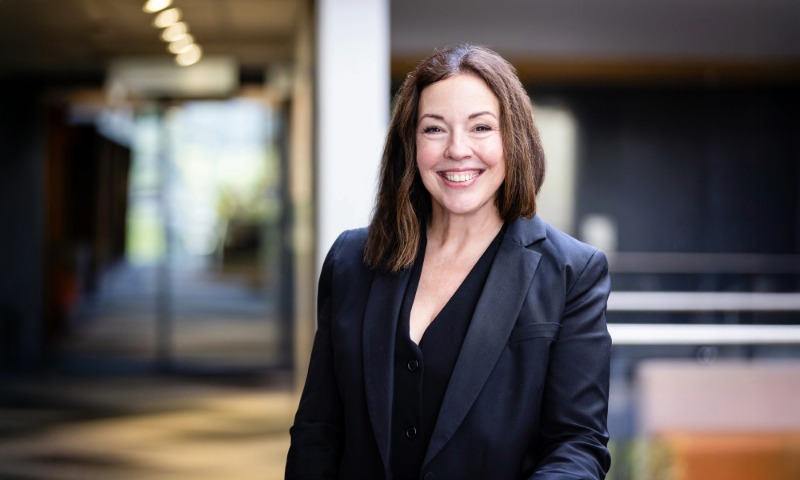
Professor Alphia Possamai-Inesedy is the Pro Vice-Chancellor (Student Success) at Western Sydney University, where she leads strategic, institution-wide initiatives designed to ensure every student is supported from pre-admission through to graduation and employment. Her portfolio integrates academic success, wellbeing, belonging, and career readiness within a holistic model of student experience, driving a new vision for equity-first, data-informed student success.
A Professor of Sociology, Alphia’s academic and leadership career has been dedicated to co-producing solutions that respond to society’s most pressing challenges. Her ongoing research focuses on higher education transformation, risk society, digital sociology, religion, and innovative methodologies. At the intersection of research, leadership, and digital transformation, Alphia is reimagining how universities can harness technology and human connection to create inclusive and personalised learning environments that empower students to thrive.
Recently, in an exclusive interview with Higher Education Digest, Alphia shared insights into transforming higher education to prioritize student success, equity, and inclusivity, emphasizing the role of technology and leadership in driving positive change. She also shared her personal hobbies and interests, future plans, pearls of wisdom, and much more. The following excerpts are taken from the interview.
What motivated you to pursue a career in higher education?
I came to higher education as a sociologist, and honestly, that lens has never left me. What drew me in, and what keeps me here, is tackling social issues including the fundamental issue of equitable access to higher education.
I am deeply aware of the structures that either enable or constrain people’s life chances. Higher education, at its best, is one of those rare spaces where we can positively influence people’s life trajectories, where we can help students see possibilities they didn’t know existed. But I am also acutely aware, even early on, that universities could just as easily reproduce inequality and narrow pathways as expand them.
My motivation has always been about the gap between what higher education promises and what it delivers. I wanted to be part of closing that gap, of making sure that when students walk through our doors, we are expanding their life opportunities.
What do you love the most about your current role?
Working with and for students. Increasingly, I love the opportunity to think deeply about purpose. In a world that’s becoming more uncertain, where the old promises of higher education are dissolving, I’m energized by the challenge of reimagining what universities are actually for. It’s not just about employability anymore. It’s about building the infrastructure for students to navigate permanent change, to have security even when stability is no longer guaranteed.
What role do you think technology plays in enhancing student success?
This is such an important question right now, and I think we need to be thoughtful about how we answer it. Technology isn’t neutral. It can either amplify existing inequalities or help us address them, but it won’t do the latter automatically.
When I think about student success and technology, I start from a position of equity. Who has access? Whose needs are being centered in the design? Are we assuming digital literacy and reliable internet that not all our students have? If we’re not careful, AI and other technologies could create a two-tiered system where the already-advantaged leverage these tools effectively while others fall further behind.
But when done right, technology can be powerful. I’m particularly interested in how it can personalize learning, offer adaptive support, and most importantly, give students choice. The omnichannel model that Ann Kirschner talks about resonates with me because it puts agency with the student. It recognizes that in our fluid world, rigid structures create barriers.
The key is that technology must serve human flourishing, not replace human agency. We need to teach students not just to use AI, but to work with it critically, to understand its limitations, to question what it produces. That’s why I believe AI literacy needs to be universal across all disciplines.
How do you stay current with best practices in student success and higher education?
I read and engage across disciplines and different sectors. I never stopped being a sociologist. My bedside table has books on social theory, history and politics as well as higher education. I am endlessly curious about the big structural questions. Right now, I’m deeply engaged with the social theory of risk society and Ulrich Beck’s notion of metamorphosis because I think it explains so much about the crisis higher education is currently facing.
I also stay grounded in the practical. I pay attention to what students are experiencing. I listen to them. I look at the data, but I don’t let the data substitute for their stories.
I have found that the best way to stay current is to be engaged and connected with colleagues in and outside of the sector, both nationally and internationally. Some of my most valuable learning comes from those conversations. Those connections, sometimes purely by chance, show us that we are struggling with very similar challenges, the collective insights and true sharing go a long way in the collective being able to support students and communities in a world that is changing faster than our institutions can adapt.
What mentors or role models have had a significant impact on your career?
I have been lucky to be surrounded by amazing colleagues, and intellectual influences are important to me, but those individuals who have had a significant impact on my career are those that are doing the work of transformation in higher education. People who aren’t just theorising change but driving it. Tim Renick, Ann Kirschner, Michael Crow, my previous Vice-Chancellor Barney Glover, and I am very fortunate to say, the new Vice-Chancellor George Williams. These are leaders who have fundamentally reimagined what’s possible.
Tim Renick’s work on student success at Georgia State, and now the National Institute of Student Success, demonstrates that we can close equity gaps at scale if we are willing to rethink the way that we operate as institutions. Michael Crow’s continuous challenging of traditions with his mission driven purpose of higher education, and Ann Kirschner who is helping all of us think through the language and frameworks for reimagining the sector.
I have been fortunate to see this play out at my institution. Barney Glover’s decade at Western Sydney University (WSU) resulted in the co-transformation of university and communities. His vision of universities as catalysts for regional economic and social futures laid the crucial groundwork for where we as an institution is now heading. George Williams AO is moving us forward with a complimentary vision. His work on inclusivity, excellence and societal impact, based on decades of fighting for Indigenous justice, human rights, and equity as a constitutional lawyer speaks to the values that should drive higher education. His commitment to making WSU the university that the region deserves speaks directly to opening up life biographies, not closing them down.
These are the people who inspire me and have shaped my career, because they prove it’s possible. They did not wait for the perfect conditions, they moved forward with value driven visions.
What do you believe are the most important qualities of an effective leader in higher education?
This might sound strange, but for me, it has to be the willingness to admit that the old playbook no longer works.
I see too many leaders in higher education who are using the language and logic of an earlier time (not that long ago really), but our world and our students have fundamentally changed. True leadership requires the ability to examine our own assumptions, to recognize when our categories no longer fit reality.
My disciplinary background has really influenced how I lead. When students struggle, my first question isn’t “what is wrong with the student?” but “what is happening with our systems?” That is a fundamentally different leadership orientation, focusing on the structures that produce outcomes, not just individual behavior.
So the qualities that matter most in my mind are
- Intellectual honesty.The courage to say that the old compact has broken, and we need to build something new.
- A genuine commitment to equity as a structural intervention.Not diversity as addition, but equity as transformation.
- The ability to build real partnerships with students, with communities, with industry, with government. But always in service of the public good.
- Finally the capacity to hold complexity. We need leaders who can hold multiple truths simultaneously and design accordingly.
At its core, leadership right now means acknowledging we’re building something new. We need leaders who can examine power, redistribute resources, center those who’ve been marginalized, and say clearly, the way we’ve always done it isn’t working, and we owe our students and our people better.
Can you share a book or resource that inspires you and why?
This is the hardest question you have asked me. I think I am going to stick with my disciplinary roots, as it is my return to Ulrich Beck, who is helping me think through what is happening at both the societal level and therefore the sector. I was heavily influenced by his work on ‘Risk Society’ in my formative years as a sociologist. It is his last work before his untimely death, ‘Metamorphosis of the World’ that is shaping my thinking about what I think we need to do as a sector.
What inspires me about Beck is that he doesn’t just diagnose problems, he imagined transformation. His concept of “emancipatory catastrophism,” the idea that crises, when confronted ethically, can produce collective learning, gives me hope that we can build something better.
What are some of your passions outside of work? What do you like to do in your time off?
The boundaries between work and private life are pretty blurred for me. Working with and for the communities of western Sydney are part of my everyday life.
I could not do any of this without the amazing people in my life, particularly my husband, kids and close friends (and of course dogs).
To help me balance, I cook a lot and I love to read, I usually have three to four books on rotation at once, it always depends on my head space at the moment I pick up the book.
Good fiction and good storytelling keeps me grounded but it also sparks curiosity and creativity for me.
What is your biggest goal? Where do you see yourself in 5 years from now?
My biggest goal is to help transform higher education from institutions that say students must adapt, reskill, and be resilient to ones that actually build the infrastructure students need to navigate permanent change.
For me, that means creating models where care-based governance and equity aren’t exceptional but normal. Where universities are public infrastructures that partner with students through uncertainty, not just prepare them for it.
In five years, I’d love to see tangible evidence we’ve rebuilt trust, that students and communities see universities as genuinely committed to the public good.
I want to keep writing and building with colleagues who share this vision. But ultimately, my goal is that every student who comes through our doors should leave with their life chances opened up. If we can do that systematically, at scale, with equity at the center, we’ll have achieved something transformational.
What advice would you give to someone starting their career in higher education?
Start by getting clear on who you are professionally and why you’re here. Not that polished version, but the real answer. What drew you to this work? I often say, look for those golden threads that are woven throughout all aspects of your career, those threads will tell your story of who you are and what you are driven by.
I also think starting off in higher education should be a journey of exploring the sector critically. What is its function? Think deeply about what you believe higher education’s role should be. I recommend that you question everything, including yourself. The people who truly make an impact in higher education are the ones who can examine their own assumptions and adapt when reality shifts. This type of thinking is aided by building relationships across boundaries, whether organisations or disciplines. The sector is too complex for any one space to solve. Always stay curious, some of my best insights have come from people and places that were the least expected.
Starting off in higher education is an exciting time, it is also one that can feel overwhelming. How privileged are we to do this work. But, and there is always a but, please take the time to care for yourself. This work takes dedication and grit, now more than ever.