



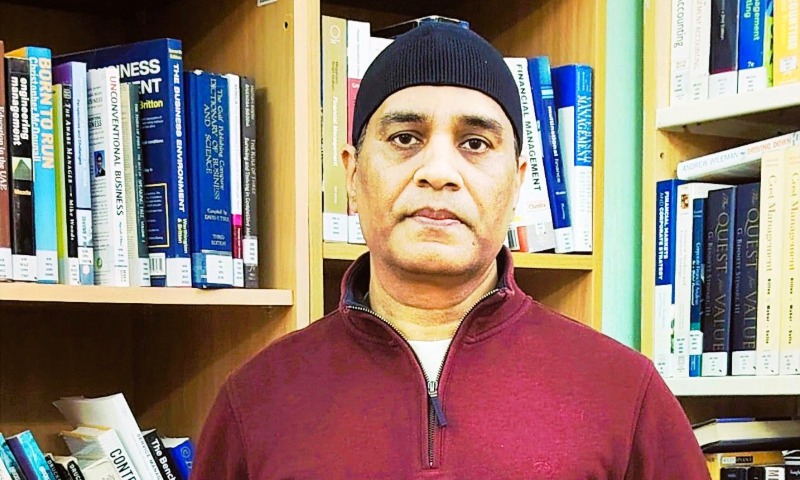
Dr. Nitin Patwa serves as the Deputy Director of the Undergraduate Program at SP Jain School of Global Management. He is an accomplished academician, an experienced corporate trainer, and an active researcher. His scholarly interests span sustainability, the circular economy, and contemporary business management. Dr. Patwa is widely recognized for integrating real-world relevance into academic learning, championing innovative pedagogies, and fostering a global mindset among students. His contributions extend beyond the classroom through executive training, industry collaboration, and impactful research aimed at shaping responsible, future-ready leaders.
In today’s rapidly evolving business environment, companies no longer design their strategies on the assumption that people make perfectly rational decisions. Instead, they are increasingly acknowledging a fundamental truth: human beings think with biases, shortcuts, emotions, and mental habits. This shift—driven significantly by the rise of behavioral economics—is transforming how products are designed, how prices are set, how consumers are engaged, and how policies are crafted.
Pioneers such as Richard Thaler and Cass Sunstein, through influential works like Misbehaving and Nudge, have shown how deeply human behavior affects economic and business outcomes. Biases such as loss aversion, anchoring, confirmation bias, and choice overload can meaningfully influence purchasing decisions, savings behavior, and even workplace performance. Small design changes—nudges—can shift choices in powerful ways. When used ethically, nudges can help people make better decisions while also benefiting businesses and society. The emphasis here is crucial: ethical, transparent, and fair nudges must guide any behavioral intervention, ensuring organizations remain responsible and trustworthy.
One of the major enablers of this behavioral revolution is the explosion of data. What was once the most difficult part of business—collecting, organizing, and interpreting data—has now become significantly easier due to technological advancements. With the rise of AI, machine learning, and predictive analytics, businesses today can identify subtle behavioral patterns that were previously invisible. AI-powered systems can capture how consumers browse, what distracts them, how they respond to price changes, and what emotional triggers shape their preferences. This ability to blend behavioral science with data analytics is reshaping every sector—from retail and finance to healthcare and education.
This reality raises an urgent question for educators: Is the way we teach Economics evolving fast enough?
Traditional economics often relies on the rational-agent model—the idea that individuals are logical decision-makers who always choose what maximizes their benefit. While this model builds a strong theoretical foundation, it no longer reflects the complexities of real markets. Today’s students must understand not only supply and demand, but also why people sometimes pay more for convenience, why they procrastinate, why they stick with defaults, and why they get overwhelmed by too many choices.
To remain relevant, economics teaching must embrace behavioral insights as a core component—not an optional or peripheral topic. When students learn to view business decisions through a behavioral lens, they become better equipped to solve real problems. They can design pricing strategies that account for cognitive bias, develop marketing campaigns that resonate emotionally, and build products that align with genuine human needs instead of theoretical assumptions.
Integrating behavioral economics with data analytics is particularly powerful. When students learn to interpret consumer behavior using real data, they discover how motivations, attention cycles, and habit formation shape decision-making. They move from merely understanding theories to applying insights in practical, measurable ways. This combination prepares them to contribute effectively in roles that require personalization, user experience design, sustainability initiatives, and strategic thinking.
For teaching to truly evolve, economics classrooms must go beyond lectures and adopt experiment-driven learning. Controlled experiments, hands-on simulations, behavioral games, and real-world field trials offer students the opportunity to test human behavior rather than simply read about it. When learners observe how people respond differently to framing, incentives, or choice architecture, behavioral economics comes alive. They begin to appreciate its relevance in pricing, communication, entrepreneurship, and social well-being.
The benefits extend far beyond business. A workforce trained in behavioral insights can help shape smarter public policies, nudge society toward sustainable practices, and improve public service design. From increasing recycling rates to encouraging healthier lifestyles, behavioral economics offers a toolkit that drives meaningful societal outcomes.
As behavioral economics reshapes the corporate world, our economics curricula must evolve. Graduates entering the workforce today are expected to operate in a decision-driven, data-heavy, psychologically informed business environment. They need the skills to analyze how people behave—not how we assume they behave.
The future of Economics Education lies in blending behavioral science, data-driven decision-making, and ethical responsibility. Only then can we prepare modern business graduates to design better organizations, create more human-centered strategies, and contribute to a more thoughtful and sustainable world.