



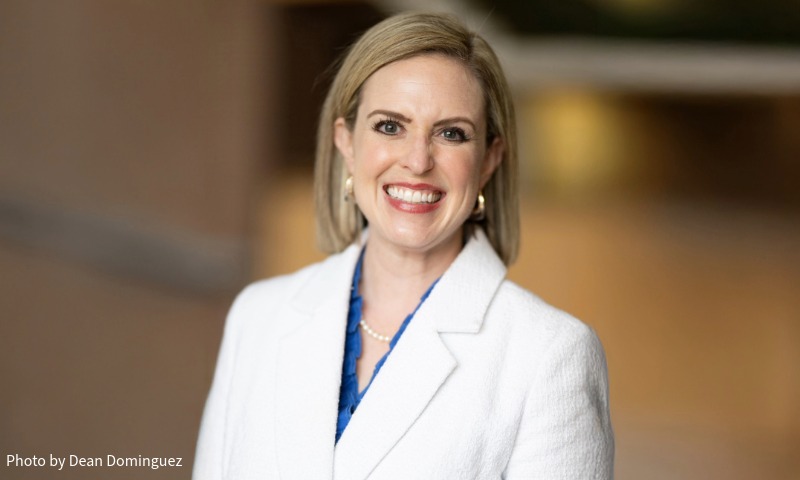
Dr. Lindsay Davis serves as Director of BBA Admission at SMU Cox, where she oversees undergraduate enrollment strategy and recruitment. She holds an Ed.D. and M.Ed. from Southern Methodist University and degrees in Theatre and Entrepreneurial Management from Texas Christian University. A recipient of SMU’s M Award, the university’s highest honor, Lindsay recently completed her term as President of the Junior League of Dallas. Her professional and volunteer work focuses on expanding access to opportunity, strengthening nonprofit organizations, and helping individuals and communities thrive.
Recently, in an exclusive interview with Higher Education Digest, Lindsay shared insights into her journey from first-year admission counselor to Director of BBA Admission at SMU Cox. She reflected on the lesson that connecting people to opportunity is about matching and storytelling, not pushing a preset path. On trends, she sees “fit” and campus culture becoming as important as GPA and test scores for talent identification, while AI’s role is strengthening business fundamentals and judgment rather than replacing them. Looking ahead, she plans to keep helping Cox attract exceptional students and expand her service to nonprofits, focusing on building things that last through collective effort. The following excerpts are taken from the interview.
Hi Lindsay. Every leader starts somewhere that shapes their lens on the world. Looking back to your first role in admissions and education, what moment taught you the most about connecting people to opportunity?
One of my earliest lessons came as a first-year admission counselor at a college fair. I remember having a lightbulb moment when I realized that every student in the room had a different “best college.” That sounds obvious now, but as a 22-year-old who had just gone to work for my alma mater because it was my best college, it genuinely shifted my perspective.
That experience taught me that connecting people to opportunity is equal parts matching and storytelling, equal parts idealism and realism. Of course, you want every student to leave your table excited about SMU. But if a student tells you she wants to be a nurse, the responsible thing isn’t to convince her she could somehow piece together that path at an institution without a nursing program. Instead, it is to help her understand the broader landscape of higher education and connect her with the institutions that could best help her achieve her goals.
That lesson has stayed with me throughout my career: leadership is about helping people identify the opportunities that are right for them, not directing them toward a predetermined destination.
As Director of BBA Admission, your role is part strategist, part storyteller, part advocate. Which part of the job lights you up most each day?
Earlier in my career, my answer would have been storytelling. I loved working directly with students and watching them light up as they began to see how a university could be a great fit for their goals, talents, and aspirations.
After more than 15 years in enrollment management, though, I’ve developed a real appreciation for strategy. I love looking at the bigger picture: identifying trends, understanding what’s driving them, determining where we should adapt, and finding opportunities to influence outcomes. Every admission cycle brings a new set of challenges, a new enrollment goal, and a fresh opportunity to solve complex problems.
What makes the work especially rewarding is that strategy is actually what shapes storytelling and makes advocacy possible. In my role, I have the opportunity to shape the strategy that empowers my team to connect students with opportunities every day. And if I’m completely honest, it doesn’t hurt that I’m highly competitive. Give me a goal, and I will do everything I can to help my team achieve it.
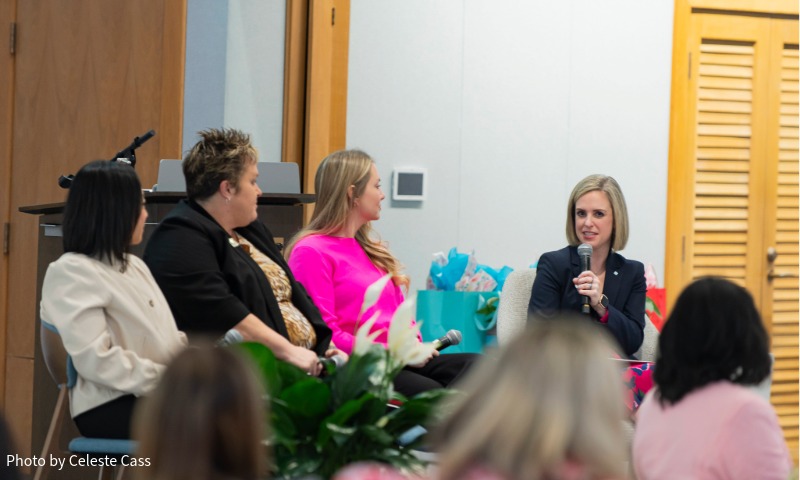
Admissions has shifted dramatically post-pandemic, with test-optional policies and new ways to evaluate fit. What trend do you think will most reshape how schools identify talent in the next 5 years?
This is a fun question for me because I studied test-optional admission policies during my doctoral program, long before the pandemic accelerated their adoption. While testing policies will continue to evolve, and we’ve already seen some institutions return to test-required admission, I don’t think test scores are the trend that will most reshape talent identification over the next five years.
What I think will become increasingly important is the concept of fit. Academic indicators like high school GPA and standardized test scores remain valuable predictors of student success, but students are making enrollment decisions based on more than academic offerings alone. They want to know how a campus feels. Do they see themselves there? Do they connect with the students, the culture, and the surrounding community?
There is research suggesting that something as simple as visiting a campus on a rainy day can influence a student’s likelihood of enrolling. That may sound surprising, but it highlights an important reality: people make decisions based on both data and experience. One publication recently described SMU as a “vibe school,” and while that phrase made me smile, there’s truth behind it. Students are looking for places where they can thrive academically and personally.
Over the next five years, I think talent identification will increasingly become a two-way process. Institutions will continue evaluating academic preparation and potential, while students will place even greater emphasis on finding environments where they feel a genuine sense of belonging. The schools that succeed will be the ones that can effectively connect those two pieces.
The line between undergraduate and lifelong learning is blurring. How do you see the role of a BBA evolving as careers change faster?
As careers continue to evolve, I believe the value of a BBA will become even stronger. The half-life of technical knowledge is shrinking. The tools, technologies, and business practices students encounter throughout their careers will continue to change at an increasingly rapid pace. But the foundational principles of business remain remarkably consistent. Organizations will always need leaders who can solve problems, communicate effectively, make sound decisions, and create value.
What’s changing is how we prepare students to apply those fundamentals in a rapidly evolving environment. At SMU Cox, our faculty members work closely with industry leaders to ensure our curriculum reflects emerging trends and prepares students for careers that may not even exist yet. Artificial intelligence is a great example. We offer specialized opportunities for students who want deep technical expertise, but we also believe every business student should understand how to use AI thoughtfully and responsibly within their chosen field. As technology evolves, our focus is on helping students develop the judgment to use it effectively, not simply teaching them how to use today’s tools. Technology will continue to change, but the most important part of the AI feedback loop is still the biological brain.
I also think one of the greatest strengths of the BBA experience at SMU Cox and most business schools is a connection to the broader university. The combination of business education, career development, and a strong foundation in the liberal arts helps students develop both technical skills and the adaptability needed to navigate change throughout their careers.
The line between undergraduate education and lifelong learning may be blurring, but that’s exactly why a strong undergraduate experience matters. The goal is to prepare students for what lies well beyond their first job; to continue learning, adapting, and leading for decades to come.
You’ve been recognized by Junior League 40 Under 40 and now People Newspapers 20 Under 40. Our readers would love to know the secret mantra behind your success.
I don’t know that I have a secret mantra, but I do have a guiding belief: build things that last, and don’t try to build them alone. Whether it’s a program, a partnership, a scholarship fund, or a team culture, I’ve always been more interested in creating sustainable impact than pursuing individual recognition. The most meaningful accomplishments in my career have been the result of talented people coming together around a shared purpose. I’ve been fortunate to learn from incredible mentors, work alongside remarkable colleagues, and lead teams willing to tackle ambitious goals. If there’s a secret, it’s that lasting impact is almost always a collective effort.
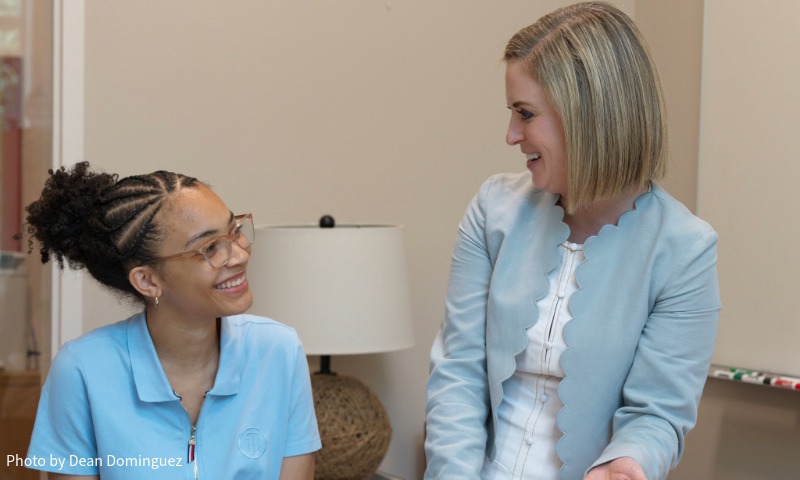
You have a background in theatre and entrepreneurial management. Is there a book, play, or story that still guides how you see the world?
One book that has profoundly shaped how I see the world is The Art of Gathering by Priya Parker. Her central premise is that bringing people together is a skill, and that meaningful gatherings don’t happen by accident. They happen through intentionality. That idea resonated deeply with me, both professionally and personally.
I found the book so impactful that I asked the entire Junior League of Dallas Board and Leadership Council to read it, and it transformed how we thought about engaging our members. Priya later spoke at our Milestones Luncheon, and I had the opportunity to facilitate our conversation on stage. Her work reinforced something I have come to believe throughout my career: whether you’re leading a nonprofit organization, building a university community, or helping students find the right college for them, people are looking for connection, purpose, and belonging. After all, in admissions we’re essentially inviting students to join a four-year gathering.
On the theatre side, Parade has always stayed with me. Although it is set in 1913, its themes of justice, corruption, public opinion, and the influence of media feel remarkably relevant today. It is a reminder that while technology and society evolve, human nature often changes much more slowly.
Community service is a throughline for you, from Junior League to local boards. What’s one small act of giving back that brings you the most joy?
One of the things I enjoy most is being able to share a specialized skill that can help an organization solve a problem. Sometimes the most meaningful acts of service occur when your experience happens to align perfectly with someone else’s need.
For example, I recently worked with an organization that wanted to establish a scholarship program using funds they had worked hard to raise. Because of my background in scholarship administration and higher education, I was able to help them think through the application process, selection criteria, and award structure. It wasn’t a large project, and it didn’t take very long, but it was exactly the kind of support they needed at that moment.
Those opportunities bring me a great deal of joy because they remind me that service doesn’t always mean starting from scratch. Sometimes it means taking knowledge you’ve gained over the course of your career and using it to help another organization advance its mission.
Dallas has such a strong sense of place. What’s your favorite spot in the city that reminds you why you serve here?
If I had to choose one place, it would be Fair Park. Few places in Dallas tell the story of our city so completely. It has a rich history of bringing together people from different backgrounds, neighborhoods, and experiences, and it continues to serve as a gathering place for our community today.
I’ve had the opportunity to engage with Fair Park in several different ways over the years. Through the Dallas Mayor’s Back to School Fair, I’ve seen thousands of local students and families come together to prepare for the school year. Through my involvement with FIFA World Cup planning efforts, I’ve seen how the park can serve as a stage for events that connect Dallas to the world. And just across the street sits Irma Rangel Young Women’s Leadership Academy, where I once participated in Principal for a Day and was reminded of the extraordinary potential of Dallas students.
What I appreciate most about Fair Park is that its history, like Dallas itself, is not without complexity. Yet because of the work of civic leaders, including trailblazers like Juanita Craft, it has become a place that belongs to everyone. When I think about why I serve, I think about places like Fair Park. They remind me that building a stronger city is ultimately about creating opportunities for people from all walks of life to come together and thrive.

What is your biggest goal? Where do you see yourself in 5 years from now?
I’ve never been someone who plans my career around a specific title five years in the future. What has consistently motivated me is the opportunity to do meaningful work, solve interesting problems, and contribute to organizations I care about.
I genuinely love what I do. In the years ahead, I hope to continue helping SMU Cox attract and support exceptional students, while adapting to the ever-changing landscape of higher education. One of the things I enjoy most about enrollment management is that every year presents a new challenge. The students change, the market changes, and the strategies evolve. There’s always something new to learn.
Now that my term as Junior League of Dallas President has concluded, I’m also excited to continue serving nonprofit organizations in ways that leverage my professional expertise. Some of the most rewarding experiences of my career have come from helping mission-driven organizations strengthen their impact, and I hope to do even more of that in the years ahead.
If there’s a common thread, it’s this: five years from now, I hope to be doing more of what I love, helping people and organizations thrive.
For students reading this who feel unsure about their path, what’s one practical step you’d tell them to take this year?
If there’s one practical step I would encourage students to take this year, it’s to experience colleges in person whenever possible. Visit the campus. Walk around. Sit in the student center. Pay attention to how the place feels.
Students often focus on majors, rankings, and admission statistics, all of which provide some value. But they’re also choosing a place where they’ll live, learn, and grow for four years. The location, culture, and overall environment are just as important as the academic program. I often tell students to identify their vibe. Do you want to be in a large city or a college town? What kind of campus community feels most comfortable to you? Where can you picture yourself thriving?
If visiting campus isn’t possible, look for opportunities to connect with the institution closer to home. Many colleges and universities, including SMU, host events around the country where prospective students can meet admission staff, alumni, current families, and sometimes even current students. It’s not quite the same as being on campus, but it can provide valuable insight into whether a school feels like the right fit.
The students who are happiest with their college decision are usually the ones who look beyond what a school offers and take the time to understand what it feels like to be there.