

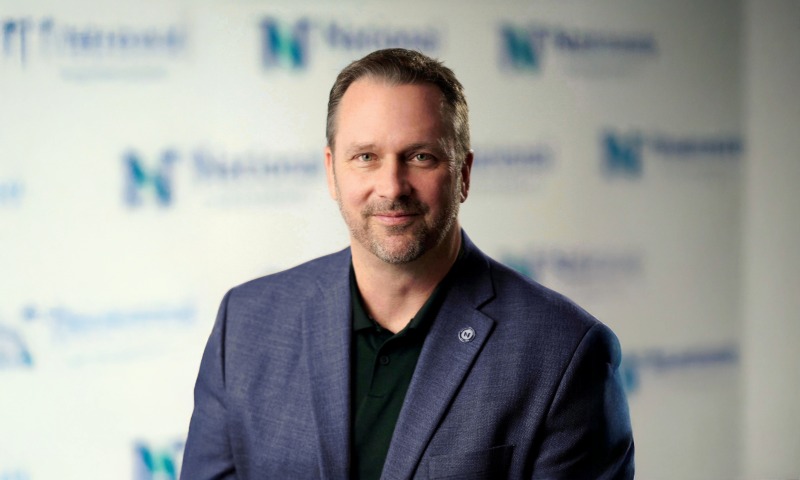
Dr. Mark Milliron is the President of National University, a role he took over in 2022. Previously, Milliron was the Senior Vice President and Executive Dean of the Teachers College at Western Governors University. Prior, he was the Chief Learning Officer of Civitas Learning, an agency he co-founded in 2011 and joined full-time in 2013. Milliron is an award-winning leader, author, speaker and consultant who has worked with universities, community colleges, K-12 schools, foundations, corporations, associations and government agencies across the country and around the world. Prior to joining Civitas, Mark served in the education world in a number of leadership positions, most recently as founding Chancellor of WGU Texas. Prior to that, Mark held the role of Deputy Director for Postsecondary Improvement with the Bill & Melinda Gates Foundation.
Recently, in an exclusive interview with Higher Education Digest, Mark shared insights into his journey in higher education, motivated by the transformative power of education and a desire to make a meaningful difference. Mark predicts AI will reshape higher ed by 2030, integrating into curricula and student support, and sees online learning playing a central role in serving non-traditional students. He also shared his personal hobbies and interests, future plans, words of wisdom, and much more. The following excerpts are taken from the interview.
Hi Mark. What motivated you to pursue a career in higher education?
Early in my life, places like Mesa Community College, Arizona State University, and the University of Texas at Austin, institutions committed to access as much as they are to excellence, showed me how transformative education can be. I would not be here without them. Without the right people showing up at the right moments, my path would have looked very different. It felt natural to make that experience my purpose, to be the right person showing up at the right moment, and to help more learners have their lives changed by education. I’ve always been driven by a combination of curiosity and a desire to make a meaningful difference, and higher education is where those two things truly come together.
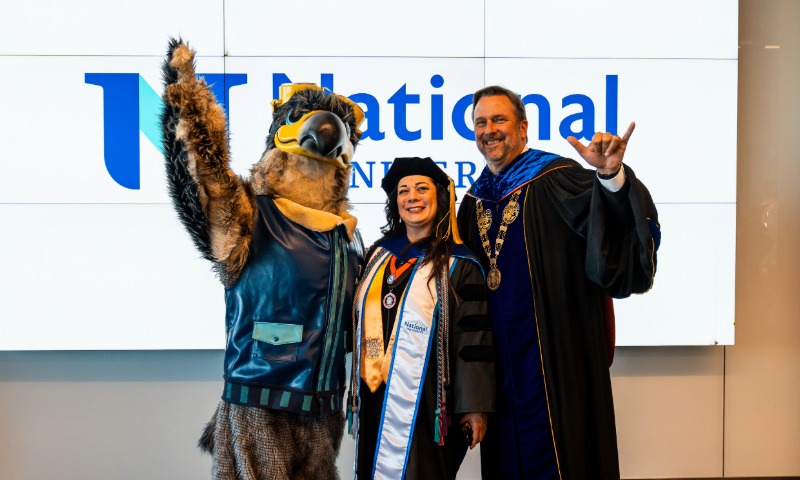
What’s most rewarding about leading NU?
The most rewarding part is leading an institution that’s deeply aligned with the realities of students who work, military and veteran communities, student-parents, and other folks balancing education with the rest of their lives. We’ve taken to calling our students ANDers™ because they are going to college and raising children, or going to college and working a full-time job. These learners represent the emerging majority of today’s students. Knowing that our mission is built around helping these learners earn meaningful credentials and create new opportunities for themselves and their families is profoundly meaningful.
How will AI reshape higher ed by 2030?
First, AI will be in the core curricula for the majority of programs in higher education–i.e., it will become a new basic skill for graduates. Second, AI will reshape higher education not by replacing educators in the teaching and learning process, but by further powering our ability to meet students where they are and guide them on meaningful learning journeys–and to do so at scale. Where it does automate human tasks, it should be the rote ones that too often get in the way of the real work we do with learners. By 2030, AI will be integrated into teaching, advising, and student support, but if higher education does this well, it will also be embedded across the entire student experience. Students won’t just encounter AI through a chatbot or be left to figure it out on their own. In short, students will learn about AI and with AI.
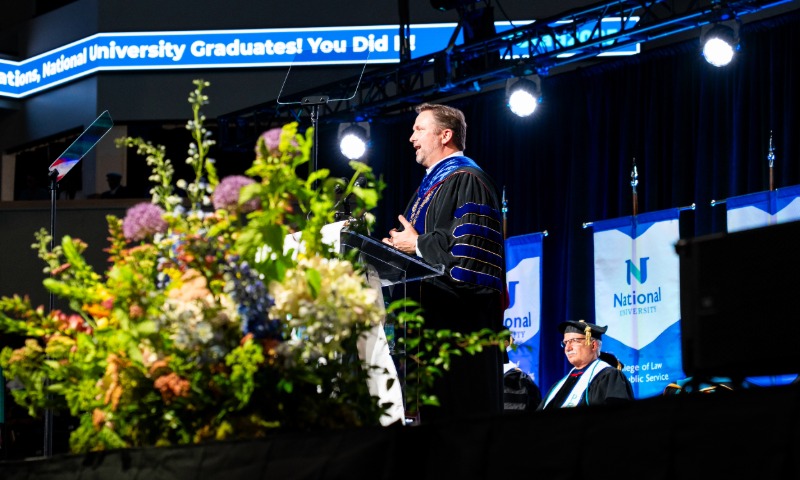
What’s the role of online learning in future education?
Nontraditional students are on the rise and online education already plays a central role in serving them. That role will only continue to grow. However, we have to remember that online and hybrid learning technologies and instructional models are diverse and changing. We’ll continue to leverage online learning and do the work of supporting policies, practices, and partnerships that help us make the most of its possibilities. However, we’re not tied to any technology or technique; what matters to us is that our students learn well, finish strong, and launch confidently into their next adventures. Given this commitment, we’ll continue to innovate and explore different learning and service models with on ground, online, hybrid, metaverse, and more.
How do you stay updated on best practices in higher education?
I stay up to date by connecting with a wide range of leaders, researchers, teachers, service professionals, and especially students at National University, across the country, and around the world. Over the course of my career, I’ve been fortunate to work alongside some pretty inspiring people from K12 schools, colleges, universities, workforce education, philanthropic organizations, technology companies, and policy circles, and those relationships have stayed with me. Many of these folks are power learners, curators of content, and the best of sharing partners. Moreover, you also get invited into meetings, conferences, projects and more as a result of these relationships. Having access to such diverse perspectives, especially from people who genuinely care about students, helps me stay humble and grounded in what’s working and where higher education is headed.
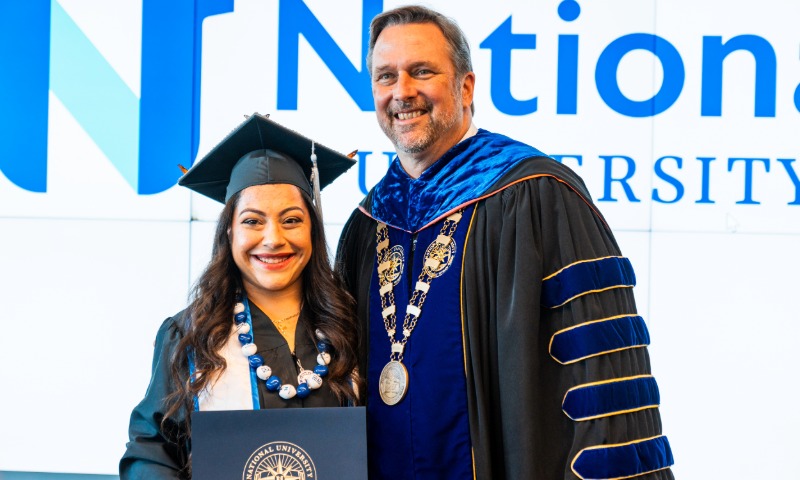
Are there any particular books, articles, or resources that have significantly influenced your thinking or approach?
I’m a big believer in having a broad learning aperture–synthesizing, analyzing, and usefully stealing from lots of places. The recent book “Range” by David Epstein is a great read and captures the why of that perspective well. We’ve really pulled that into our culture here at NU. Learning together with a team is a power skill as you work to get better.
What is your favorite quote?
“This is the true joy in life, being used for a purpose recognized by yourself as a mighty one. Being a force of nature instead of a feverish, selfish little clod of ailments and grievances, complaining that the world will not devote itself to making you happy. I am of the opinion that my life belongs to the whole community and as long as I live, it is my privilege to do for it what I can. I want to be thoroughly used up when I die, for the harder I work, the more I live. I rejoice in life for its own sake. Life is no brief candle to me. It is a sort of splendid torch which I have got hold of for the moment and I want to make it burn as brightly as possible before handing it on to future generations.”― George Bernard Shaw.
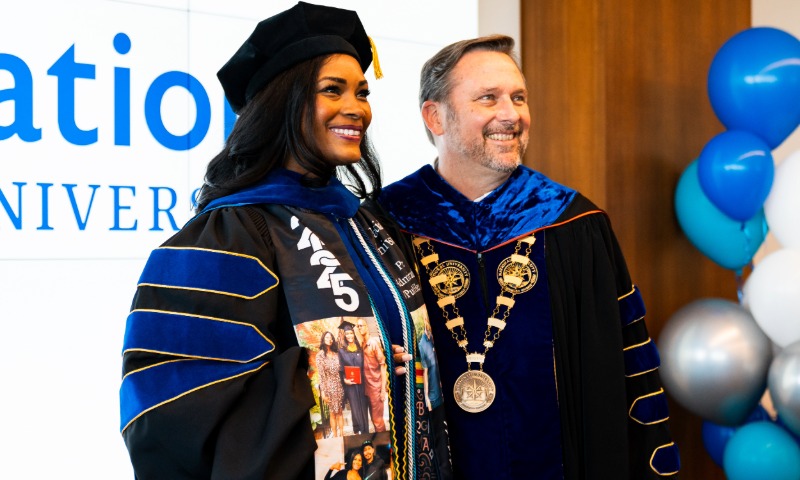
What are some of your passions outside of work? What do you like to do in your time off?
Most of all, I enjoy spending time with my wonderfully rowdy family – four kiddos and an amazing wife; hiking in the Blue Ridge Mountains and on the beaches of San Diego; playing, coaching, and watching sports (basketball and tennis in particular); and taking in amazing views, scenes, and moments in travel and in everyday life.
What is your biggest goal? Where do you see yourself in 5 years from now?
The answer is really the same: working to make things better.
What advice would you give to someone just starting out in their career in higher education?
Be curious, stay open, and always be willing to be a rookie again. Some of the most important learning happens when you step into unfamiliar territory and allow yourself to be a beginner. Pay attention to people who do this vital work in education thoughtfully and with integrity, and learn just as much from missteps as from successes. Most of all, keep your focus on opening pathways to possibility for students. There’s deep meaning in this work.