



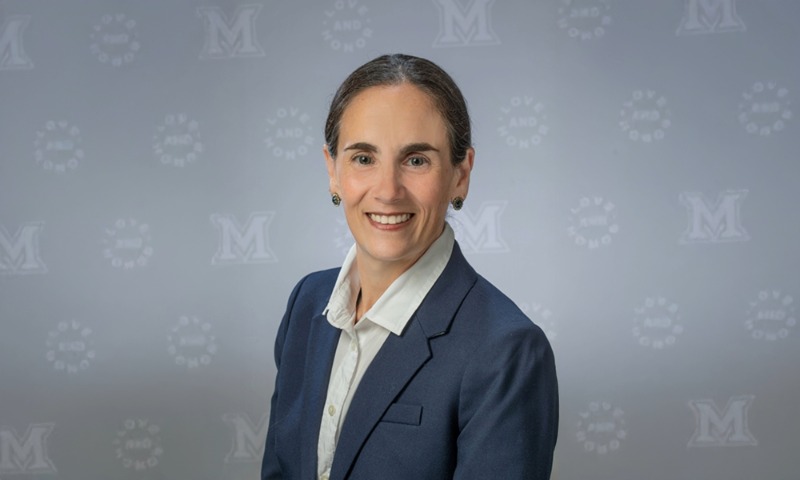
Jessica Palatka is the VP and CHRO for Miami University. Ms. Palatka leads HR functions throughout the university, including HR strategic programs and partnerships, operations and services, and compliance. Ms. Palatka is an Adjunct Professor teaching HCM. She advances scholarship and applied research in the areas of workforce planning, talent management, and the evolving role of data and technology in HCM. Ms. Palatka earned a bachelor’s and a master’s from the University of Maryland. Ms. Palatka is a doctoral student at Miami University. Ms. Palatka serves on the Executive Board of Directors for the United Sommelier Foundation, a 501(c)(3).
Recently, in an exclusive interview with Higher Education Digest, Jessica shared insights into her journey as a leader in human capital, her approach to building relationships, and her vision for empowering employees and advancing the mission of Miami University. She also shared her personal hobbies and interests, future plans, words of wisdom, and much more. The following excerpts are taken from the interview.
Hi Jessica. What motivated you to pursue a career in HR, and what have been some of the highlights?
My pathway into human capital was shaped by a deep belief that people, not systems, budgets, or structures, are the true drivers of organizational excellence. Early in my career, I saw how profoundly employees’ experiences influenced performance, culture, and innovation. I was drawn to roles where I could cultivate those experiences, remove organizational barriers, and create environments where people could thrive.
Over time, I became especially motivated by the complexity and purpose-driven nature of human capital work in higher education. Colleges and universities are communities of learning, inquiry, and transformation. The success of those missions depends on the faculty and staff whose expertise, creativity, and commitment bring them to life. Working in human capital allows me to align people strategy with academic strategy, to turn abstract values into concrete practices that support teaching, research, and student success.
I also gravitated toward human capital because it offers the opportunity to approach leadership through both compassion and strategy. It requires understanding individuals’ lived experiences while simultaneously making decisions that move the institution forward. That combination of empathy and organizational stewardship is what continues to motivate me today.
Throughout my career, several experiences have affirmed why I chose this path and have shaped my approach as a leader:
Leading organizational transformation efforts: I have had the privilege of steering HR modernization initiatives that improved processes, strengthened accountability, and helped shift HR from a transactional function to a strategic partner. These efforts demonstrated how strong human capital leadership can reshape culture and improve institutional performance.
Building meaningful partnerships with academic leaders: Some of the most rewarding moments have come from collaborating with deans, department chairs, and faculty leaders to co-design recruitment, retention, and development strategies. These partnerships reinforced my commitment to shared leadership and showed how much can be accomplished when HR and academic affairs work in true alignment.
Creating talent pathways that support institutional goals: Whether designing faculty development programs, rethinking onboarding, or creating leadership pipelines, I have found great fulfillment in building systems that support growth at all levels of the institution. Seeing individuals advance, thrive, and contribute in new ways remains one of the most meaningful aspects of the work.
Strengthening equity, inclusion, and belonging: Much of my human capital practice is grounded in equity-centered leadership. I am proud of initiatives that expanded access to development, reduced barriers in hiring, increased transparency in HR processes, and intentionally built more inclusive workplaces. This work aligns closely with my scholarly interest in transformative and culturally responsive leadership.
Mentoring and developing emerging HR professionals: Investing in people, especially early-career HR practitioners, has been a consistent highlight. Serving as a mentor and building high-performing teams has affirmed my belief that human capital work is, at its core, about developing others.
Contributing to strategic planning and institutional direction: As a CHRO and senior leader, being invited to shape mission-aligned strategies has been deeply energizing. Participating in institutional planning, aligning HR strategy with academic priorities, and supporting presidential or provost-level initiatives have been among the most impactful experiences of my career.
What do you love the most about your current role?
What I love most about serving as Vice President and Chief Human Resources Officer at Miami University is the opportunity to shape an environment where people can do their best work in service of a mission that truly matters. Miami is a place where teaching, research, and community engagement have a transformative impact on students’ lives, and knowing that my work helps enable that impact is deeply meaningful.
I value the strategic vantage point that this role offers. As a cabinet-level leader, I have a hand in shaping decisions that influence the entire institution, its culture, priorities, and long-term direction. Being able to align human capital strategy with Miami’s mission, values, and academic goals is both energizing and intellectually rewarding. I get to bridge the work of HR with the work of academic leadership so that our people strategy advances Miami’s aspirations.
One of the most fulfilling aspects of this role is developing partnerships across campus. Miami attracts extraordinarily dedicated faculty and staff, and collaborating with them, whether supporting a dean through a complex recruitment effort, partnering with leadership on initiatives that enhance belonging, or helping units rethink how they engage and develop talent, reminds me every day of the shared commitment that makes this university special.
I also love the opportunity to build and empower a strong HR team. Watching team members grow, stretch, and take pride in elevating the employee experience is one of the most rewarding parts of my leadership. HR is often at its best when we are quietly enabling excellence behind the scenes, and I take great pride in helping create the systems, processes, and culture that make that possible.
Finally, what I cherish most is the sense of purpose that comes from leading human capital work in a community grounded in values. Miami’s priorities, student success, academic distinction, access and inclusion, and a people-centered culture, align deeply with my own professional commitments. Being able to advance those priorities through strategic, equity-centered human capital leadership is not only a privilege; it’s the reason I come to work energized every day.
What do you think is the most important thing people should know about HR and leadership?
The most important thing people should know is that human capital is fundamentally a leadership discipline, not an administrative function. Effective HR is not about managing processes; it’s about shaping the conditions in which people can contribute their best work, feel valued, and align their efforts with the mission of the institution.
In other words: HR is leadership, and leadership is a human-centered practice.
Strong human capital strategy requires leaders to recognize that talent is not interchangeable. People bring expertise, identity, motivation, creativity, and lived experience, and it is the responsibility of leadership to cultivate an environment that honors and leverages those strengths. When leadership treats HR as a strategic partner, not a back-office function, the entire institution benefits, through stronger culture, better decision-making, higher retention, and more innovation.
The other essential truth is that culture is not accidental; it is created through leadership choices. Every hiring decision, development program, performance conversation, policy, and communication shapes what an organization becomes. HR leaders help make those choices intentional, equitable, and aligned with values.
Ultimately, what people should know is that human capital work is mission work. In higher education especially, investing in people is inseparable from investing in students, academic excellence, and the long-term vitality of the institution. When leaders value human capital as a strategic asset, not just a resource to manage, they unlock the full potential of their community.
How can organizations prioritize employee well-being and mental health in the workplace?
Employee well-being and mental health have to be treated as core leadership responsibilities, not standalone HR programs. In my view, the most important thing an organization can do is intentionally build a culture where people feel valued, supported, and psychologically safe. That starts with senior leaders modeling healthy behaviors, using their own PTO, setting appropriate boundaries, and talking openly about the importance of mental health. When leaders normalize these conversations and demonstrate that well-being matters at the highest levels, it reduces stigma and empowers employees to care for themselves without fear of judgment.
Another critical component is addressing the structural conditions that create burnout. Well-being cannot be achieved through wellness activities alone; it comes from the way work is designed. Organizations need to examine workload expectations, meeting culture, and the level of autonomy employees have in how they accomplish their work. When we give people flexibility, reduce unnecessary bureaucratic pressure, and design jobs with realistic demands, we create the conditions where people can truly thrive. That requires partnership between HR and managers, and it requires leaders to truly listen to employees about what gets in the way of their well-being.
Manager capability is also essential. Managers are the daily touchpoint for most employees, and they shape individual experiences more than any policy or program. Investing in manager development, coaching skills, empathy, conflict navigation, inclusive leadership, has a direct impact on how supported employees feel. When managers know how to have compassionate conversations, recognize signs of stress, and respond effectively, it strengthens trust across the organization. That trust is the foundation of a healthy workplace.
Finally, organizations must ensure employees have access to meaningful, accessible mental health resources that reflect the diversity of their workforce. This includes strong benefits, counseling resources, employee assistance programs, and spaces for belonging and connection. When people feel seen, included, and connected to a broader mission, their overall well-being naturally improves. Ultimately, prioritizing mental health is about designing a workplace where people can bring their best selves, because when employees thrive, so does the institution.
What role can HR play in promoting a culture of inclusivity and diversity?
HR plays a critical role in shaping a culture of inclusivity and diversity because we influence every stage of the employee experience, from how people are recruited and hired to how they are developed, advanced, and supported. At its best, HR is the steward of equitable systems. That means designing policies, processes, and decision-making frameworks that remove barriers, increase transparency, and ensure that all employees have access to the same opportunities. When HR integrates equity-minded principles into talent practices, inclusivity becomes part of the organization’s infrastructure rather than an aspirational goal.
A second key role HR plays is equipping leaders and managers with the skills and mindsets needed to build inclusive teams. Culture is created in the everyday interactions employees have with their managers, so HR must invest heavily in leadership development that centers cultural awareness, psychological safety, and bias recognition. When managers know how to foster belonging, navigate differences, and build trust across teams, diversity becomes a lived experience rather than a statement on a website. HR serves as both coach and accountability partner in helping leaders create environments where all employees feel valued.
HR also plays an essential role as a strategic partner, ensuring that diversity and inclusion are not treated as compliance activities but as organizational priorities aligned with mission and strategy. This includes using data to identify equity gaps, recommending policy changes, supporting ERGs and affinity groups, and collaborating with academic and administrative leaders to strengthen climate. When HR brings a strategic lens to DEI work, one rooted in outcomes, structures, and lived experiences, the organization is better positioned to create sustainable, meaningful change.
Finally, HR helps elevate the voices of employees and creates channels for listening and engagement. Whether through climate assessments, feedback loops, listening sessions, or inclusive policy design, HR ensures that people’s perspectives inform institutional decisions. By centering employee voice, HR reinforces the idea that inclusivity is not something done to employees but something built with them. Ultimately, HR’s most important role is creating the conditions where diversity is embraced, inclusion is practiced, and belonging is felt across the organization.

Are there any particular books, articles, or resources that have significantly influenced your thinking or approach?
Several books, articles, and thought leaders have profoundly shaped my thinking about human capital, leadership, and organizational culture. One foundational influence is Peter Drucker’s work on management as a human-centered discipline. Drucker emphasized that organizations exist to serve people and that leadership’s most important responsibility is enabling individuals to contribute their strengths. This principle has guided how I approach strategy, talent development, and culture-building at Miami University.
Beverly Kaye and Sharon Jordan-Evans’ research on employee engagement and career development has also been influential. Their work reinforced the idea that investing in people’s growth and aligning development with organizational goals is not just “nice to have”, it drives retention, performance, and mission fulfillment. I consistently apply these principles when designing programs for faculty and staff, ensuring that professional development is meaningful, equitable, and strategically aligned.
In the area of diversity, equity, and inclusion, Robin DiAngelo and Verna Myers have shaped my thinking about systemic bias and creating environments of belonging. Their insights emphasize that inclusivity requires intentional action at all levels of an organization, from policy and process to everyday interactions. This perspective has informed how HR partners with academic and administrative leaders to embed equity into institutional structures, culture, and leadership practices.
Finally, I draw regularly from research on Human Capital Theory and Transformative Leadership, which underscores the connection between strategic human capital management and institutional effectiveness. Authors like Becker, Wright, and McMahan have helped me frame HR as a strategic lever for advancing mission and culture rather than a transactional function.
Together, these resources reinforce a common thread: effective leadership and human capital strategy are about putting people at the center while aligning talent and culture with organizational purpose. They inform how I lead HR, collaborate with academic partners, and support faculty and staff to do their best work.
What is your favorite quote?
“The most important thing in communication is hearing what isn’t said.”
I love this quote because it captures the essence of effective leadership and human capital work. In HR and in higher education, it’s not enough to implement policies or processes; we have to understand people’s experiences, motivations, and concerns, even the ones they may not voice directly. Listening deeply, observing culture, and noticing patterns that aren’t immediately obvious allows leaders to respond thoughtfully, create meaningful change, and build environments where everyone can thrive.
It also reminds me that leadership is relational, not transactional. The work of human capital is fundamentally about relationships, aligning individual potential with institutional mission, advocating for people, and creating conditions where they can do their best work. That insight has guided me throughout my career, whether in designing development programs, partnering with academic leaders, or supporting teams across the university.
What are some of your passions outside of work? What do you like to do in your time off?
I have several passions outside of work – first and foremost my family. My partner – Brian Wisdom, and 3 children (Siena (and Chris Haile), Biz and Patrick Lynch) and 2 grandchildren (Catania and Chris Jr. Haile) that make me so incredibly proud.
I also must mention my rescue dog, Bitty, a MinPin/Chihuahua mix who is my constant companion and comic relief.
I am an endurance athlete – I am a long-course triathlete and ultra-runner.
Finally, I am on the Executive Board of Directors for the United Sommelier Foundation, a 501c3 organization.
What is your biggest goal? Where do you see yourself in 5 years from now?
In five years, I see myself having finally accomplished my PhD in Educational Leadership from Miami University, while continuing to grow as a strategic leader who shapes the culture, talent, and mission of the institution in meaningful ways. I hope to deepen the integration of human capital strategy with academic priorities, ensuring that faculty and staff are supported, developed, and empowered to contribute at their highest potential. My focus will remain on creating systems and cultures that are equitable, inclusive, and sustainable, so that the institution not only attracts top talent but also retains and develops it over time.
I also envision expanding my influence in higher education more broadly, contributing to thought leadership in human capital management, mentoring emerging HR leaders, and helping other institutions understand how human capital strategy drives student success and institutional vitality. Ultimately, in five years, I want to be in a role where I am helping shape not just policies, but the lived experience of employees and the overall effectiveness of the university, while continuing to grow as a leader myself.
What advice would you give to someone looking to enter the HR field?
My advice for someone entering the HR field is to recognize that HR is much more than policies and procedures, it’s a strategic, people-centered discipline. Success comes from developing both business acumen and emotional intelligence. You need to understand how organizations operate, align talent with mission, and make data-informed decisions, but you also need to deeply understand people, their motivations, challenges, and potential.
I would encourage aspiring HR professionals to seek diverse experiences across the employee lifecycle: recruitment, onboarding, professional development, performance management, and employee relations. Each area offers insights into how organizations function and how leaders can create environments where people thrive.
Another key piece of advice is to build strong relationships and credibility. HR is most effective when leaders and colleagues trust you, and trust is built by listening, acting with integrity, and consistently advocating for people in alignment with organizational goals.
Finally, stay curious and embrace continuous learning. The HR landscape, especially in higher education, is always evolving, whether it’s through new leadership theories, DEI practices, or technology. The most impactful HR professionals are those who combine strategy, empathy, and adaptability to help both people and institutions succeed.