



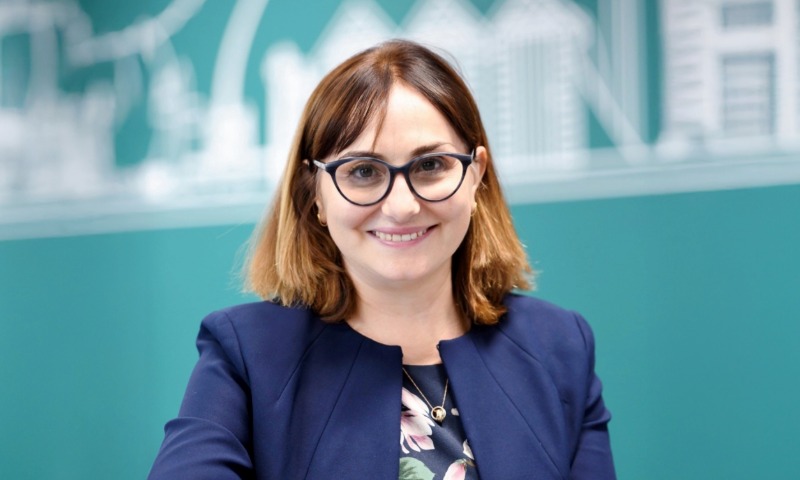
Professor Chrisina Jayne is Dean of the School of Computing & Digital Technologies, with over 15 years’ leadership experience in UK higher education, including Oxford Brookes, Robert Gordon, and Coventry Universities. Her research focuses on artificial neural networks, machine learning, and AI, with over 90 peer-reviewed publications. Chrisina is a Fellow of the British Computer Society (CITP) and Senior Fellow of the UK Higher Education Academy, and received the UK National Teaching Fellowship in 2009. She served as President of the International Neural Network Society (2021–2022), currently serves on BCS committees, and is passionate about gender equality, social inclusion, and diversity.
Recently, in an exclusive interview with Higher Education Digest, Chrisina shared insights into her passion for artificial intelligence, machine learning, and education, highlighting the importance of empathy, innovation, and social inclusion in shaping the future of higher education. She also shared her personal hobbies and interests, future plans, words of wisdom, and much more. The following excerpts are taken from the interview.
Hi Chrisina. Can you tell us about your early career and what sparked your interest in artificial neural networks and machine learning?
I completed my PhD in Applied Mathematics at Sofia University, where I became fascinated by applying mathematical theory to real-world challenges. One of my early projects involved age estimation from images. I encountered complex, non-linear data that traditional models couldn’t handle. This led me to explore artificial neural networks, and implementing these revealed their remarkable ability to recognise patterns and surpass classical approaches. That experience sparked my long-term interest for machine learning and its potential to solve complex problems.
What do you love the most about your current role?
As Dean of the School of Computing & Digital Technologies at Teesside University, and for our London campus, what I enjoy most is the opportunity to combine analytical problem-solving with people-centred leadership. I thrive on tackling complex challenges and shaping innovative solutions through designing new programmes, advancing digital and pedagogic initiatives, or delivering strategic projects across campuses. I also value the collaborative nature of the role, working with colleagues, students, and external partners to create opportunities, build a shared vision, and drive meaningful impact.
Above all, I am passionate about the student experience. A core focus for me is ensuring that every student receives an outstanding, future-focused education that prepares them not only for the careers of today but for roles and opportunities that do not yet exist. Creating an environment where students feel supported, challenged, and confident to thrive in a rapidly changing world is what I find most rewarding.
Can you tell us about your passion for gender equality, social inclusion, and diversity, and how you got involved in this area?
The gender inequality in technology fields is stark, and it is an issue I have been passionate about addressing throughout my career. I am deeply committed to increasing the participation and progression of women in Computing, Engineering, and Digital Technologies, and to supporting female students and researchers at every stage of their journey.
I have led a range of initiatives aimed at promoting gender equality and broader social inclusion—mentoring female researchers, hosting girls’ computing competitions, organising targeted networking events, and delivering educational activities that highlight the opportunities available in tech. One of the achievements I am proud of is that, under my leadership, the School of Computing, Engineering & Digital Technologies at Teesside University earned the Athena Swan Bronze Award, recognising our sustained commitment to gender equality and the principles behind it.
What role do you think AI and machine learning will play in shaping the future of education?
AI and machine learning will be transformative in shaping the future of education. They will enable personalised and adaptive learning—creating pathways, feedback, and assessments tailored to each student’s needs, pace, and goals. Intelligent tutoring systems will increasingly support students throughout their learning journey, offering guidance that is responsive, accessible, and available at scale. At the same time, AI supports educators with real-time insights and reducing administrative burdens, allowing them to focus more on mentorship and creativity.
However, the transformative potential of AI must be balanced with strong ethical considerations. Issues such as data privacy, algorithmic bias, transparency, and the responsible use of student information are critical. Ensuring fairness, inclusivity, and alignment with educational values is essential for building trust and maximising the benefits of AI.
What do you think are the key skills or qualities that students should develop to succeed in the 21st century?
To succeed in the 21st century, students need to develop strong critical thinking and problemsolving skills, as well as the ability to collaborate effectively with others. Digital and AI fluency are essential—not just using technology but understanding how data and intelligent systems shape the world around them.
Creativity, adaptability, and clear communication are equally important, helping students generate new ideas, contribute to innovation, and thrive in diverse teams. Finally, resilience and a commitment to lifelong learning are crucial. As careers and technologies continue to evolve, the ability to keep learning will be one of the most valuable qualities of all.
What role do you think mentorship played in your career, and do you have any mentors who inspired you?
Yes, mentorship has played a very important role throughout my career. At different stages, I have been fortunate to have mentors who inspired, guided, and challenged me. Early on, my mathematics teacher sparked my interest in problem-solving and analytical thinking. During my PhD, my supervisor was instrumental in shaping my research mindset and encouraging me to pursue ambitious ideas. Later, senior colleagues I worked with provided valuable professional guidance, helping me navigate leadership roles and broaden my perspective. Each mentor contributed in a different way, and their influence has had a lasting impact on my development.
Can you share a book or resource that inspires you and why?
One resource that I follow is The Batch by DeepLearning.AI. It delivers weekly insights and updates on AI developments, offering a clear and authoritative perspective on a field that evolves incredibly quickly. It is written in a very engaging and accessible style, making complex ideas understandable without oversimplifying them. It is an excellent way to stay informed about emerging trends, research breakthroughs, and real-world applications of AI. For anyone wanting to keep up with the pace of change in AI, it is a fantastic resource.
What are some of your passions outside of work? What do you like to do in your time off?
Outside of work, I really enjoy reading—it is a way for me to unwind and keep learning about different ideas and perspectives. I also love spending time with friends; connecting with people and sharing good conversations helps me recharge.
What is your biggest goal? Where do you see yourself in 5 years from now?
My goal is to be a leader in the ethical and effective integration of AI into higher education— bridging the gap between cutting-edge research and practical, human-centred pedagogical applications. I want to lead innovative projects and support colleagues in driving meaningful change. I am motivated by opportunities to enhance education and to help others grow and succeed.
In five years, I see myself leading major initiatives that advance equity, inclusion, and access, ensuring excellence in education for all students. I aim to drive impactful work that strengthens teaching, learning, and the student experience, and to be at the forefront of shaping a more inclusive, future-focused academic environment.
What advice would you give to early-career academics or professionals looking to make a mark in the field of AI and machine learning?
My advice is: be curious, build strong foundations in core concepts such as mathematics, algorithms, data, and ethics, and commit to continuous learning. Focus on applying AI to realworld problems. It is important to understand the context as well as the technology. Stay connected and collaborate with colleagues, attend conferences, and seek mentors who can support your development. Keep in mind that fairness, transparency, responsible AI, and ethical awareness are essential for shaping the future of the field.