



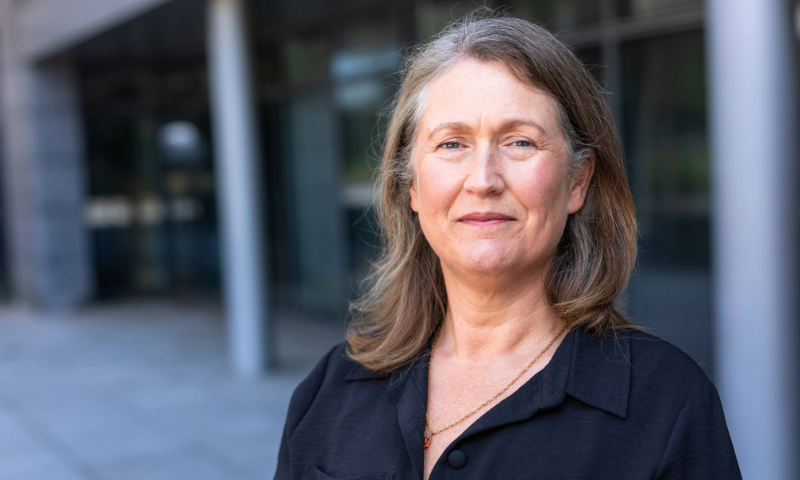
Rachel Msetfi is Vice President for Research and Innovation at Maynooth University, Ireland. A psychologist by training, she has held academic and leadership roles across the UK and Ireland. Her work focuses on building inclusive research environments, supporting academic freedom, and enabling researchers to thrive. Rachel is passionate about research as a public good and believes that flexibility, diversity, and intellectual curiosity are essential to knowledge creation. She works closely with researchers across all disciplines — from music and early Irish to data science and engineering — and is committed to making research careers more open, accessible, and impactful.
Recently, in an exclusive interview with Higher Education Digest, Rachel reflected on her experiences as a leader in higher education, the importance of kindness and curiosity, her vision for the future of research and innovation, words of wisdom, and much more. The following excerpts are taken from the interview.
Hi Rachel. What inspired you to pursue a career in research and innovation?
I came to university as a mature student, so my path into academia wasn’t typical. Like many others who’ve returned to education later in life, I found the process both exhilarating and demanding. What sustained me was a deep curiosity about the world and the joy of learning how to make sense of it — especially the complexity of human thoughts, emotions, and behaviour, which became the focus of my research.
I was fortunate to have opportunities early on to work on real research projects, volunteering as a research assistant and learning by doing. The academics I worked with became mentors, supervisors, colleagues and eventually friends — their generosity with time and ideas shaped my entire career.
In many ways, research gave me a way to bring structure to a chaotic world. That combination — curiosity, creativity, and method — pulled me into academia and still motivates me today.
What do you love the most about your current role?
What I love most is the opportunity to remove barriers that get in the way of researchers doing their best work.
There is enormous pressure on universities and researchers to deliver excellent research, but over time, the resources available have not kept pace with expectations. Regulatory and compliance demands have grown significantly, often reducing the time researchers have to think, write, and explore. I see my role as helping to navigate that complexity, break it down, and problem-solve — a bit like an experimental lab, just with different variables.
Much of this work happens behind the scenes, and its effects aren’t always immediately visible to those it’s meant to support. That can be difficult — not because it needs to be seen, but because I genuinely want to do more. I want researchers to feel the difference in their everyday working lives. Creating space for them to think, experiment, and thrive is what motivates me, and I’m always looking for ways to strengthen that support.
What are some emerging trends or technologies that you think will have a significant impact on research and innovation in the next few years?
The most obvious — and far-reaching — is artificial intelligence. We’re just beginning to understand how it will reshape research, from data analysis and writing support to fundamental questions around authorship, originality, and research integrity.
One of the biggest challenges will be integrating AI in ways that are ethical, transparent, and sensitive to the norms of different disciplines. That’s particularly important for early-career researchers, who are still developing their research identities and practices, and need clarity about what’s acceptable and encouraged.
At the same time, AI has real potential to transform research support functions —streamlining administrative processes, improving access to information, and reducing time spent on repetitive tasks.
But in all of this, we must not lose sight of the human experience. As researchers navigate this evolving landscape, their resilience and wellbeing need to be actively supported. The rapid pace of change can create uncertainty and pressure — especially for those at the early stages of their careers. It’s not enough to equip people with tools; we must also foster confidence, adaptability, and a sense of belonging in a research environment that continues to shift.
How do you stay current with emerging trends and technologies?
That’s easy — I spend time with and listen to our researchers! They’re the ones who really know what the future holds.
At Maynooth University, I’m so fortunate to work with experts across a wide range of disciplines — from the humanities and social sciences to data science, engineering, and beyond. I learn a huge amount just by engaging with them — through leadership groups, research initiatives, and the informal conversations that happen across our academic community.
Just in the past two days, I’ve attended the Innovation Value Institute’s Annual Summit and the IUA Deans of Graduate Studies Doctoral Symposium we hosted on research supervision. At both events, I was struck by the insight, creativity, and ambition on display — from early-career researchers to senior academic and industry leaders working on digital transformation, sustainability, and responsible innovation. These are the spaces where emerging ideas take shape, and I make it a priority to be present and engaged.
I also stay connected through national and international networks focused on research policy and innovation strategy. But it’s those direct conversations — hearing what excites, challenges, and motivates our researchers — that most clearly show me where the future is heading.
Can you share your perspective on the importance of diversity and inclusion in research?
For me, it’s about ensuring that research careers are genuinely open to everyone — and that means designing systems with flexibility, accessibility, and inclusion at their core.
When we’re too rigid about how research should be done — or how research training should be structured — we unintentionally narrow the field of who can participate. Whether you’re a stay-at-home parent returning to study, first in your family to attend university, or simply don’t ‘look the part’ of a typical academic, you bring valuable and often unique perspectives. I know this personally — I’ve walked those paths myself.
People who’ve had to carve their own way into research often bring with them determination, creativity, and resilience — exactly the traits that lead to new insights and breakthroughs. As leaders, we need to remove unnecessary hurdles, enable diverse ways of contributing, and build environments where all researchers can thrive.
That’s how knowledge moves forward — when everyone has a chance to shape it.
What has been your most career-defining moment that you are proud of?
I’ve never thought of my career in terms of a single defining moment or achievement. Instead, what has shaped me most are the moments of generosity I’ve received — from mentors who gave their time, listened, answered my questions, and helped me believe I had something to offer.
I carry those moments with me, and I try to pass them on in my own work — whether that’s mentoring others, shaping policy, or building research systems that help people succeed. That kind of quiet, sustained influence has meant more to me than any title or milestone.
And it’s not only mentors from the past. I’m continually shaped by the colleagues I work with today — people who show kindness, offer honest feedback, and create space for others to grow. Sometimes it’s as simple as someone taking the time to say, “You did that really well,” or gently suggesting another way forward. Those everyday interactions build trust, reflection, and growth. I’m proud to be part of that kind of community.
What is your favorite quote?
I don’t have a favourite quote — and I did consider asking ChatGPT for something suitably profound! But honestly, in the middle of a busy day, I’m more likely to say “Is lunch ready?” or “What time is coffee?” Perhaps that says something in itself — we need space to pause, connect, and think.
How do you see your role as a leader in the arts and education sectors evolving in the future, and what impact do you hope to make?
Leadership often feels like problem-solving at pace — there’s always something urgent. But when I step back, I think the most important impact I can make is to create the conditions in which others flourish.
That means building systems that are supportive, inclusive, and open to diverse contributions. It means valuing kindness and collaboration as much as metrics and rankings. And it means using whatever influence I have to open doors for others — particularly for those whose potential might otherwise be overlooked.
If, through my work, I’ve helped make the academy more accessible, more humane, and more intellectually vibrant — then I’ll feel I’ve made a meaningful contribution.
What are your long-term career aspirations, and how do you see yourself evolving as a leader over the next five years?
This is a hard one! I don’t have a rigid five-year plan. Like many people, I try to give my best in the role I’m in, remain open to opportunities, and stay aligned with my values.
That said, I do care deeply about the future of universities — as spaces for learning, questioning, and public good. If I ever took on a broader leadership role, I’d want to do so in a way that reflects those values, and that builds community rather than hierarchy.
Universities are all different — in culture, ethos, and purpose — and that’s a strength. My aspiration is to continue learning from them, contributing where I can, and helping shape environments where people and ideas thrive.
What advice would you give to aspiring researchers and innovators?
Stay curious, stay kind.
Curiosity will take you places no career plan can predict. Kindness will make the journey worthwhile — for you and for everyone you work with.