


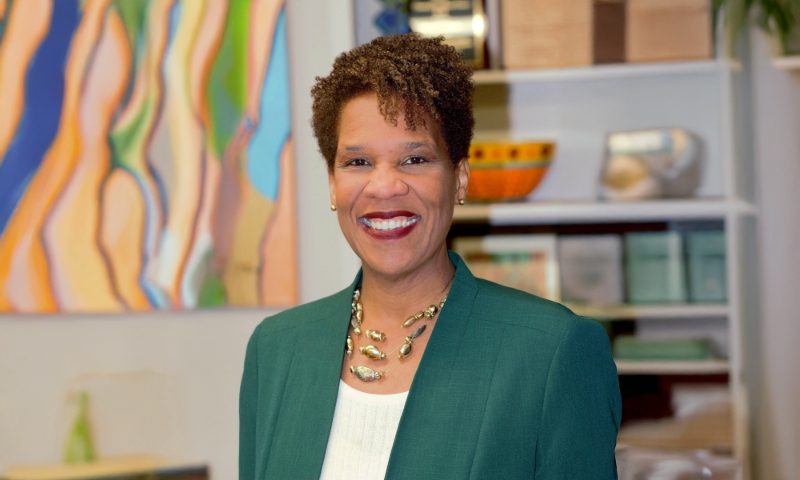
Dr. Shanna L. Jackson has led Nashville State Community College since June 2018. Nashville State is a seven-campus comprehensive community college that serves students in a seven-county region. Her extensive experience in administration, teaching, workforce, and community development experience is guiding the college’s mission to increase access, completion, and post-completion success for all students who come to Nashville State. Jackson serves on the Nashville Area Chamber of Commerce, Ascension St. Thomas, The Memorial Foundation, the Community Foundation of Middle Tennessee, the United Way of Middle Tennessee, the Nashville Branch of the Federal Reserve Bank of Atlanta and Achieving the Dream. In 2023, Jackson was named one of the Most Admired CEOs in Nashville by the Nashville Business Journal. Jackson earned a Bachelor of Science in Business Administration and an MBA from Florida A&M University and an Ed.D. in Administration and Supervision from Tennessee State University.
In a recent interview with Higher Education Digest, Dr. Shanna L. Jackson discussed her experience in academia and administration. She shared her views on institutional growth, accessibility and quality education, online learning, hybrid education models, and many more.
How has your experience in academia and administration influenced your approach to student success and institutional growth?
I started my professional career working in manufacturing after earning a BS in Business Administration and a MBA in Management. It was a chance opportunity to teach part-time business courses for a 2-year proprietary institution that change the course of my life. In that classroom, I saw the power of education in action. But I also learned that not every student had the same level of support that I had to get to and through college. I have carried that classroom experience throughout my 25-plus year career in higher education, and having a background in business informs how I continue to support student success and growth.
Community colleges play a vital role in workforce development. How do you see their role evolving in the coming years?
I think community colleges are uniquely positioned to be the anchor institutions in the communities they serve. I believe for communities to become or remain economically vibrant; they must grow their own talent. We are the bridge to education, training and opportunity. The shift has been taking place for community colleges to become partners with employers instead of just a source for talent. I see that partnership evolving into more co-curricular development, infused employment of students (ex. apprenticeships) and shared resources (ex. employers allowing team members to teach).
With the rise of online learning and hybrid education models, how is your institution adapting to ensure accessibility and quality education?
Just recently, we decided to bring our amazing and robust Teaching Center under the director of online learning. This allows us to ensure consistency in quality of online, hybrid and on-ground instruction. It is critical to invest in faculty, who are on the front line each day with students, with the tools they need to continuously improve teaching and learning.
What strategies have you implemented to strengthen partnerships between the college and local businesses or industries?
Nashville State is a workforce solution partner. Over the years, we have developed several strong and lasting partnerships with employers which have resulted in improving the local talent pool. On the credit side we continue to expand apprenticeship’s and work-based learning opportunities. This solves a need for employers who are looking for both the credential and work experience. On the workforce side we have co-developed workforce solutions to upskill employees in healthcare.
The landscape of higher education is constantly shifting. What trends or challenges do you foresee impacting community colleges the most in the next decade?
Top of mind is the negative narrative about the value of a college education. In my opinion, we are losing the battle of public opinion because we are struggling with explaining how what we do matters. Go to college to get a good job no longer resonates with a large portion of potential students.
What leadership lessons have you learned from your role that you believe are essential for future higher education leaders?
It is important to take the time to build a strong team. As Drucker states “Culture eats strategy for breakfast.” You can be the most visionary leader, with amazing ideas but I guarantee you cannot implement and execute them alone. Invest in the people who can.
If you could give one piece of advice to students or aspiring educators looking to make a difference in education, what would it be?
In my opinion, education remains the strongest ladder to economic and social mobility. Our work is critically important to building and sustaining strong communities. Therefore, hold the mission in your heart. Dream big and bold about what is NOT being done that could really make a difference – then get to work!