


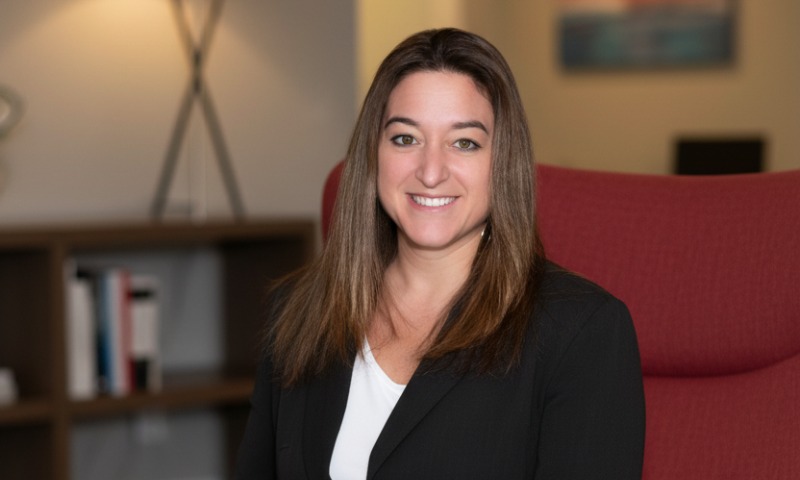
Patricia Baia, Ph.D., is Assistant Dean of Teaching Effectiveness at Touro Law, Adjunct Professor at Touro University’s Graduate School of Technology, and Touro University’s AI Fellow for 2026. A nationally recognized leader in instructional design and faculty development, she brings more than 25 years of experience in higher education and has designed over 350 online, hybrid, and face-to-face courses. Dr. Baia partners with faculty to strengthen teaching, integrate emerging technologies (including AI) into legal education and promote meaningful student engagement. She consults nationally and is widely respected for advancing innovative and responsible approaches to teaching and learning across disciplines.
Recently, in an exclusive interview with Higher Education Digest, Patricia shared insights into her passion for curriculum development and faculty professional development. Looking forward, Patricia sees technology as a transformative force in higher education, shifting the focus from information delivery to judgment, analysis, synthesis, ethics, and creativity. She also shared her personal hobbies and interests, future plans, words of wisdom, and much more. The following excerpts are taken from the interview.
Hi Patricia. What sparked your interest in curriculum development and faculty professional development in higher education?
At its core, my commitment to curriculum design and faculty development is personal. I grew up in Amsterdam, New York, in a close-knit, hardworking Italian family where education meant opportunity. It wasn’t abstract, it was the pathway to growth and stability. My parents and grandparents modeled perseverance and pride in doing meaningful work, which shaped how I view learning as both empowerment and responsibility.
I wasn’t a standout student in K–12, but I was deeply aware of how much teachers mattered. I could feel the difference between a classroom that was thoughtfully designed and one that simply delivered content. That awareness stayed with me and evolved into a belief that education should open doors, especially for students who may not immediately see themselves reflected in traditional spaces. That perspective guides my work today. Faculty development, to me, is about a partnership honoring professors’ expertise while helping them build structures that allow more students to thrive with or without technology.
What do you love the most about your current role?
What I love most about my role at Touro Law Center is the intersection of people and possibility. I get to work with faculty who care deeply about their craft and students who are navigating one of the most intellectually demanding professional programs there is. Helping Faculty rethink an assignment, redesign an assessment, or experiment with a new classroom strategy or innovation and then seeing the positive effect on students is incredibly rewarding. I also value being a bridge-builder, connecting committees, administrators, and faculty around shared goals.
How do you see technology transforming teaching and learning in higher education?
Tools powered by artificial intelligence are fundamentally shifting how students research, write, and think. I don’t see technology as replacing faculty, rather it is forcing us to clarify what we truly value in learning. If information is abundant and instantly accessible, then higher education must lean harder into judgment, analysis, synthesis, ethics, and creativity. Technology also offers powerful opportunities for accessibility, data-informed advising, and more personalized learning pathways. We also must think in terms of an “AI/Tech Sandwich” (Human in, AI/Tech out, Human edit).
What trends will drive innovation in student support and academic advising?
This is really not my area, but I think trends that will drive innovation will promote accountability, professionalism, and kindness. There is growing recognition that belonging and identity development are central to persistence, not to mention the importance of students who are encouraged to become strong critical thinkers.
Are there any particular books, articles, or resources that have significantly influenced your thinking or approach?
Many resources have shaped my thinking and pushed me toward evidence and responsible based design including, Diffusion of innovation by E. Rodgers, How We Think by J. Dewey, Savage Inequalities by J. Kozol, The Vygotsky Reader by R. Van Der Veer & J. Valsinger, Toward a Theory of Instruction by J. Bruner, Rethinking University Teaching by D. Laurillard, Designing Groupwork by E. Cohen, Pedagogy of the Oppressed by P. Freire, Constructivism in Education edited by D.C. Phillips, Professional Evaluation by E. House, Interdisciplinary Curriculum edited by S. Wineburg & P. Grossman and Mind in Society by L.S. Vygotsky .
What are the key skills educators need to develop to lead in digital transformation?
Educators who want to lead digital transformation need adaptive expertise, data literacy, ethical fluency around AI, and strong communication skills. They must be comfortable experimenting publicly and iterating transparently. Perhaps most importantly, they need the humility to remain learners themselves. It is less about mastering tools and more about cultivating a mindset that embraces change while remaining anchored in core educational values.
What is your favorite quote?
Only those who can see the invisible can do the impossible, by Patrick Snow. Fun note: this was also my high school yearbook quote. It was as true then as it is now.
What are some of your passions outside of work? What do you like to do in your time off?
Outside of work, I am a wife and mom and love spending time with my husband (Dan), our kids (Katelyn, Kevin, and Cameron) and our dog (George) and cat (Smitty). I adore time with my parents and sister and spend any extra time I have with them as well. It is important to me to be with family and close friends. I genuinely like to cook, attend my kids’ events, go to casinos and the beach, slow dance with my husband, go on coffee and shopping runs, and travel as much as possible. I also like to binge watch Netflix shows and go out to a movie and get cinema popcorn.
What is your biggest goal? Where do you see yourself in 5 years from now?
My biggest goal is to equip every faculty member with the vision, tools, and support to redefine what excellence in teaching can be. In five years, I see myself continuing to lead Touro Law Center by supporting change, promoting rigor, and encouraging innovative initiatives.
What advice would you give to leaders looking to drive positive change in education?
My advice to leaders seeking positive change in education is to start with clarity of purpose and transparency. Change fails when it is imposed without context or collaboration. Invite stakeholders in early, communicate often, use active listening, and align innovation with shared values rather than trends.