



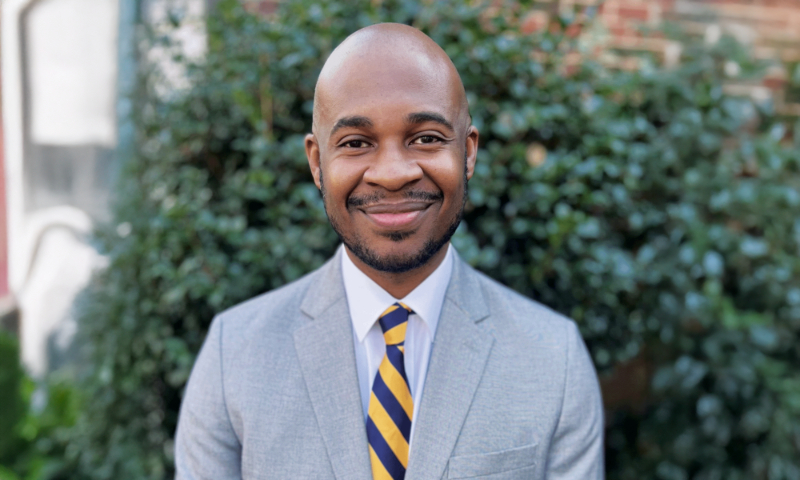
Jesse R. Ford, Ph.D., serves as an Associate Professor of Higher Education and the director of the Collaborative for Black Men’s Success at the UNC Greensboro. His scholarship explores the historical impacts of race and gender on the educational experiences and pathways of underrepresented populations. His scholarly work has appeared in the Journal of Higher Education, Journal of College Student Development, International Journal of Qualitative Studies in Education, and several others. In addition, he released an edited book titled book, Engaging Black Men in College Through Leadership Learning, with Dr. Cameron Beatty.
In a recent interview with Higher Education Digest, Jesse R. Ford discussed his experience in research, leadership, and higher education. He also shared his views on transforming student success, graduate education, and institutional culture in ways that center belonging and purpose, and many more.
From Coastal Carolina to UNCG – what experiences have most profoundly shaped your journey as an educator, researcher, and leader in higher education?
My journey as a college student at Coastal Carolina University to where I am now has been about staying rooted in my purpose and letting my personal and professional experiences shape how I show up in higher education. I started out in student affairs in my early twenties, and I witnessed what was happening when Black students, especially Black men and boys, moved through educational spaces that were never truly designed with their success in mind. Far too often, Black students do not feel seen, heard, or understood by the very spaces and people that claim to support them. That reality challenged me to think differently about how we build environments rooted in care and belonging for all students.
One of the most impactful experiences for me was launching a Black men centered program in my first professional role. It was built around critical reflection, Hip Hop and leadership development. Those experiences showed me the power of creating spaces where culture, identity, and purpose could meet in ways that felt authentic and affirming. It also pushed back on traditional ideas of leadership by valuing lived experience and community as sources of knowledge and growth. Since then, whether it is research, teaching, or mentoring, my work has centered on creating spaces where students can show up as their authentic selves. I’m not interested in preparing the prefect students. I want to support students in becoming grounded professionals who are confident in their identity, values, and purpose. My research centers the voices of Black people, in particular the ones navigating graduate education and early career positions, where so much of the struggle is quiet, internal and more often than not, unacknowledged.
My time at UNCG has only strengthen my commitment to this work. I have the opportunity to teach, mentor, and collaborate with students and colleagues who commitment to student success. The work that I am able to do reminds me that transformation takes intention. It does not happen with through performative gestures or by maintaining what has always worked. It happens when we create spaces that allow people to thrive without having to compromise who they are. For me, higher education is a unique place to reimagine spaces for all students, not just maintain them.
You’ve dedicated your career to investing in early career professionals. In your view, what are the most critical supports institutions must provide to help young academics and practitioners thrive today?
When we talk about supporting early career professionals, we must start by being honest about what’s missing. Too often, institutions focus on recruitment and stop there. But brining someone in is only the beginning. Real support means building systems and relationships that help people find their footing, develop their voice, and grow with purpose to strength the mission of the organizations. Especially for Black professionals and others from historically marginalized communities, it’s not just about learning the job. It’s about navigating structures that were not built with them in mind, as everyone must learn a new job. Institutions need to recognize that and respond with care, intention, and actions for their success. This means creating environments where early career professionals do not have to carry the burden of figuring everything out alone, and where they feel see not just as employees, but as the future leaders of our field.
Personally, I think this starts with building real, intentional mentorship structures. I’m not talking about a quarterly check-in or assigning someone a mentor on paper. I mean relationships with people who are willing to pour into you, challenge you, advocate for you, and help you see what’s possible. Mentors who are invested in your growth, who help you make sense of the unwritten rules, and who show up even when it’s not convenient. That kind of mentorship is often the difference between surviving and thriving.
When I reflect on my own journey, intentional mentorship has been critical to who I am and how I navigate workspaces. I would not be where I am without the people who created room for me to process, take risks, and grow. That is why I believe institutions have a responsibility to create clear expectations and offer consistent support. Too many early-career professionals are operating in environments where they are trying to meet invisible standards with no real guidance. We need to demystify what success looks like and offer pathways to get there that are realistic, transparent, and affirming.
For me, supporting early career professionals also means making sure they never feel like they have to leave parts of themselves at the door just to be accepted. I want folks to know they can show up fully, without shrinking or performing, and still be taken seriously. Their lived experiences and cultural backgrounds are not deficits but are strengths that add to the institution. When people know they belong, when their ideas are heard and valued, and when they do not have to constantly explain or defend their presence, that is when they thrive. And when they thrive, our institutions become responsive, more just, and more sustainable for everyone as this is when we can truly do the heart work of supporting students.
As the higher education landscape evolves worldwide, what trends do you believe are most significantly reshaping the way we prepare future scholars and leaders?
Right now, we are seeing a real shift in how leadership and scholarship are being defined, especially by students and early career professionals. It is no longer just about understanding theory for the sake of theory. They want to know how to apply it, how to challenge what is not working, and how to lead in spaces that were never designed for them. That requires us, as educators and institutional leaders, to rethink how we prepare them. We cannot simply hand them frameworks and expect them to figure it out. They are asking bigger questions about power, about justice, and about purpose. And they are pushing us to expand the boundaries of what leadership looks like and who gets to lead. I do my best to make sure students are equipped to handles the realities of today, not just in theory but in practice. That means giving them space to explore, push back, and find their own way through the work.
At the same time, there is a growing awareness around the emotional, physical, and mental toll that higher education takes on the people in it. Many scholars and practitioner are openly naming burnout, racial battle fatigue, isolation, and the deep exhaustion that comes with the term success in higher education. We have to acknowledge that the way we have trained scholars and practitioners in the past, often through overwork, detachment, and performance, no longer works, and frankly, never did. We have to more toward learning spaces that are humanizing. That means centering care, reflection, and healing just as much as we center publishing productivity and performance for new faculty. Identity work and emotional processing is hard and should not be treated as side conversations. They must be woven into how we teach, mentor, and support the next generation of scholars and leaders.
I think there is a clear shift now that work must live beyond the academy. Students and professionals are not interested in doing research that only circulates behind a paywall or in rooms that feel disconnected from the communities we claim to serve. They want to see their work have an impact. Whether that is in policy, in local communities, or in public conversations, they want to know that their scholarship matters. And they should. We are not just preparing people to become academics anymore. We are preparing the next set of change agents, bridge builders, and advocates. That means, as educators, we have to give the next generation the tools, the confidence, and the space to lead boldly and authentically in whatever space they choose to show up in.
Having worked extensively across academic and corporate spaces, what role do you see for cross-sector collaboration in enhancing student success and institutional innovation?
I think there is real value in cross-sector collaboration, especially when it comes to advancing student success and truly institutional innovation. However, the challenges we face, closing equity gaps, reimagining student support, adapting to a rapidly changing workforce, and creating culturally responsive spaces are becoming more complex. This complexity means we must explore partnerships with nonprofit organizations, corporations, philanthropic foundations, and community-based institutions that are equally invested in educational access, affordability, and accountability.
Higher education contributes a rich legacy of research, reflection, and critical thinking. We have figured out how to ask deep questions, hold space, and have difficult conversations. Cross-sector collaboration would allow higher education scholars to breakdown silos and bring new partners to the table. We would be able to design programs that bridge what students learn in the classroom with real-world application. This is an opportunity to create new internship opportunities, mentor, networks, fellowships, and real-life opportunities for students that are not just relevant, but also responsive to the cultural and lived realities. When done properly, it allows higher education scholars to dream bigger, design spaces and places that expand the possibilities for our campuses to grow.
With the growing need for inclusive and culturally responsive educational environments, how can universities better embed a true sense of belonging into their teaching, training, and campus culture?
This is such a tricky question. Inclusive and culturally responsive educational environments are critical to student success and require institutions think about our staff retention and faculty hires. Additionally, I think it ultimately comes down to who we hire, what we teach and how we create spaces and places for students, faculty and staff to lead and be heard. When students do not see representations of themselves in the curriculum or among the faculty and staff, it sends a distinct message concerning who is seen capable of success and who is anticipated to conform. Personally, I try to create a space where students feel recognized, validated, and have time to foster relationships.
Looking ahead, what’s your vision for the next decade of higher education—and what should be our top priorities as educators and institutional leaders?
This is a challenging question. My vision for higher education is one that is more humanizing, more justice-centered, and more responsive to the communities we claim to serve. I want to see institutions that are bold enough to disrupt the normal and build new models rooted in equity, care, and accountability. I think higher education has upheld systems that reward productivity over people and tradition over transformation. This can no longer be our standard.
Our top priorities should include reimagining how we support students beyond access alone. We need to rethink how we design curriculum, how we assess impact and how we define success. I think we need to take sometime to think about graduate education more deeply. Graduate education in particular must be transformed to be less isolating and have a more developmental approach. Early career professionals, especially those from marginalized backgrounds, need more then survival strategies. I think we should invest in the leadership development that reflects our current educational landscape. That means we have to equip students and early career professionals to navigate the complex systems, challenge structural harm, and establish a stronger community. I think we are responsible to make sure higher education looks and feels different for the next generation of college students.
On a personal note, what drives you to keep doing the work you do—and what advice would you give to someone just beginning their journey in academia or education leadership?
I think about all the people who poured into me, who created room for me to think, question, and grow without apology. I do this work because I know what it feels like to wonder if you belong, to carry the pressure of being the only one, and to keep showing up. I carry those experiences with me, and they keep me focused on creating space for others to be successful. My advice to anyone just starting their journey in education is simple: do not lose yourself trying to meet someone else’s expectations. Protect your peace, find your people, and know that you are enough. Your story, your lens, your experience, your presence, your voice, your support, your guidance, and everything else that makes you who you are, are all very necessary.