


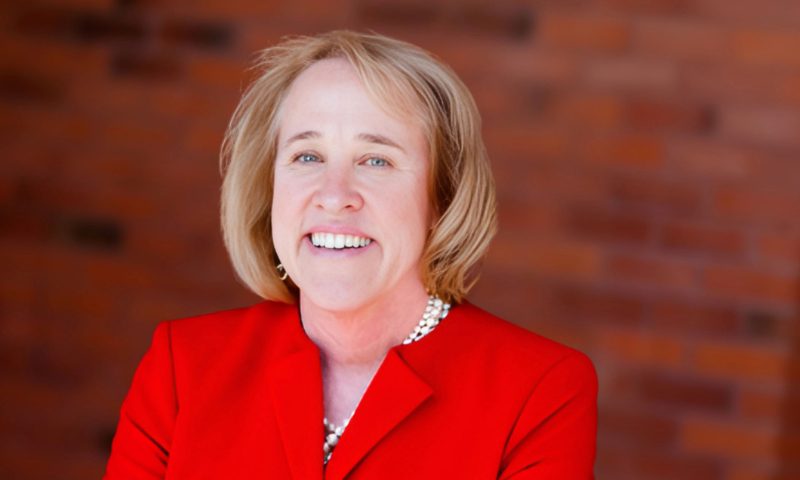
Melissa Vito is a nationally recognized leader in higher education, with over 35 years of experience driving student success and institutional innovation. As Senior Vice President for Enrollment and Student Affairs, and Senior Vice Provost for Academic Initiatives and Student Success at the University of Arizona, Melissa played a pivotal role in securing the university’s designation as a Hispanic Serving Institution and in creating the Student Success District, a transformative space focused on academic achievement and student well-being. After briefly retiring in 2018, Melissa joined the University of Texas at San Antonio (UTSA) as Vice Provost for Academic Innovation. Under her leadership, UTSA Online has risen into the top 20% of all online programs nationwide, according to U.S. News & World Report. She also established the Academic Innovation Center, a collaborative hub for faculty and students, and spearheaded UTSA’s pioneering efforts in integrating Generative AI into education. Melissa’s contributions have earned her numerous accolades, including NASPA’s prestigious Pillar of the Profession award. She holds a bachelor’s degree in Journalism and English, a master’s degree in Higher Education and Counseling from the University of Arizona, and a Doctorate in Educational Leadership from Northern Arizona University.
In a recent interview with Higher Education Digest, Melissa Vito discussed her experience in Student Affairs and higher education leadership. She also shared her views on leadership philosophy, digital learning environments, traditional and online modalities, and many more.
What pivotal experiences or mentors have shaped your leadership philosophy in the context of student success and institutional growth?
I’ve been fortunate to have several mentors, but the one who most shaped my leadership philosophy was my mother. She was a deeply community-involved stay-at-home mom who launched her career at 50 and eventually led our city’s Convention and Visitor’s Bureau. She taught me that people rise to your expectations-she modeled trust, never micromanaged, and always encouraged growth and creativity. She led with optimism and empathy. From her, I also learned the power of listening, the importance of curiosity, and the value of keeping a broad perspective. Because of that, I’ve always looked beyond higher ed for inspiration-whether it’s using lessons from top-tier online retailers to shape student experiences or encouraging my team to scan the horizon for ideas that drive innovation. Another early influence was the first female VP for Student Affairs I worked with. She led with grace, stayed true to herself, and balanced leadership with motherhood-a powerful model for me as a young dean and mom. I’ve also learned that nothing significant happens alone. Building fun, motivated teams and fostering strong communities-both within and beyond my area-has been central to everything I do. And just as others mentored me, I see it as my responsibility to lift others, help them recognize their potential, and spotlight opportunities they may not yet see.
With enrollment trends shifting across many regions, what strategies have proven most effective in attracting and retaining students in today’s competitive higher education landscape?
It’s a complex landscape-especially as my current work focuses on online learning, academic innovation, and professional and continuing education, rather than traditional enrollment. But these areas are increasingly central to attracting and retaining today’s learners. The pandemic broke down long-standing barriers around online education. While fully online programs are still distinct from on-campus offerings, we’re seeing a real shift in modality expectations. High-quality online courses-when thoughtfully designed-are just as engaging and effective as in-person ones. That’s opened the door for more flexible pathways: campus learning for first- and second-year students, and hybrid or online options for juniors and seniors balancing work or internships. Adult learners are also a rapidly growing population. The most forward-looking programs offer certificates, badges, boot camps, and clear pathways to degrees in high-demand areas like AI and cybersecurity. Over time, I think we’ll see multiple, equally respected entry points into higher education-whether through transfer, professional and continuing education, or recognition of prior learning. At the end of the day, traditional- aged students and their families are asking one central question: Is this worth it? Value is key. They want to see clear links between college and career outcomes, as well as opportunities for hands-on learning that prepare them for what’s next.
How is the role of Student Affairs evolving as student expectations and digital engagement models change?
Student Affairs has always been a high-touch profession-but today, that includes both in- person and digital touchpoints. The pandemic showed us that hybrid delivery can actually enhance engagement. We’re seeing professionals adapt creatively, especially as new technologies and AI come into play. AI has been transformative-not just for how staff do their work, but for shaping new policy and guidance. Issues like academic integrity and student conduct now have a digital dimension that we’re navigating in real time. And let’s not forget the rise in student activism. It’s always been a core area for Student Affairs, but the speed and visibility of social media, paired with AI-driven communication, have added layers of complexity. The work remains the same at its heart: support students, foster belonging, and help them find their voice-but the ways we engage continue to evolve quickly.
What innovative practices or programs have you implemented to support student belonging, wellness, and persistence?
In my current role, we partner closely with student success to drive initiatives that improve outcomes. My background in Student Affairs definitely influences how we approach this work-especially through the lens of belonging and wellness. One of the most exciting things we’ve done is measure the impact of our faculty development on student success. Through our course transformation work and faculty training programs, we’ve seen reduced DFW rates and increased student achievement. We even have a dedicated institutional research team member to help track and analyze the impact. Another innovation I’m proud of is our Student AI Partners program. As AI becomes a bigger part of the academic experience, we’ve trained students to support their peers, faculty, and staff in using it effectively. These students also co- developed our university’s Student AI Guidelines-a great example of meaningful student engagement and co-creation.
In what ways are digital learning environments transforming the student experience outside the classroom, and how are you leading that transformation at your institution?
A few years ago, we reimagined a large space near a popular student outdoor area and transformed it into the Academic Innovation Center-a vibrant hub where both students and faculty explore new tools and ideas. Students can come in and try out VR headsets, get help with Adobe Creative Cloud, or learn how to use AI tools in meaningful ways. Faculty are just as active in the space, which creates an incredible sense of cross-community learning and connection. We also support student-led initiatives like the Adobe Ambassadors program, and we regularly meet with student government to stay attuned to emerging needs and concerns. What’s unique about our model is how we empower students to be peer leaders-especially around digital fluency, which is now essential for career readiness. At the same time, we deeply value human connection. Even in a tech-rich world, students still crave authentic, face-to-face engagement- and we intentionally design experiences that blend both.
What technologies or platforms do you believe are most promising for enhancing student engagement and success in both traditional and online modalities?
We take a pilot-first approach to technology. We start small, collaborate with our student success partners to identify clear needs or opportunities, and then evaluate the outcomes before scaling. Right now, we’re investing in platforms that build community and connection- especially peer-to-peer mentoring, whether students are online or on campus. These tools help foster a sense of belonging, which is key to persistence. We haven’t found any technology that reliably detects AI use, so instead of playing defense, we encourage faculty to design assignments that integrate AI thoughtfully. Many of them are using it to boost critical thinking, creativity, and engagement-really pushing students to apply their learning in meaningful ways.
What personal mantra or philosophy keeps you grounded and motivated as you lead through complexity and change in higher education?
I always come back to our purpose-why we do what we do. I also try to challenge the prevailing narrative. It’s easy to get caught in the urgency of the moment, but I believe in staying focused on values like gratitude, optimism, energy, and empathy. These are non- negotiables for me and for how I lead. I encourage my team to question assumptions, dig into data, and think creatively about solutions. And I remind them: our work is important, but it’s not life or death. That gives us the freedom to have fun, take risks, and try bold new approaches. We also think big. I often ask, ‘What will today’s third graders need from higher ed in 2035?’ That future-focused mindset helps us stay ahead. I’d rather be designing for the next decade than trying to be “best in class” in 2025. One example: when Generative AI first exploded onto the scene, many institutions went into reactive mode. We took a different approach. We brought faculty together in peer learning communities and leaned into curiosity and creativity. We asked: how can we use AI with our students to empower them-not just protect against misuse? During the pandemic, we also used disruption as a catalyst. We created immersive interdisciplinary experiences-like performances based on students’ pandemic reflections-and supported them in developing open educational resources to document their journey. For me, innovation always starts with listening. Whether through quick pulse surveys or conversations, we keep student voices at the center of everything we do. That’s what grounds me-and what keeps the work deeply rewarding.